Attackers Exploit Teams, Slack, and Meet for Identity Phishing and Persistence
Social Engineering & Fraud · 3 sources · Updated 3mo ago · First seen Aug 20, 2026
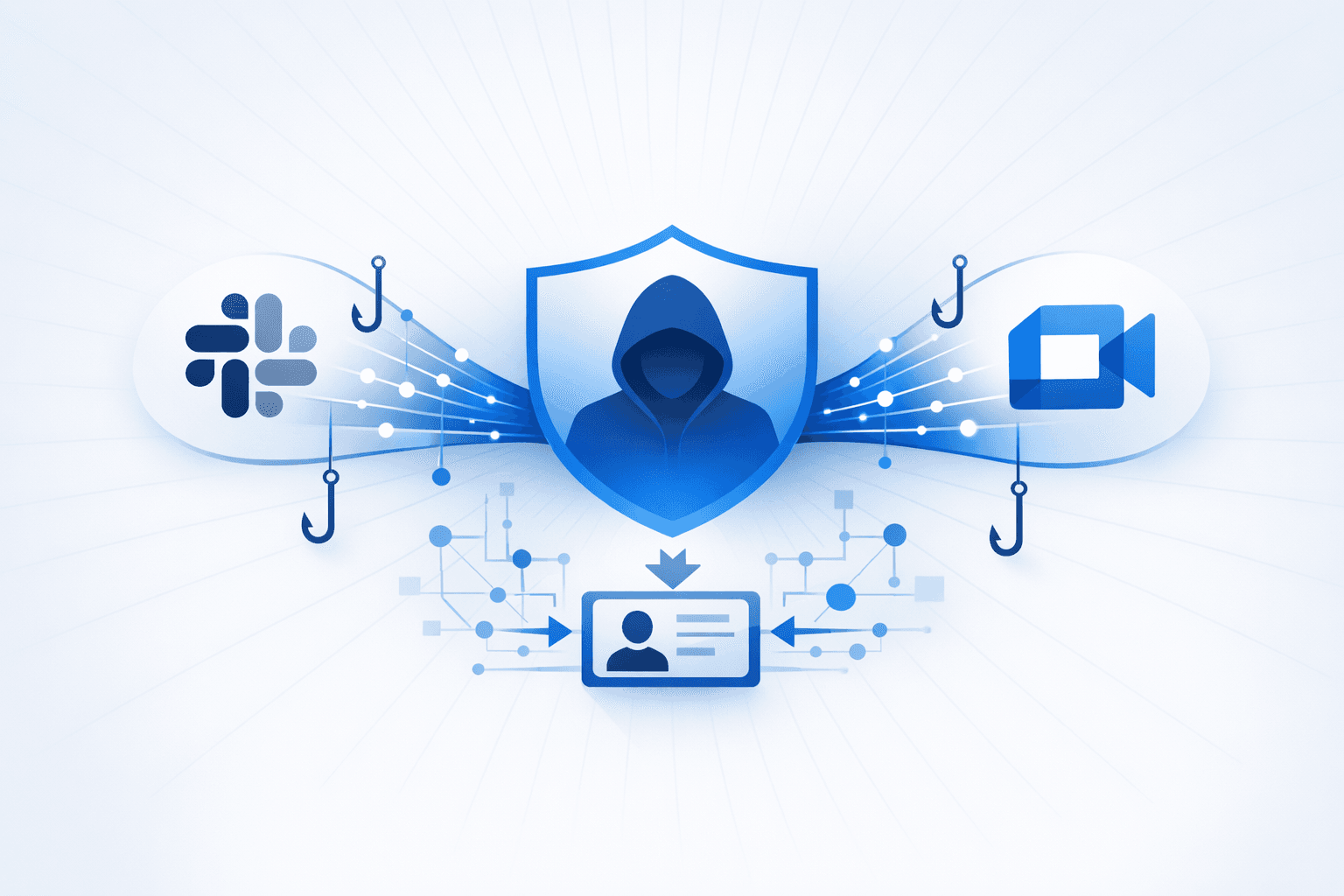
Attackers are increasingly abusing trusted enterprise collaboration platforms including Microsoft Teams, Slack, and Google Meet to steal credentials, impersonate employees, deliver malware, and maintain post-compromise access. Palo Alto Networks Unit 42 reported that alerts tied to malicious activity on collaboration tools increased more than fourfold over the past year, with 99% of those alerts linked to chat-based phishing. The activity reflects a shift from obviously malicious infrastructure to legitimate communication channels that users and defenders often trust by default.
Documented cases include APT29 phishing through Microsoft Teams, adversary-in-the-middle credential theft using attacker-controlled Slack workspaces, the Contagious Interview campaign themed around Fireblocks, the compromise of an Axios npm maintainer, Slack phishing reported by OpenSSF against Linux Foundation communities, and CERT Polska findings on Slack webhook abuse for persistence and credential exfiltration. Researchers said collaboration platforms now form part of the enterprise identity attack surface and urged organizations to tighten guest and federation controls, enforce stronger identity protections, verify sensitive requests through secondary channels, and correlate collaboration, endpoint, and network telemetry in monitoring and incident response.
Why it matters
Impact assessment
Attackers are using trusted collaboration platforms including Microsoft Teams, Slack, and Google Meet as primary identity attack channels, affecting enterprises that rely on chat, guest access, federation, and third-party collaboration. The impact is high because these attacks enable credential theft, MFA bypass, malware delivery, privileged account abuse, software supply chain compromise, and durable post-compromise persistence.
The exposure is broad rather than isolated: Unit 42 reported collaboration-tool-related malicious activity alerts increased more than fourfold in the last 12 months, and 99% of those alerts were tied to chat phishing. Multiple real-world incidents show active exploitation in the wild, including APT29 activity in Teams, Slack-based adversary-in-the-middle phishing, the Contagious Interview campaign, the Axios npm maintainer compromise, OpenSSF-reported Slack phishing, and CERT Polska’s Slack webhook persistence case.
Affected organizations and users
- Enterprises using Microsoft Teams, Slack, and Google Meet for internal or external collaboration
- Organizations with external federation, guest access, or trusted third-party collaboration relationships
- High-value users such as administrators, developers, maintainers, recruiters, executives, and IT support staff
- Open source communities and software supply chain participants, including npm maintainers and Linux Foundation communities
- Manufacturing environments where network/security appliances can be abused for persistence and exfiltration
Severity and business consequences
- Credential theft and MFA token capture can lead to account takeover and lateral movement
- Impersonation of trusted staff increases success rates for social engineering and fraudulent approvals
- Malware delivery through chats, archives, and staged meetings can result in endpoint compromise and remote access
- Privileged identity abuse can disable MFA and expand attacker control
- Supply chain compromise can propagate malicious code to downstream users, as shown in the Axios npm incident
- Reputational and operational damage is significant because attacks originate from platforms users inherently trust
Scope and observed activity
- Unit 42 observed a more than 4x increase in endpoint alerts tied to collaboration-tool abuse over 12 months
- 99% of related alerts were associated with chat phishing operations
- Known exploitation examples span espionage, social engineering, credential theft, malware delivery, persistence, and exfiltration
- Activity includes both widespread tradecraft trends and targeted campaigns against specific communities or individuals