
Loading story…
Researchers reported multiple BitRAT distribution campaigns that used highly tailored social-engineering lures to infect Windows users with the commodity remote access trojan. In one campaign, attackers abused a Colombian cooperative bank’s compromised infrastructure and reused stolen customer records in malicious Excel files, indicating a real breach involving roughly 418,777 rows of sensitive data. Qualys said the operators likely exploited SQL injection with sqlmap, then used obfuscated macros, certutil, and rundll32 to stage and launch BitRAT from payloads hosted on a throwaway GitHub repository. Separate reporting showed BitRAT also spread through fake Windows 10 activators shared on South Korean webhards, Discord, and social media, where a bogus activation tool downloaded the malware and attempted to weaken Windows Defender protections.
Fortinet documented another BitRAT campaign that targeted NFT enthusiasts, using Hebrew-language Excel lures and Discord-hosted payloads to deliver the malware through batch scripts, PowerShell, and DLL injection into a copied MSBuild.exe process. Across the campaigns, BitRAT was described as a low-cost malware-as-a-service tool sold on underground forums since 2021, with capabilities including credential theft, keylogging, webcam and microphone access, hidden remote desktop (HVNC), file exfiltration, cryptocurrency mining, DDoS activity, and persistence via startup-folder placement or process injection. The reporting highlights how BitRAT operators increasingly combine stolen data, topical themes, and pirated software bait with legitimate services such as GitHub and Discord to improve infection success.
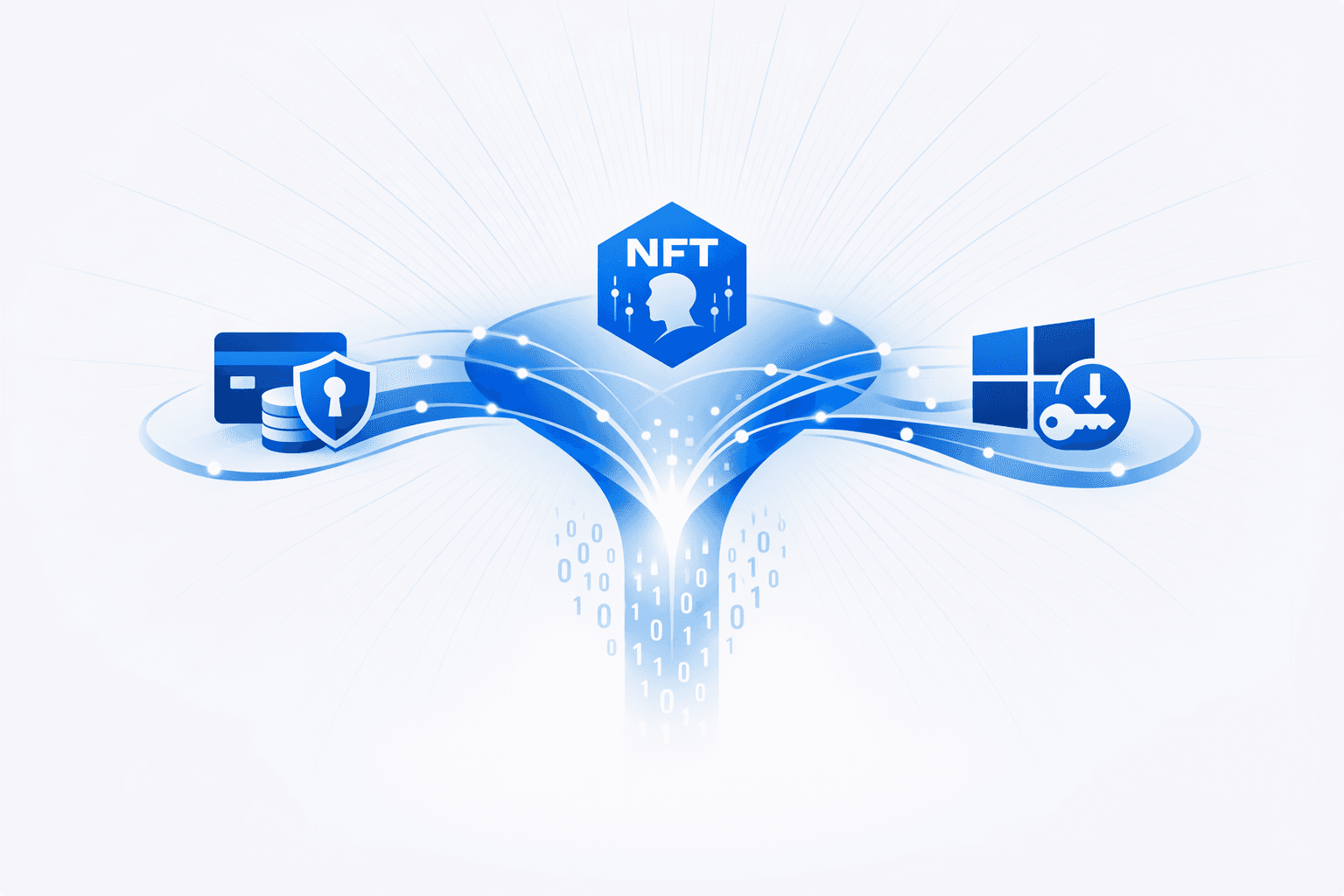
Pull IOCs and campaign context straight into your stack.
13 events from the most recent confirmed update back to the earliest known activity.
Qualys Threat Research Unit published an analysis of a BitRAT campaign that used malicious Excel lures containing stolen data from a Colombian cooperative bank, revealing both the malware delivery chain and the underlying bank data breach.
FortiGuard Labs published its analysis of the NFT-themed BitRAT campaign, detailing the Excel macro lure, Discord-based staging, persistence, and BitRAT capabilities.
The malicious Excel macro file used in the NFT-themed BitRAT campaign was uploaded to a public online scan service on January 3, 2022.
Fortinet says the DLL used in the NFT-themed BitRAT infection chain appeared to have been compiled on January 2, 2022.
Bitdefender published research on a BitRAT campaign targeting users seeking pirated Windows activation, attributing it to suspected Korean threat actors based on distribution patterns and Korean-language code artifacts.
Qualys reports that BitRAT had been sold on underground forums since February 2021 as a low-cost commercial remote access trojan.
Malpedia lists a string-based YARA rule named win_bit_rat_w0 for BitRAT dated 2020-08-28 and attributed to KrabsOnSecurity. The rule used strings including TaskbarGlomLevel, profiles.ini, RtlCreateUserThread, nss3.dll, and AVE_MARIA to detect BitRAT payloads.
Fortinet's report states that BitRAT was first sold on a hacking forum in August 2020, marking the malware's initial appearance on the underground market.
FortiGuard Labs discovered a campaign using malicious Excel macro files named NFT_Items.xlsm or NFT_LIST.xlsm to infect likely Israel-based NFT enthusiasts with BitRAT. The infection chain used a batch file, PowerShell, Discord-hosted payloads, and DLL injection into a copied MSBuild.exe process.
The attackers reused stolen customer data from the Colombian cooperative bank in malicious Excel lure documents to make the files appear legitimate and improve infection success.
Qualys found evidence that an adversary hijacked the infrastructure of a Colombian cooperative bank, used sqlmap to identify SQL injection weaknesses, and obtained database dumps containing 418,777 rows of sensitive customer data.
Qualys found that the GitHub repository used to host BitRAT payloads in the bank-themed campaign was created in mid-November and appeared to be a throwaway account.
A BitRAT campaign distributed malware disguised as an unofficial Windows 10 Pro activator through South Korean webhards, with links shared on Discord and social media. The downloader installed BitRAT as Software_Reporter_Tool.exe, added Windows Defender exclusions, and deleted itself.
Vulnerabilities, threat actors, malware, products, organizations, breaches, and observables Mallory has linked to this story. Indicator values are masked here and available in full in the app.
Indicator values are masked on this page. View all 22 in Mallory Domains, IPs, hashes, and URLs are exportable to your SIEM.
Pull the IOCs, campaigns, and victimology behind this family, ready to push into your SIEM and EDR.
5 references tracked. Mallory keeps watching after this page renders.
malpedia.caad.fkie.fraunhofer.de
Open sourceblog.qualys.com
Open sourceasec.ahnlab.com
Open sourcefortinet.com
Open sourcebitdefender.com
Open sourceMap indicators from this story to your assets and identify affected systems in minutes.
Every observed campaign, victim, and pivot linked to actors named in this story.
Malware, exploits, and IOCs connected to the activity described here.
YARA, Sigma, and Snort rules deployed to your SIEM as soon as they’re published.
Get matching new stories delivered to your team as they break — not the next morning.
Ask questions about this story and take action on the answers.
Other stories Mallory is tracking that overlap on entities, sources, or topic labels.

Researchers across multiple reports documented continued **njRAT** (also known as **Bladabindi**) activity delivered through diverse infection chains, including malicious PowerPoint macros, phishing attachments, password-protected archives, trojanized software on Korean webhard sites, compiled AutoHotKey loaders, and typosquatted npm packages. The malware was shown using layered obfuscation in VBS and PowerShell, Base64-encoded payloads, reflective or in-memory loading, and staged retrieval from services such as `paste.ee`, `archive.org`, `wtools.io`, and dynamic DNS infrastructure. In one supply-chain case, the npm packages `jdb.js` and `db-json.js` installed a .NET payload that copied itself as `dchps.exe` and connected to `46.185.116.2:5552`, while other campaigns used domains including `fidapeste2.duckdns.org`, `xxxcarldon.duckdns.org`, and `0.tcp.eu.ngrck.io` for command and control. Analysis of multiple samples showed njRAT maintaining persistence through **Startup folder** copies, **registry Run keys**, shortcuts, mutexes, firewall-rule changes, and even `netsh` exclusions, while some variants bundled legitimate applications so victims would not notice the infection. Once active, the RAT collected host profiling data and supported a broad set of attacker functions, including **keylogging, credential theft, webcam access, screenshot and screen viewing, file transfer, process and registry manipulation, remote shell access, and full remote control** of Windows systems. Reports also linked njRAT delivery to long-running loader ecosystems that rotated payload families such as Houdini, LimeRAT, RevengeRAT, AsyncRAT, and VjW0rm, underscoring the malware’s persistence as a flexible commodity RAT used across phishing, malware-hosting, and software supply-chain abuse.
Aug 15, 2026
Security researchers reported several unrelated **remote access trojan (RAT)** delivery campaigns using different initial access vectors and lures. Seqrite Labs described “**Operation Covert Access**,” a spear‑phishing operation targeting Argentina’s judiciary with a ZIP attachment containing a convincing court-resolution decoy; execution is triggered by a malicious `LNK` masquerading as a PDF, which launches hidden PowerShell to fetch additional stages from a GitHub repository, culminating in a custom **Rust-based RAT** that attempts to blend in by renaming itself (e.g., `msedge_proxy.exe`). Separately, AhnLab Security Intelligence Center reported South Korea-focused activity distributing **RemcosRAT** through illegal online gambling-related tools and trojanized *VeraCrypt* installers, using embedded malicious VBS scripts and a multi-stage chain that ultimately deploys a RAT capable of surveillance and data theft (e.g., keylogging, screenshot/webcam/mic capture, credential/data harvesting). Another campaign documented by ReliaQuest abused **LinkedIn private messages** to deliver a bundled legitimate application alongside a malicious DLL for **DLL sideloading**, enabling RAT deployment under the guise of a trusted process; the reporting emphasized that social platforms can serve as effective phishing channels beyond email and that the technique is portable to other commonly used business messaging platforms.
Jun 29, 2026
Multiple research reports detailed **Windows-focused malware delivery chains** that rely on social engineering and abuse of legitimate services to blend into normal enterprise traffic. FortiGuard Labs described a **multi-stage campaign targeting users in Russia** that starts with business-themed decoy documents and scripts, then escalates to security-control bypass and surveillance before deploying **Amnesia RAT** and ultimately **ransomware** with widespread file encryption. A notable technique in that intrusion is the abuse of **Defendnot** (a Windows Security Center trust-model research tool) to **disable Microsoft Defender**, while payloads are hosted modularly across public cloud services (e.g., **GitHub** for scripts and **Dropbox** for binaries) to improve resilience and complicate takedowns. Separately, ReliaQuest reported attackers using **LinkedIn private messages** to build trust with targets and deliver a **WinRAR SFX** that triggers **DLL sideloading** via a legitimate PDF reader, then establishes persistence (Registry `Run` key) and executes **Base64-encoded shellcode in-memory** to load a RAT-like payload. Trend Micro and Koi Security documented **Evelyn Stealer**, which weaponizes **malicious VS Code extensions** to drop a downloader DLL (e.g., `Lightshot.dll`), run hidden PowerShell to fetch `runtime.exe`, and inject the stealer into `grpconv.exe`, exfiltrating data (credentials, cookies, wallets, screenshots, Wi‑Fi credentials) to `server09.mentality[.]cloud` over FTP. AhnLab ASEC also reported **proxyjacking** activity in South Korea attributed to **Larva‑25012**, distributing **proxyware disguised as a Notepad++ installer** and evolving evasion (e.g., injecting into Windows Explorer and using Python-based loaders) to monetize victims’ bandwidth via unauthorized proxyware installation.
Jun 29, 2026