MacSync Malware Used Fake Claude Setup to Steal macOS Credentials and Crypto Seeds
Malware Intelligence · 5 sources · Updated 4mo ago · First seen Jul 30, 2026

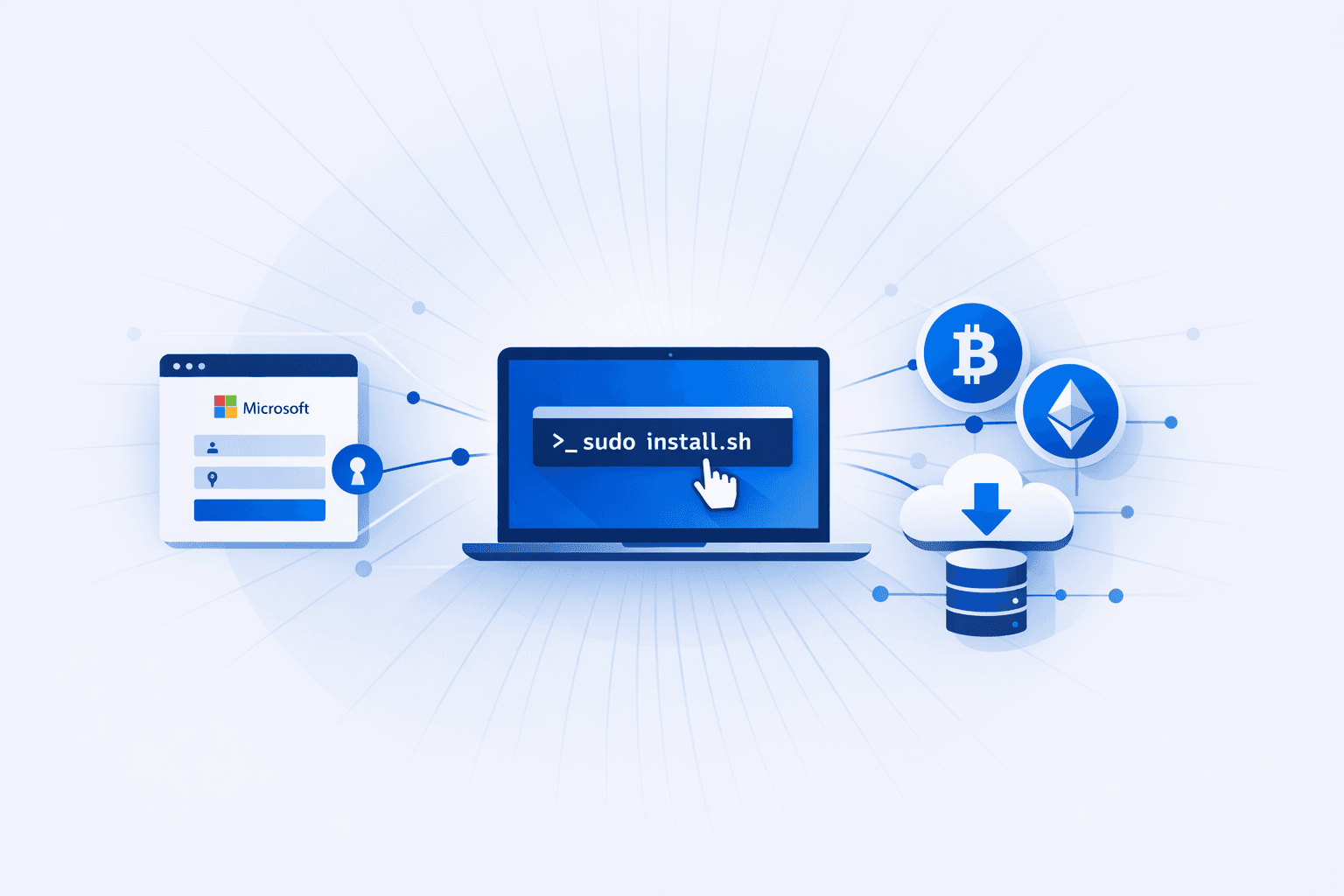
Huntress reported a macOS intrusion in which a user searching Google for Claude installation instructions clicked a sponsored result that led to a weaponized public Claude share on claude.ai, ultimately triggering installation of MacSync, a stealer and remote-access trojan. The infection chain relied on a pasted command executed by the victim, then fetched a server-side AppleScript payload, prompted for Full Disk Access, and harvested browser data, keychain contents, wallet information, and other credentials before installing a persistent Mach-O RAT. Investigators said the malware also deployed a helper component to obtain Screen Recording permission, expanding the attacker’s visibility on the host.
The campaign used delivery domains agenticsora[.]com and malwareaudit[.]com, a RAT command-and-control endpoint at 85.206.161[.]241:8443, and seed-phrase collection domains main.sdhomeinspectors[.]com and main.southcarolinacounselor[.]com. Huntress found that if cryptocurrency wallet applications including Ledger Live, Ledger Wallet, or Trezor Suite were installed, MacSync trojanized those apps in place to phish recovery seed phrases and exfiltrate them to attacker-controlled infrastructure. The researchers assessed that MacSync shares strong lineage with AMOS/Atomic Stealer tradecraft, including Russian-language developer artifacts, but goes further by combining credential theft with persistent remote access, screen capture, and wallet-app rewriting.
Why it matters
Impact assessment
MacSync affects macOS users, especially developers, knowledge workers, and cryptocurrency users who may search for Claude installation guidance and execute terminal commands from untrusted pages. The impact is high because the malware steals browser credentials, cookies, keychain secrets, SSH and cloud credentials, Telegram sessions, wallet data, and can escalate to persistent remote access with screen capture.
The exposure appears broader than a single targeted intrusion because delivery relied on sponsored Google search results and trusted hosting on claude.ai share pages, but victim execution is still required. There is confirmed real-world compromise investigated by Huntress, and the campaign includes direct cryptocurrency theft through trojanized Ledger Live, Ledger Wallet, and Trezor Suite applications that phish recovery seed phrases.
Supporting details
- Affected platforms: macOS
- Affected populations: users searching for Claude/Claude Code install help; users willing to paste terminal commands; cryptocurrency wallet users
- High-risk sectors: technology, software development, crypto/fintech, professional services, and any macOS-heavy workforce
- Business impact:
- Credential theft enabling account takeover
- Theft of cloud, SSH, and developer secrets enabling downstream compromise
- Persistent RAT access enabling continued espionage and lateral activity on the host
- Screen capture increasing exposure of sensitive sessions and data
- Direct financial loss through wallet seed phrase theft
- Scope:
- Opportunistic initial access via paid search poisoning and trusted-domain abuse
- Not dependent on a software vulnerability; exposure depends on user behavior and endpoint controls
- Known exploitation:
- Huntress investigated at least one confirmed intrusion in mid-July
- Huntress observed a second infection flow using alternate loader infrastructure
Entities and infrastructure
- Malware family: MacSync
- Related lineage/tradecraft: AMOS / Atomic Stealer
- Hosting/trust-abuse platform: claude.ai shared conversation pages
- Delivery domains: agenticsora[.]com, malwareaudit[.]com
- RAT C2: 85.206.161[.]241:8443
- Operator panel IP: 103.216.221[.]95
- Seed phrase collection domains: main.sdhomeinspectors[.]com, main.southcarolinacounselor[.]com
- Additional reported C2/domain from one reference: oklahomawarehousing.com