GST Refund Phishing Campaign Delivers Remcos RAT via Multi-Stage .NET Loaders
Social Engineering & Fraud · 3 sources · Updated 4mo ago · First seen Jul 17, 2026
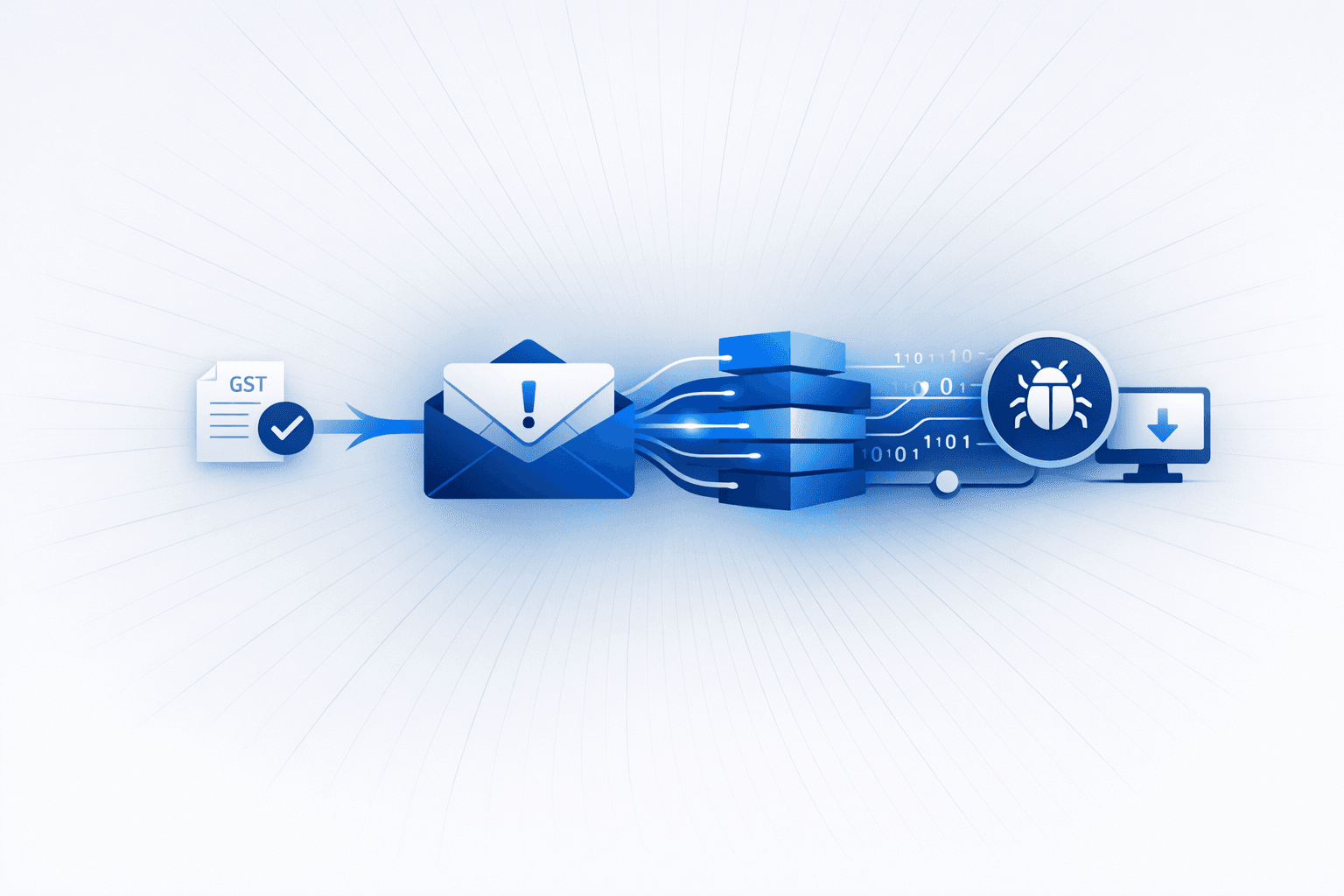
Attackers used spoofed Government of India GST refund emails to target Indian businesses and taxpayers, luring recipients into opening a malicious RAR attachment that launched a multi-stage .NET infection chain and ultimately deployed Remcos RAT. Seqrite reported that the initial executable unpacked successive in-memory loaders hidden in bitmap resources and DLL stages, including Windows Health Optimizer Plus.dll and perfgurd.dll, while using reflection, XOR-based decryption, and architecture-aware method dispatch to evade analysis and execute the final payload.
The campaign established persistence by copying the executable and launching a PowerShell script through a Run registry key, and it attempted privilege escalation via cmstp.exe. The final Remcos RAT payload enabled remote access, credential theft, surveillance, and delivery of additional malware. Infrastructure tied to the operation included dynamic DNS domains under hath.network and synology.me, with command-and-control activity resolving to 185.242.4.122 on hosting associated with M247 Europe SRL; researchers assessed the activity as likely financially motivated cybercrime but did not attribute it to a known threat actor.
Why it matters
Impact assessment
This campaign primarily affects Indian businesses, finance teams, and taxpayers that process GST or tax-related communications on Windows endpoints. The impact is high for compromised hosts because the final payload is Remcos RAT, which enables credential theft, keystroke logging, screenshot capture, remote command execution, and follow-on malware delivery.
The exposure appears targeted by geography and theme rather than indiscriminate global exploitation, but the lure abuses trusted government branding and could achieve broad success across Indian organizations. The reporting describes active phishing delivery and operational command-and-control infrastructure, indicating real-world exploitation in the wild.
Supporting facts
- Target population: Indian businesses and taxpayers.
- Delivery theme: spoofed Government of India GST/tax refund emails.
- Primary business risk: theft of credentials and sensitive financial or tax-related data.
- Operational risk: attacker-controlled remote access on infected Windows systems.
- Secondary risk: deployment of additional payloads, enabling broader compromise or ransomware staging.
- Scope: targeted campaign focused on India-linked recipients using taxation, refunds, compliance, and regulatory lures.
- Exploitation status: active phishing campaign observed and reported by Seqrite Labs; infrastructure and payload chain were documented.
- Attribution: likely financially motivated cybercrime or an initial access broker; no confirmed mapping to a public threat actor.