Ransomware Campaigns Use Email Bombing and Microsoft Teams Vishing for Initial Access
Social Engineering & Fraud · 4 sources · Updated 5mo ago · First seen May 25, 2026
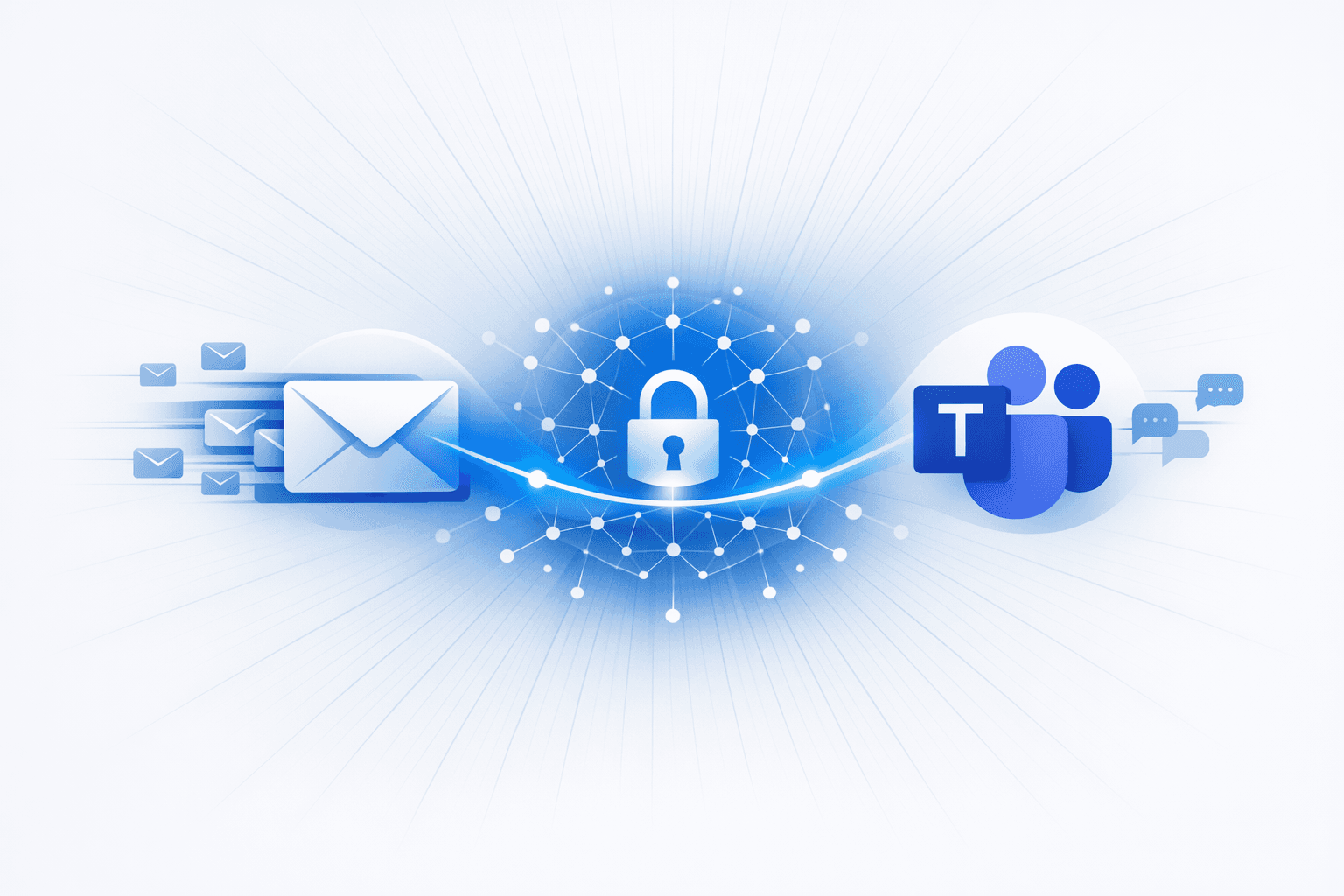
Sophos MDR reported two ransomware campaigns that combined email bombing with voice phishing over Microsoft Teams to gain initial access to targeted organizations. In the observed intrusions, attackers overwhelmed users with large volumes of emails and then contacted them through Teams while impersonating IT or help desk staff, using the confusion to persuade victims to grant remote access or follow attacker-directed steps. The activity highlights how adversaries are blending social engineering with trusted enterprise collaboration tools to bypass technical defenses.
The campaigns were tied to ransomware operations and show a repeatable intrusion pattern in which attackers exploit user fatigue, trust in internal support workflows, and the widespread use of Microsoft 365 services. The reported tradecraft underscores the need for organizations to harden Teams and remote-support processes, verify help desk interactions through separate channels, and train staff to treat unsolicited support calls during email floods as suspicious, especially when they involve requests for remote access, credential entry, or security tool changes.
Why it matters
Impact assessment
These campaigns target Microsoft 365-enabled organizations that allow external Microsoft Teams contact and use remote-support workflows such as Quick Assist, Teams screen control, AnyDesk, Supremo, or ScreenConnect. The highest-risk users are executives, managers, and directors, and the business impact includes credential theft, persistent footholds, lateral movement, data theft, and attempted ransomware deployment.
The exposure is broad because the tradecraft abuses default or common enterprise configurations rather than a software vulnerability. Exploitation in the wild is confirmed: Sophos reported more than 15 incidents in late 2024, tied activity to ransomware extortion clusters STAC5143 and STAC5777, and documented at least one attempted Black Basta deployment.
Affected entities and scope
- Products and services affected: Microsoft 365, Microsoft Teams external chat/calling, Windows Quick Assist, Teams screen control, AnyDesk, Supremo, ScreenConnect.
- User populations most targeted: executives, managers, directors; one source states 77% of observed Teams-based attacks in early 2026 targeted these roles, up from 59% two months earlier.
- Industries: not limited to a single sector; any enterprise using Microsoft 365 and permissive Teams federation is exposed.
- Threat actors/entities named: STAC5143, STAC5777, Storm-1811, Black Basta, UNC6692, possible FIN7/Sangria Tempest overlap.
Severity and business consequences
- Initial access can be achieved in minutes through social engineering rather than malware exploitation.
- Attackers use legitimate signed remote-support tools, reducing the chance of prevention by traditional AV controls.
- Post-access activity includes credential harvesting, persistence, network discovery, lateral movement, MFA disruption, attempted endpoint agent removal, data theft, and ransomware staging.
- Operational disruption risk is high because the intrusion chain is designed to enable enterprise-wide ransomware deployment.
Confirmed incidents
- Sophos observed more than 15 incidents using this pattern over a three-month period in late 2024.
- One STAC5143 victim received more than 3,000 spam emails in 45 minutes before a malicious Teams call.
- Sophos documented STAC5777 attempting to deploy Black Basta ransomware; endpoint protection blocked execution.
- Microsoft previously observed Storm-1811 using Teams and Quick Assist in 2024 for similar access operations.