Russian GRU Targets Western Logistics and Defense Supply Chains for Ukraine Intelligence
Threat Actor Intelligence · 4 sources · Updated 5mo ago · First seen Apr 17, 2026

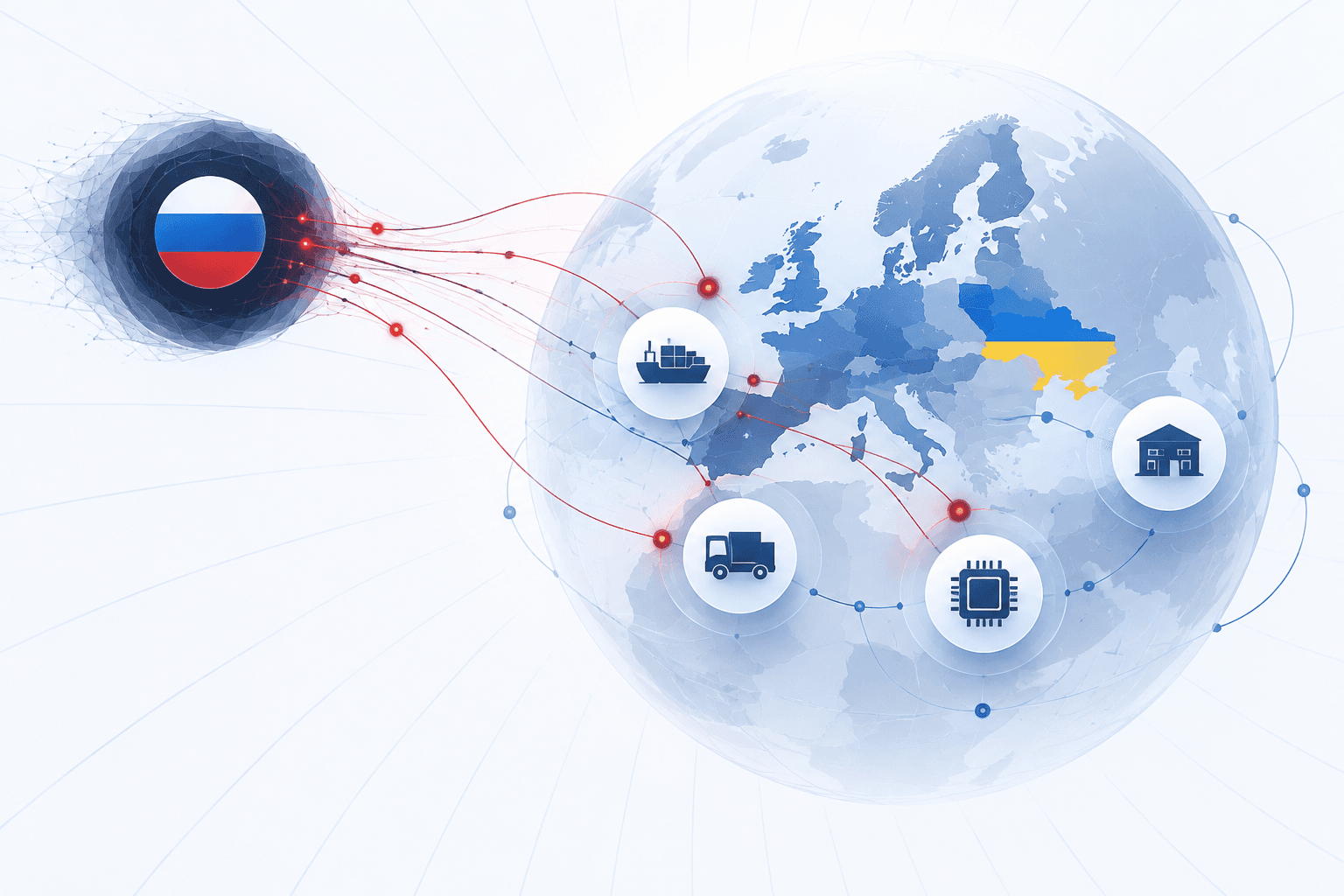
A joint government advisory says Russia’s GRU Unit 26165, also tracked as APT28 or Fancy Bear, has run a sustained cyberespionage campaign against Western logistics providers, technology companies, and defense supply-chain organizations supporting aid flows to Ukraine. The activity has affected entities in the United States, Germany, Poland, France, and Ukraine, with intrusions aimed at transportation networks, IT services, and military-related logistics. Officials said the operators also sought visibility into aid movements by compromising internet-connected IP cameras positioned near border crossings, rail hubs, and military facilities.
Authorities linked the campaign to long-running GRU tradecraft previously used against governments, militaries, defense contractors, and cloud and email environments including Microsoft Office 365 and on-premises Exchange. Reported access methods include password spraying, brute-force and credential-guessing attacks, spearphishing, exploitation of known vulnerabilities including CVE-2020-0688 and CVE-2020-17144, and the use of malware such as HEADLACE and MASEPIE, alongside web shells, Tor, VPNs, and living-off-the-land techniques to persist and exfiltrate data. Agencies warned the espionage effort remains active and urged organizations to enforce MFA, patch exposed systems, tighten access controls, monitor for lateral movement, and review supply-chain risk.
Why it matters
Impact assessment
This is an active state-sponsored cyberespionage campaign targeting logistics providers, technology companies, and defense supply-chain organizations that support aid flows to Ukraine. The most affected sectors are transportation across air, sea, and rail, IT service providers tied to logistics operations, and defense-related organizations in the United States, Germany, Poland, France, and Ukraine.
The primary impact is intelligence loss, exposure of shipment and operational data, and potential compromise of trusted partner relationships across supply chains. Scope is targeted rather than indiscriminate, but broad across multiple countries and interconnected organizations; government reporting states the activity has been ongoing since early 2022 and remains active in the wild.
Supporting facts
- Threat actor: Russian GRU Unit 26165
- Also tracked as: APT28, Fancy Bear, GTsSS 85th Main Special Service Center
- Campaign objective: cyberespionage focused on Ukraine-related logistics and defense support
- Targeted industries: logistics, transportation, IT services, defense supply chain, governments, militaries, defense contractors
- Targeted geographies: United States, Germany, Poland, France, Ukraine
- Targeted logistics modes: air, sea, rail
- Data sought: shipment routes, cargo contents, sender and recipient information, transport schedules, email communications
- Supply-chain risk: actors exploit trust relationships and pivot from one compromised organization to connected partners
- Physical intelligence angle: compromise of internet-connected IP cameras near border crossings, rail stations, and military facilities to monitor aid movement
- Known exploitation status: government advisory says the campaign is ongoing and active
Technical details
The campaign uses a mix of credential attacks, spearphishing, exploitation of known vulnerabilities, malware, web shells, and legitimate administrative tooling. Reported access paths include password spraying, brute-force, credential harvesting through phishing and Outlook abuse, exploitation of Exchange, Roundcube, and WinRAR vulnerabilities, and abuse of weakly secured IP cameras and RTSP services.
The actor maintains persistence with valid accounts, manipulated email permissions, malware, and web shells, then conducts reconnaissance, lateral movement, and exfiltration over concealed channels such as Tor and VPNs. The tradecraft aligns to established APT28 operations against Microsoft 365, on-premises Exchange, and related cloud/email environments.
Structured facts
CVEs
- CVE-2020-0688: Microsoft Exchange; used for persistence and privilege escalation
- CVE-2020-17144: Microsoft Exchange; used for persistence and privilege escalation
- CVE-2023-23397: Microsoft Outlook; weaponized to harvest credentials
- CVE-2023-38831: WinRAR; weaponized for remote code execution
- Roundcube vulnerabilities: referenced as exploited for email server access; specific CVE not provided in the source content
Attack vectors and exploit mechanics
- Password spraying
- Brute-force and credential guessing
- Spearphishing in target-native language
- Impersonation of government entities or trusted services
- Fake login pages hosted on compromised devices or free web platforms
- Multi-stage redirect infrastructure filtering victims by location and device characteristics
- Exploitation of exposed Microsoft Exchange and Roundcube environments
- Abuse of weak credentials on internet-connected IP cameras
- Access to unsecured Real Time Streaming Protocol servers for live video monitoring
- Use of compromised trust relationships to pivot across partner organizations
Malware, tools, and infrastructure
- Malware: HEADLACE
- Malware: MASEPIE
- Web shell: reGeorg variant
- Concealment infrastructure: Tor, VPNs
- Initial password attacks reportedly conducted from a cloud-hosted Kubernetes cluster
- Lateral movement via Remote Desktop Protocol and open-source frameworks
- Living-off-the-land techniques used to blend with normal administration
Persistence, post-compromise activity, and objectives
- Persistence via valid cloud service accounts
- Persistence via web shells
- Manipulation of email permissions for long-term mailbox access
- Reconnaissance focused on transport operations staff and cybersecurity teams
- Lateral movement to obtain additional credentials and escalate privileges
- Exfiltration targets: emails, local files, network shared drive files, repository data, logistics records
Affected systems and configurations
- Microsoft Office 365
- On-premises Microsoft Exchange servers
- Microsoft Outlook clients
- Roundcube email servers
- WinRAR on user endpoints
- Internet-connected IP cameras near border crossings, rail hubs/stations, and military facilities
- RTSP services exposed without adequate authentication controls
MITRE ATT&CK techniques
- T1110: Brute Force
- T1110.003: Password Spraying
- T1566: Phishing
- T1078: Valid Accounts
- T1505.003: Web Shell
- T1021.001: Remote Services: RDP
- T1046: Network Service Discovery
- T1087: Account Discovery
- T1069: Permission Groups Discovery
- T1556 / mailbox permission abuse context: manipulation of email permissions for persistence and collection
- T1041: Exfiltration Over C2 Channel
- T1090: Proxy use, including Tor/VPN concealment
Recommended response
Organizations in logistics, transportation, defense supply chains, and supporting IT services should treat this as an immediate exposure and detection priority. Security teams should rapidly validate exposure to the cited products and access paths, enforce MFA everywhere possible, patch vulnerable Exchange/Outlook/WinRAR systems, and review internet-exposed email and camera infrastructure.
Detection and hunting should focus on password spraying, anomalous mailbox permission changes, suspicious RDP activity, web shell artifacts, unusual access to logistics data, and outbound traffic through Tor/VPN patterns from systems that do not normally use them. Longer term, reduce partner trust exposure, harden remote access, and segment operational logistics systems from general IT and internet-facing services.
Prioritized actions
Patch and mitigate now
- Patch Microsoft Exchange for CVE-2020-0688 and CVE-2020-17144 if any legacy exposure remains
- Patch Microsoft Outlook against CVE-2023-23397
- Patch or remove vulnerable WinRAR installations affected by CVE-2023-38831
- Review and patch Roundcube deployments; verify no unsupported versions remain exposed
- Disable or restrict direct internet exposure for Exchange, Roundcube, RTSP, and camera management interfaces
- Enforce MFA for Microsoft 365, VPN, email admin access, and all remote administration paths
- Implement account lockout and rate-limiting controls to reduce password spraying success
- Reset passwords and revoke sessions for accounts showing suspicious login patterns
Investigate exposure
- Identify all organizations, suppliers, and service providers with Ukraine-related logistics or defense support roles
- Inventory internet-facing Microsoft 365, Exchange, Roundcube, VPN, RDP, and IP camera assets
- Audit camera deployments near sensitive facilities; disable default credentials and restrict RTSP access to trusted networks only
- Review trust relationships and delegated access between logistics providers, IT service providers, and defense partners
- Check for unauthorized mailbox forwarding rules, delegate permissions, and OAuth or service-account abuse
Detect and hunt
- Hunt for password spraying against O365, VPN, Exchange, and webmail from distributed infrastructure or cloud-hosted sources
- Review authentication logs for repeated failures followed by successful logins, especially against privileged, transport-operations, and security-team accounts
- Hunt for anomalous RDP sessions, especially cross-segment or after suspicious email compromise events
- Search Exchange and web servers for web shell indicators, including reGeorg-like tunneling behavior and unusual ASPX/PHP artifacts
- Monitor for Tor/VPN egress from servers that do not normally initiate such traffic
- Review mailbox audit logs for permission changes, forwarding rule creation, and unusual access by service accounts
- Hunt endpoints for HEADLACE and MASEPIE artifacts if vendor signatures are available from government or partner reporting
- Monitor access to shipment databases, schedules, cargo records, and shared drives for unusual bulk collection
Longer-term hardening
- Apply zero-trust access principles across partner-connected environments
- Segment logistics operations, email infrastructure, and administrative networks
- Minimize standing privileged access and require just-in-time administration
- Require phishing-resistant MFA for high-value users
- Centralize logging for identity, email, endpoint, VPN, and camera infrastructure
- Conduct tabletop exercises for supply-chain compromise and espionage-driven data theft scenarios