AI-Enabled Phishing and Malware Delivery Trends
Emerging Technology Risk · 3 sources · Updated 5mo ago · First seen Mar 13, 2026
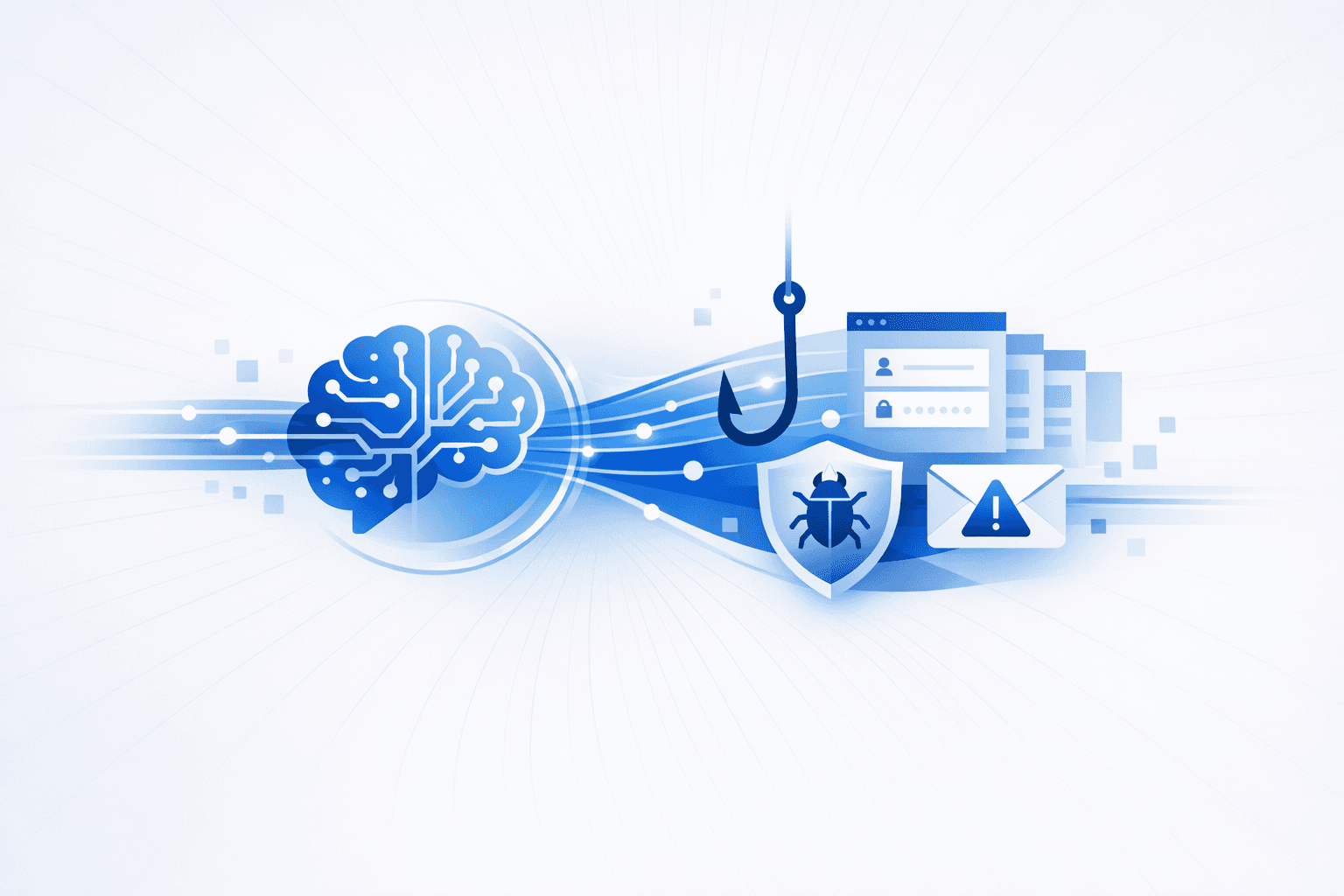
Security researchers and industry commentary describe a broader rise in AI-assisted cybercrime, with attackers using generative AI to improve phishing lures, clone legitimate login pages, and scale social-engineering operations. Reporting highlights that phishing remains a leading initial access vector, while phishing-as-a-service and AI-generated content are making campaigns more convincing and easier to produce at volume. IBM similarly warns that AI is acting as a force multiplier for attackers, lowering the cost of malware development and enabling more disposable, harder-to-attribute malicious tooling.
Kaspersky documented active campaigns in which threat actors used Google Search ads and fake documentation pages to distribute the AMOS infostealer on macOS and Amatera on Windows, disguising the malware as popular AI tools including OpenClaw, Claude Code, and Doubao. By contrast, ZDNET's article focuses on the business and product-security shortcomings of Moltbook and OpenClaw acquisitions rather than a specific threat campaign, making it adjacent but not part of the same security event. The material overall is not fluff because it includes substantive threat reporting and technical security analysis, even though the references describe related developments rather than one discrete incident.
Why it matters
Impact assessment
AI-assisted phishing and malware delivery is increasing the scale and credibility of social-engineering attacks across email, web, search, and voice channels. The most immediate operational risk falls on enterprises whose users search for AI tools or interact with phishing lures, especially developers, executives, privileged users, and employees using unapproved “shadow AI” services.
The impact ranges from credential theft and account compromise to theft of browser data, crypto-wallet data, source code, secrets, and confidential corporate files. Exposure is broad rather than sector-specific because the lures impersonate widely used AI brands and abuse common platforms such as Google Search ads and Squarespace; at least one active campaign was observed in the wild in early March with ad placements seen in Romania and Brazil.
Supporting facts
- Phishing remains a leading initial access vector; 85% of businesses that suffered a breach in the year to August 2024 reported phishing activity.
- AI and phishing-as-a-service are lowering the cost and effort required to generate convincing phishing lures, cloned login pages, and impersonation content at scale.
- Reported targets include users searching for AI tools such as Claude Code, OpenClaw, and Doubao.
- Kaspersky documented active malware delivery campaigns using Google Search ads and fake documentation pages.
- macOS users were targeted with AMOS infostealer/spyware; Windows users were targeted with Amatera infostealer.
- The campaign creates organizational risk beyond individual users because employees may expose enterprise credentials, source code, secrets, and internal files while attempting to install unapproved AI tools.
- IBM assesses AI is currently a force multiplier for attackers, increasing speed, volume, and disposability of malicious tooling rather than requiring major advances in sophistication.
- Known exploitation in the wild: yes, active search-ad-driven malware campaigns were reported by Kaspersky.