Social-engineering malware delivery via trusted installation and download paths
Social Engineering & Fraud · 2 sources · Updated 5mo ago · First seen Mar 7, 2026
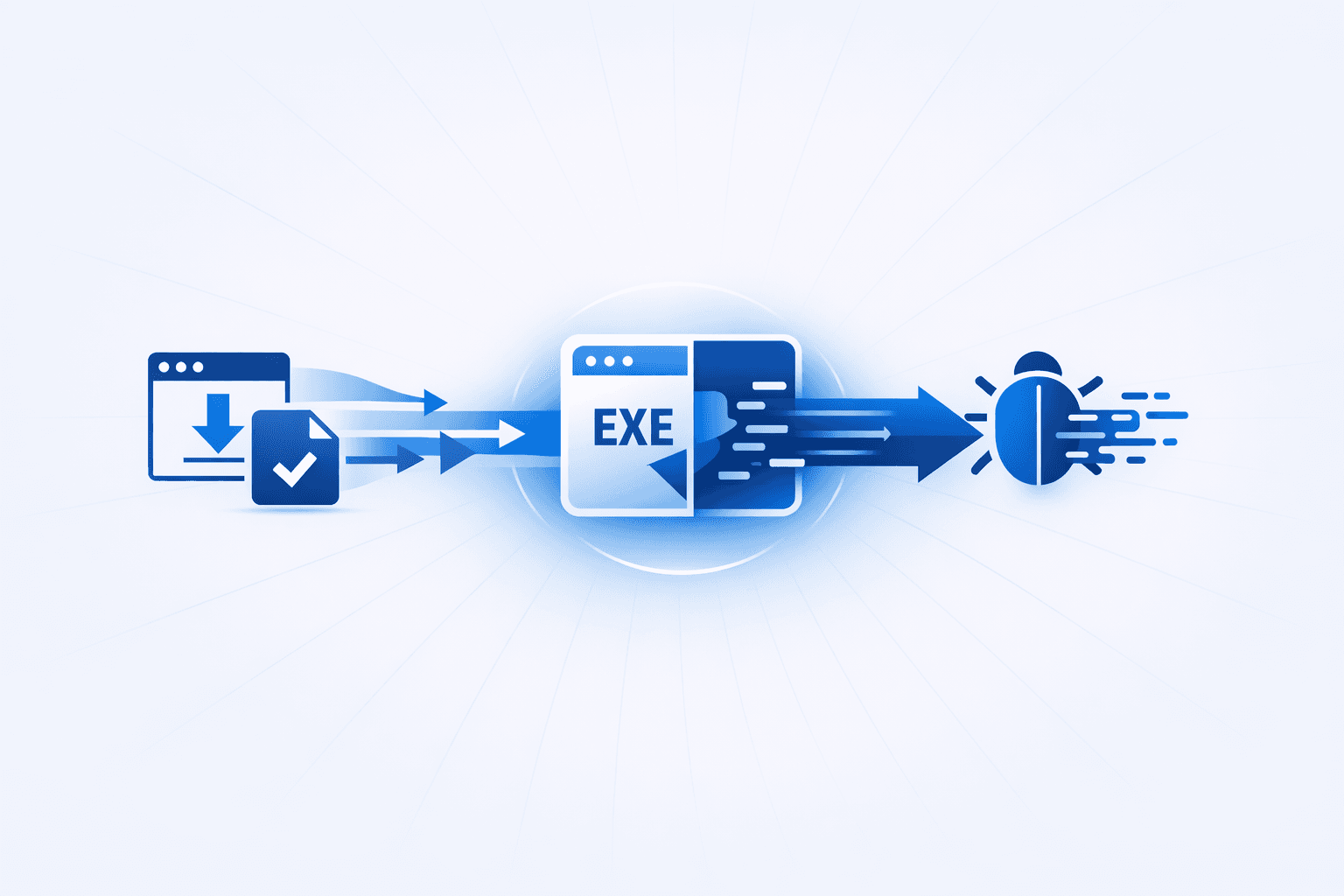
Security researchers reported two active/feasible malware-delivery patterns that abuse user trust in “normal” software acquisition flows rather than exploiting a specific browser or OS vulnerability. LayerX demonstrated a proof-of-concept Chrome add-on (Totally Innocent Extension) that can silently modify executables as they are downloaded—including from legitimate vendor sites—by appending attacker-controlled code without breaking the original application or requiring additional extension permissions, enabling follow-on outcomes such as persistence, lateral movement, and data theft. The researchers said the technique highlights gaps in browser extension security controls; Google and Mozilla did not acknowledge it as a product issue, with Google indicating social-engineering-driven intrusions fall outside its browser threat model.
Separately, Push Security documented InstallFix, a new variant of the ClickFix social-engineering technique, where attackers clone installation pages for popular CLI tools and replace the install steps with malicious “copy/paste” commands (e.g., curl-to-shell patterns) that fetch payloads from attacker infrastructure. A noted example used a cloned Claude Code (Anthropic) CLI install page that preserved legitimate branding and redirected most links back to the real site, while only the macOS/Windows install instructions delivered malware; the pages were promoted via Google Ads malvertising for searches like “Claude Code install,” increasing the likelihood of developer and non-developer victims executing the malicious commands.
Why it matters
Impact assessment
These delivery patterns affect organizations that rely on browser extensions, web-based software distribution, and command-line tooling, with elevated risk for developers, IT administrators, and power users who routinely install software from vendor sites or copy terminal install commands. The likely impact includes credential theft, cryptocurrency wallet theft, persistence, lateral movement, and full endpoint compromise, with downstream operational and reputational damage if compromised developer or admin workstations are used to access internal systems.
The scope is broader than a single product vulnerability because both patterns abuse trusted user workflows rather than a specific CVE-bound flaw. Active malicious use is reported for InstallFix via Google Ads malvertising and cloned install pages delivering Amatera Stealer; the browser-extension executable-tampering case is described as a proof of concept but demonstrates a feasible path to widespread abuse if weaponized.
Affected populations
- Developers and engineers installing CLI tools such as Claude Code
- IT administrators and technical users who use copy/paste install commands
- Enterprises permitting broad browser extension installation
- Users downloading software from legitimate vendor sites while running untrusted extensions
Severity and business risk
- Endpoint compromise can lead to credential theft, browser session theft, and wallet theft
- Compromised developer/admin endpoints can enable privilege escalation into enterprise environments
- Persistence and lateral movement raise the risk of broader internal compromise
- Malvertising-driven exposure increases victim volume beyond highly targeted operations
Known exploitation status
- InstallFix is reported as active in the wild
- Google Ads sponsored results were observed promoting malicious cloned pages
- Payload delivery of Amatera Stealer was documented
- The Chrome extension executable-modification technique is a demonstrated proof of concept, not a confirmed in-the-wild campaign in this reporting