Mallory
← Back to News
search-ad-manipulationvendor-distribution-compromisepersistence-methodcommand-and-control-method

Trojanized 7-Zip Installers from 7zip[.]com Used to Deploy Proxyware on Home PCs

Social Engineering & Fraud · 4 sources · Updated 5mo ago · First seen Feb 10, 2026
Trojanized 7-Zip Installers from 7zip[.]com Used to Deploy Proxyware on Home PCs

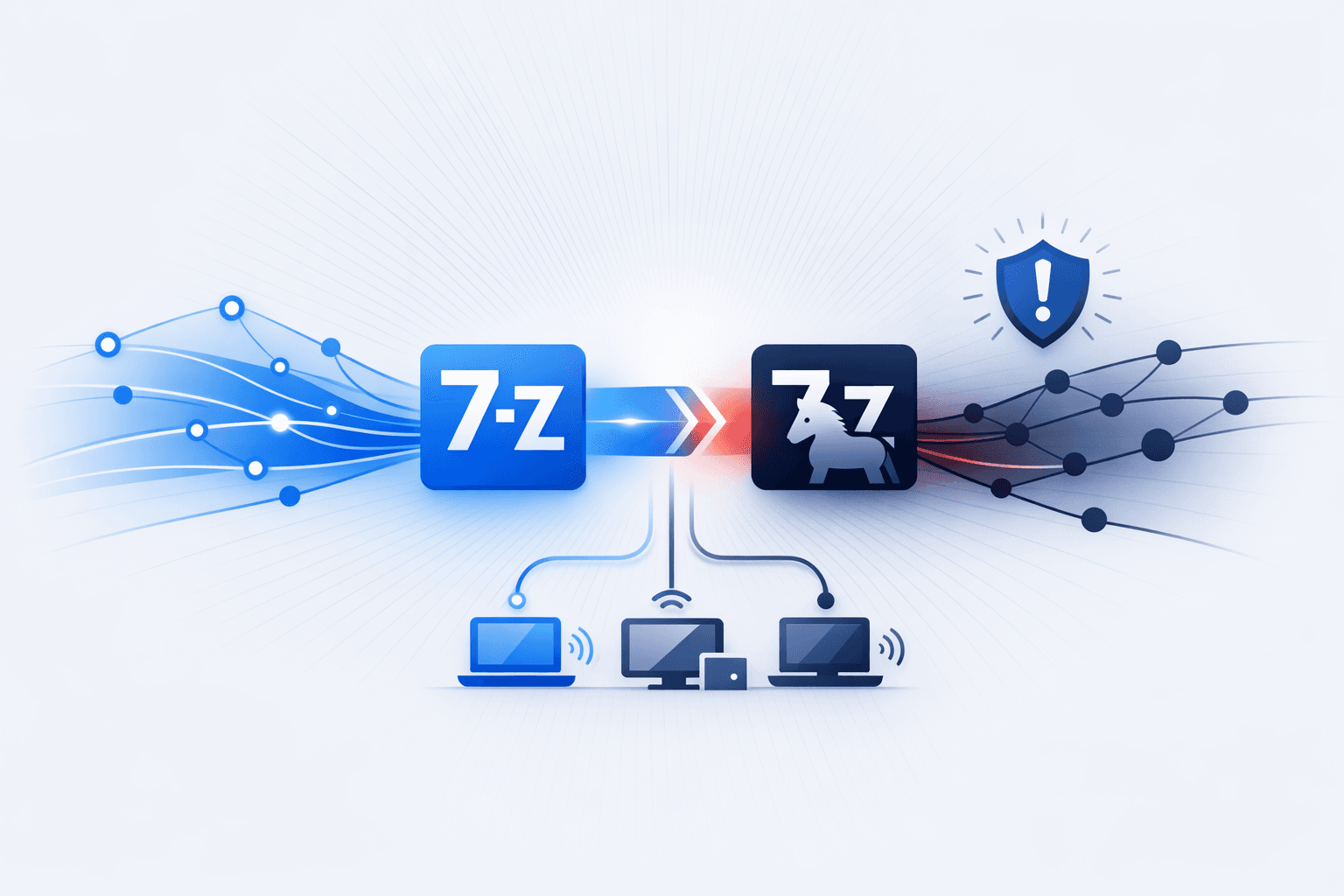
Malwarebytes reported a malware distribution campaign in which attackers use a lookalike domain, 7zip[.]com, to impersonate the legitimate 7-Zip download site (7-zip.org) and deliver a trojanized installer that still appears to function as expected. The activity surfaced after a Reddit user described being directed to the fake site via a YouTube tutorial/comment, installing the software on multiple systems, and later receiving a generic Microsoft Defender trojan alert; Malwarebytes’ follow-on analysis concluded that systems running installers from 7zip[.]com should be treated as compromised.

Analysis of the counterfeit installer found it drops additional hidden components (including Uphero.exe, hero.exe, and hero.dll) into C:\Windows\SysWOW64\hero\ and establishes persistence by registering executables as Windows services that start with SYSTEM privileges. The primary payload was assessed as proxyware, turning infected home computers into residential proxy nodes that allow third parties to route traffic through victims’ IP addresses; the malware also includes anti-analysis checks to reduce detection. The installer was observed carrying an Authenticode signature issued to Jozeal Network Technology Co., Limited (reported as revoked), and defenders were advised to watch for unauthorized services and related network activity, and to block known C2/proxy infrastructure where possible.

Why it matters

Impact assessment

This campaign primarily affects Windows users who downloaded 7-Zip from 7zip[.]com instead of the legitimate 7-zip.org site, with the highest exposure among home users and small organizations that rely on ad hoc software downloads. Impact is moderate to high because infected systems are converted into residential proxy nodes, enabling abuse of victim IP addresses for fraud, scraping, ad abuse, and anonymity laundering while also granting attackers persistent SYSTEM-level execution.

The exposure appears broad rather than tightly targeted because the lure used a long-standing lookalike domain, YouTube tutorial references, and a fully functional trojanized installer for a widely used utility. There is evidence of real-world compromise and execution on victim systems, and Malwarebytes explicitly advised treating any host that ran installers from 7zip[.]com as compromised.

Supporting facts

  • Affected product: 7-Zip impersonation via 7zip[.]com; legitimate site is 7-zip.org.
  • Affected platform: Windows systems executing the trojanized installer.
  • User populations at risk: home users, PC builders, and any users following third-party download links or tutorials.
  • Operational impact: unauthorized Windows services, firewall rule changes, persistent malware execution at boot, and covert network proxying.
  • Security impact: victim IP reputation damage, possible downstream abuse attribution to the victim, reduced visibility due to HTTPS and DNS-over-HTTPS, and host profiling/exfiltration.
  • Scope: opportunistic mass-distribution through a counterfeit software site rather than a narrow sector-specific intrusion.
  • Known exploitation: yes; public victim reporting, Malwarebytes analysis, and AV detections confirm in-the-wild activity.
  • Related entities and brands referenced in the broader operation: Hola/HolaVPN, TikTok, WhatsApp, Wire.
  • Notable entity: code-signing certificate issued to Jozeal Network Technology Co., Limited, reported revoked.

Is your org in this campaign?Get the infrastructure and lures behind it.
Hunt this campaign
Event timeline

How this story unfolded

Events from the most recent confirmed update back to the earliest known activity.

5 events · Feb 10, 2026 – Feb 11, 2026
  1. Feb 11, 202610mo ago

    Public disclosure prompts defensive blocking and updated AV detections

    After the campaign was publicly disclosed, antivirus vendors updated detections for the malware and the malicious 7zip[.]com domain was added to ad-blocking rulesets, including ones used by uBlock Origin. These actions were intended to reduce further user exposure to the fake download site.

  2. Feb 10, 202610mo ago

    Researchers connect 7-Zip lure to broader software impersonation campaign

    Analysis tied the 7-Zip impersonation to a wider operation using trojanized installers themed as other popular software and services, including HolaVPN, TikTok, WhatsApp, and Wire. The campaign used anti-analysis checks, Cloudflare-fronted C2 traffic, and non-standard proxy ports to reduce detection and support third-party traffic tunneling.

  3. Feb 10, 202610mo ago

    Malwarebytes analyzes installer and links it to residential proxy malware

    Malwarebytes found the fake installer dropped components including Uphero.exe, hero.exe, and hero.dll, created SYSTEM-level Windows services, changed firewall rules, profiled hosts, and contacted "smshero"-themed infrastructure. The company assessed the malware's main purpose as converting infected Windows systems into residential proxy nodes and warned systems that ran the installer should be treated as compromised.

  4. Feb 10, 202610mo ago

    Trojanized 7-Zip installer infects users via YouTube-linked fake download page

    The campaign came to light after a Reddit user reported downloading 7-Zip from 7zip[.]com after following a YouTube PC-building tutorial link or comment. The user later received a Microsoft Defender trojan alert, indicating compromise.

  5. Feb 10, 202610mo ago

    Attackers gain control of 7zip[.]com and weaponize it as a fake 7-Zip site

    Adversaries took control of the long-registered domain 7zip[.]com and used it to impersonate the legitimate 7-Zip project. The site hosted trojanized installers that appeared to provide normal 7-Zip functionality while delivering malware.

Linked entities

Related entities

Vulnerabilities, threat actors, malware, products, organizations, breaches, and observables Mallory has linked to this story. Indicator values are masked here and available in full in the app.

Open in app →

Malware

2 linked

Observables

6 linked

Indicator values are masked on this page. See the values in Mallory Domains, IPs, hashes, and URLs are exportable to your SIEM.

Do you run this?Get the infrastructure, lures, and IOCs behind this campaign, ready to push into your email and identity stack.
Hunt This Campaign
Mallory platform

See the full picture, correlated to your attack surface.

This page covers what’s public. Mallory adds the parts that aren’t: which of your assets are affected, which threat actors are using it right now, and what to deploy next.

Exposure mappingMap indicators from this story to your assets and identify affected systems in minutes.
Threat actor evidenceEvery observed campaign, victim, and pivot linked to actors named in this story.
Associated malwareMalware, exploits, and IOCs connected to the activity described here.
Detection signaturesYARA, Sigma, and Snort rules deployed to your SIEM as soon as they’re published.
Scheduled alertsGet matching new stories delivered to your team as they break, not the next morning.
AI threadsAsk questions about this story and take action on the answers.