Threat Actors Abuse Trusted Cloud and Ad Platforms for Multi-Stage Phishing and Scam Delivery
Social Engineering & Fraud · 3 sources · Updated 5mo ago · First seen Feb 5, 2026
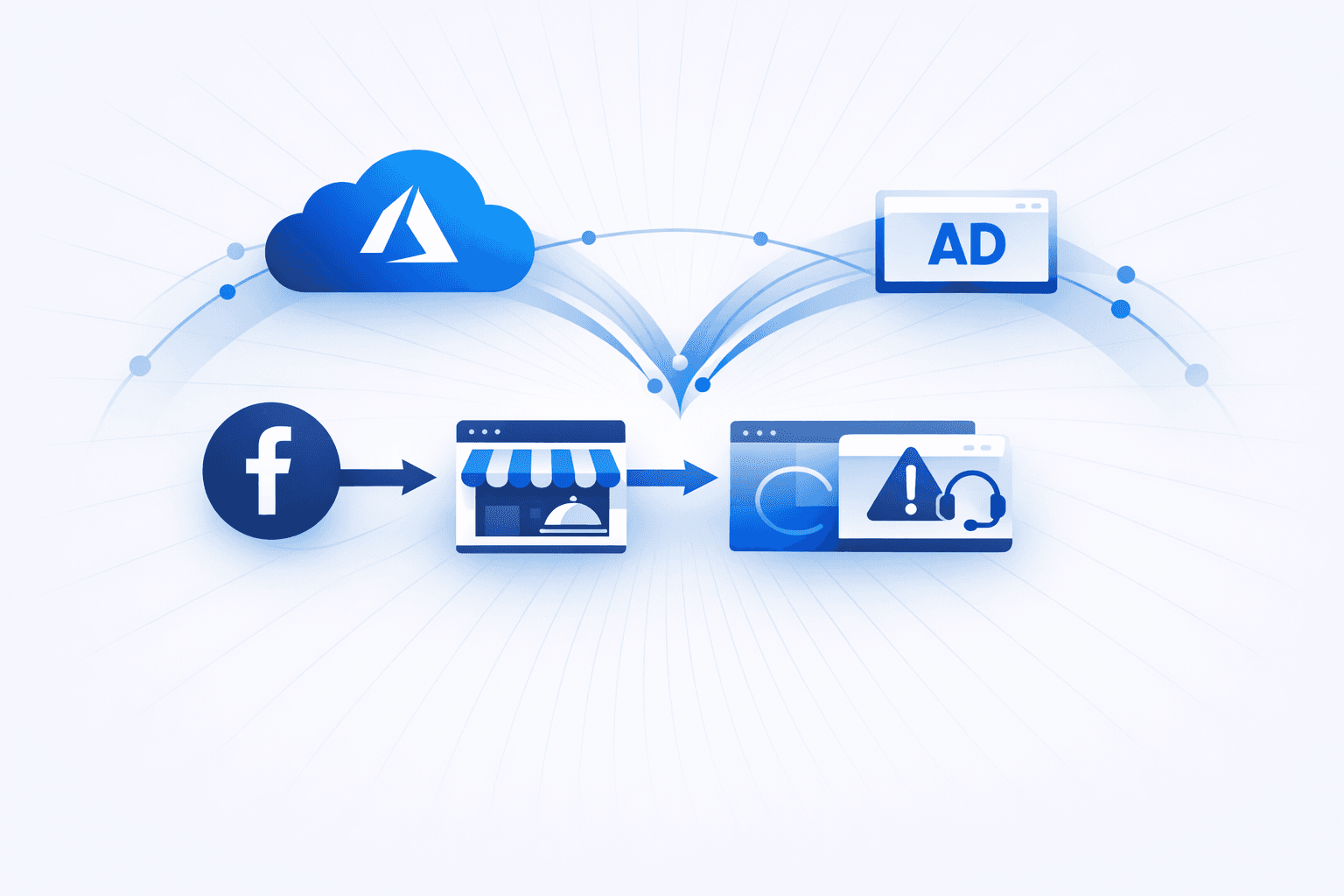
Threat actors are increasingly using trusted platforms—including cloud hosting and major ad networks—to deliver multi-stage phishing and scam campaigns that evade traditional URL and domain reputation controls. Recent activity includes a three-step malvertising chain delivered via Facebook paid ads that redirects victims through a decoy site (e.g., a fake Italian restaurant page) before landing on a tech support scam (TSS) kit hosted on Microsoft Azure infrastructure (including web.core.windows.net). Researchers reported rapid infrastructure churn, with 100+ domains rotated in seven days, and targeting focused on U.S. users with activity concentrated on weekdays.
Parallel enterprise-focused campaigns are hosting phishing infrastructure on Microsoft Azure Blob Storage, Google Firebase, and AWS CloudFront, using redirect chains, CAPTCHA gates, and QR codes to bypass automated analysis and email defenses. Analysis highlighted the use of Adversary-in-the-Middle (AiTM) phishing-as-a-service kits—Tycoon2FA, Sneaky2FA, and EvilProxy—to steal credentials and session tokens even when MFA is enabled. Separately, researchers documented a “clean email” approach to steal Dropbox credentials: benign-looking procurement-themed emails deliver PDF attachments that hide clickable elements (e.g., via AcroForms and FlateDecode), which then route victims to a second-stage file hosted on Vercel Blob and ultimately to a fake Dropbox login page that captures credentials and collects victim telemetry (IP address, location, and device details).
Why it matters
Impact assessment
Threat actors are abusing trusted cloud platforms and major ad networks to deliver phishing, AiTM credential theft, and tech support scams that bypass reputation-based controls. Affected populations include U.S. consumers exposed through Facebook ads and enterprise users targeted through email and cloud-hosted phishing pages on Microsoft Azure, Google Firebase, AWS CloudFront, and Vercel Blob.
The impact ranges from credential theft and session hijacking to direct financial fraud through tech support scams. Exposure is broad because the campaigns rely on legitimate hosting and advertising ecosystems, but some activity is targeted, including U.S.-focused malvertising and procurement-themed phishing aimed at business users; the story describes active campaigns observed in the wild.
Supporting details
- Affected platforms and services:
- Facebook paid ads
- Microsoft Azure, including Azure Blob Storage and
web.core.windows.net - Google Firebase
- AWS CloudFront
- Vercel Blob
- Dropbox brand impersonation
- Affected user populations:
- U.S. users targeted by malvertising
- Enterprise users receiving procurement-themed phishing emails
- Organizations relying on MFA but vulnerable to session-token theft via AiTM kits
- Business impact:
- Credential compromise
- Session token theft and MFA bypass
- Fraud losses from fake support hotlines
- Reputational and operational risk from successful account takeover
- Scope and activity:
- 100+ domains rotated in seven days in one campaign
- Activity concentrated on weekdays
- Multiple concurrent campaigns using trusted infrastructure indicate a repeatable and scalable tradecraft pattern