NANOREMOTE Malware Uses Google Drive API for Command and Control
Malware Intelligence · 3 sources · Updated 5mo ago · First seen Dec 12, 2025
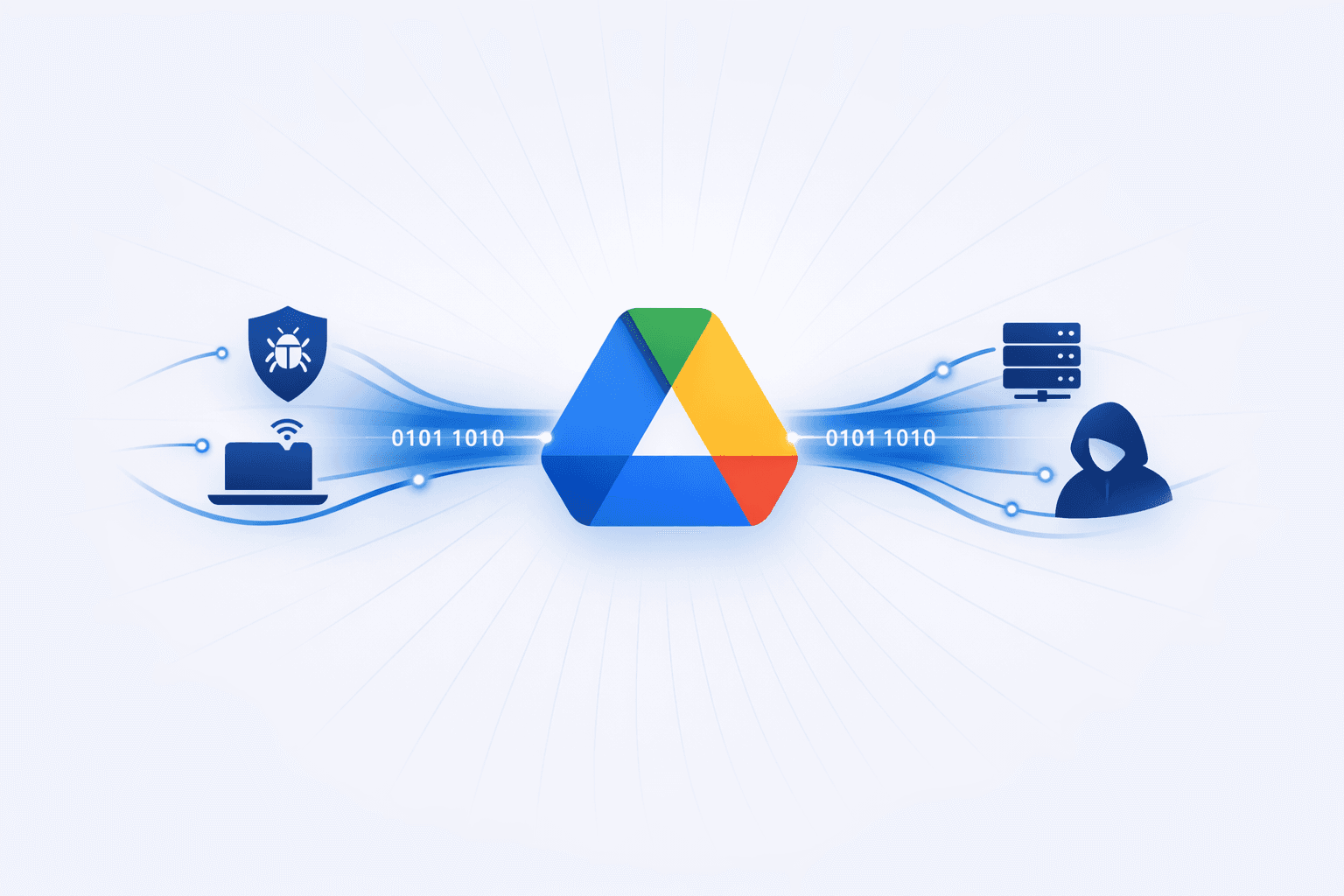
Researchers at Elastic Security Labs have identified a new Windows backdoor named NANOREMOTE, which leverages the Google Drive API for command-and-control (C2) operations. The malware shares code similarities with the FINALDRAFT (Squidoor) implant, previously linked to the threat group REF7707, and is capable of data exfiltration and payload staging through Google Drive, making detection challenging. The attack chain involves a loader, WMLOADER, which masquerades as a Bitdefender executable and decrypts shellcode to load NANOREMOTE into memory, with similar loaders mimicking other security products.
NANOREMOTE is a 64-bit C++ backdoor that supports 22 command handlers, enabling attackers to execute commands, move files, and gather system information on compromised Windows systems. The malware communicates with a hard-coded, non-routable IP address over HTTP, using encrypted and compressed JSON payloads. The threat actor REF7707, suspected to be a Chinese group, has previously targeted sectors such as government, defense, telecommunications, education, and aviation, with recent activity including a prolonged intrusion at a Russian IT service provider. The initial access vector for NANOREMOTE remains unknown.
Why it matters
Impact assessment
NANOREMOTE is a targeted Windows backdoor tied through code overlap and tooling to REF7707/FINALDRAFT activity, affecting organizations in government, defense, telecommunications, education, aviation, and potentially IT service providers. The malware enables espionage outcomes including host reconnaissance, command execution, payload staging, and data exfiltration through Google Drive, creating material confidentiality risk and potential operational disruption on compromised endpoints.
The exposure appears targeted rather than indiscriminate, but the tradecraft is high-value because it abuses legitimate cloud infrastructure to blend with normal enterprise traffic. There are no public reports in the provided sources confirming broad in-the-wild exploitation of NANOREMOTE itself, but the linked REF7707 cluster has documented prior intrusions, including a reported five-month compromise of a Russian IT service provider.
Supporting facts
- Malware family: NANOREMOTE
- Platform: Windows
- Threat cluster linkage: REF7707, also referenced as CL-STA-0049, Earth Alux, Jewelbug
- Related implant: FINALDRAFT, also known as Squidoor
- Targeted sectors previously associated with REF7707: government, defense, telecommunications, education, aviation
- Geographic targeting previously reported: Southeast Asia and South America
- Known incident linked to the cluster: prolonged intrusion at a Russian IT service provider reported in October 2025
- Primary risks: data theft, covert persistence, remote execution, stealthy exfiltration via cloud API traffic