Malicious npm Packages Distribute PyInstaller Infostealer via Typosquatting and Fake CAPTCHA
Supply Chain Risk · 4 sources · Updated 5mo ago · First seen Oct 30, 2025

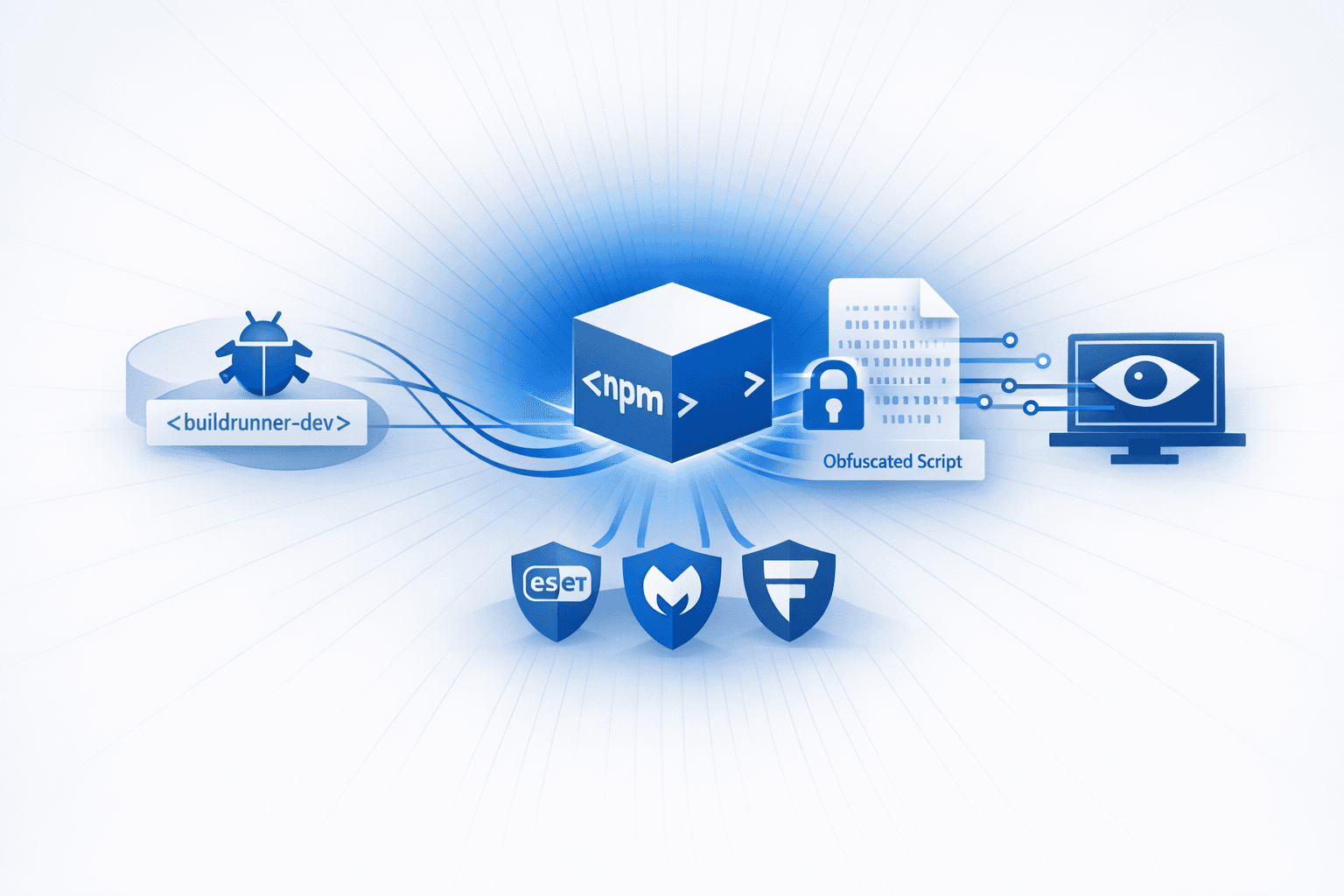
Ten malicious packages were discovered on the npm registry, masquerading as popular JavaScript libraries through typosquatting techniques. These packages, which included names like typescriptjs, deezcord.js, and react-router-dom.js, were designed to trick developers into downloading them by mimicking legitimate projects. Upon installation, a postinstall script executed a heavily obfuscated loader that displayed a fake CAPTCHA in the terminal to appear legitimate, then downloaded and ran a 24MB infostealer built with PyInstaller. This malware targeted Windows, Linux, and macOS systems, stealing credentials from system keyrings, browsers, and authentication services. The campaign went undetected for an extended period, resulting in nearly 10,000 downloads before being reported to npm, with the malicious packages still available at the time of reporting.
The infostealer's deployment leveraged multiple layers of obfuscation, including self-decoding wrappers, XOR decryption, and control-flow obfuscation, to evade static analysis and detection. The attack highlights the ongoing risks posed by supply chain threats in open-source ecosystems, particularly through typosquatting and social engineering tactics. Security researchers emphasized the importance of vigilance when installing npm packages and recommended enhanced scrutiny of package names and sources to mitigate the risk of inadvertently installing malicious software.
Why it matters
Impact assessment
This is a software supply-chain compromise affecting developers and build environments that installed ten typosquatted npm packages impersonating widely used JavaScript libraries. Impact is high because the payload is a cross-platform infostealer for Windows, Linux, and macOS that can steal credentials, session cookies, SSH keys, cloud configuration files, API tokens, and secrets from OS keyrings, enabling follow-on access to source code, cloud consoles, email, VPNs, and internal systems.
Exposure appears broad rather than narrowly targeted: the packages were published to the public npm registry on 2025-07-04 and accumulated nearly 10,000 downloads over roughly four months. There is confirmed malicious execution in the wild via npm postinstall hooks, and the packages reportedly remained available at the time of reporting.
Affected populations
- Developers, DevOps engineers, CI/CD runners, and build servers using npm
- Organizations with JavaScript/Node.js development workflows
- Enterprises whose developer endpoints store browser credentials, SSH keys, cloud tokens, or VPN credentials
Severity and business risk
- Credential theft from browsers, OS keyrings, SSH key locations, and token stores
- Potential compromise of code repositories, cloud environments, corporate email, file storage, VPN access, and production databases
- Risk of downstream operational disruption, unauthorized code changes, cloud abuse, data theft, and reputational damage
Scope and exploitation status
- Public npm ecosystem exposure through typosquatted packages
- More than 9,900 to nearly 10,000 downloads reported across sources
- Confirmed in-the-wild malicious package distribution and automated execution on install
Key entities and affected package names
- Researcher/entity: Socket, including researcher Kush Pandya
- Registry: npm
- Malicious packages:
deezcord.js,dezcord.js,dizcordjs,etherdjs,ethesjs,ethetsjs,nodemonjs,react-router-dom.js,typescriptjs,zustand.js - Impersonated projects: TypeScript, discord.js, ethers.js, nodemon, react-router-dom, zustand