Mallory
← Back to News
package-repository-poisoningdependency-confusion-typosquatpayload-delivery-evasionremote-access-implant

Malicious npm Packages Using Typosquatting and Payload Obfuscation

Supply Chain Risk · 3 sources · Updated 5mo ago · First seen Feb 22, 2026
Malicious npm Packages Using Typosquatting and Payload Obfuscation

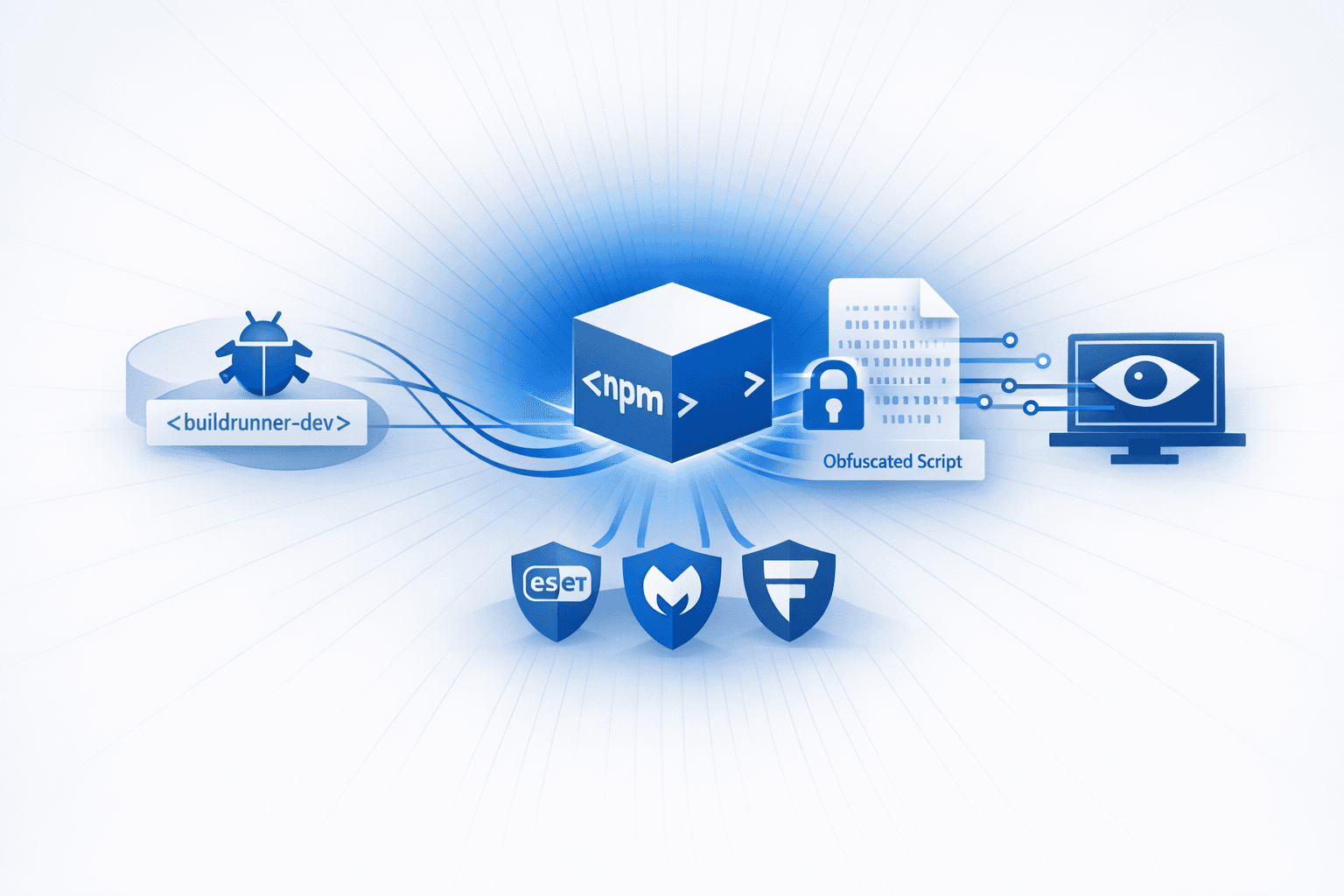
Threat researchers reported an npm supply-chain attack in which a typosquatted package (buildrunner-dev) delivered Pulsar RAT via a multi-stage Windows infection chain. The package executed a script that fetched a large, heavily obfuscated batch file (packageloader.bat) containing mostly “noise” to evade static detection, performed security-product checks (including ESET, Malwarebytes, and F-Secure), established persistence by copying itself as protect.bat into a hidden folder, and attempted privilege escalation/UAC bypass using fodhelper.exe.

Separate supply-chain reporting highlighted how package-name deception is evolving beyond human typos into “slopsquatting” (AI/hallucination squatting), where attackers register package names that LLMs commonly invent and then rely on developers installing them on AI recommendation. Documented tradecraft includes malicious postinstall scripts to exfiltrate secrets from developer environments (API keys, cloud tokens, npm auth tokens) and the use of URL-based dependencies to fetch external payloads at install time, allowing the published package to appear benign to naive scanners.

Why it matters

Impact assessment

This story affects software development teams, CI/CD environments, and Windows developer workstations that install npm packages, especially where package installs run with postinstall hooks enabled. The impact is high because the observed campaign delivers Pulsar RAT with persistence, privilege escalation, and full remote control of compromised hosts, while the broader slopsquatting trend increases exposure to credential theft from developer environments.

Business impact

  • Affected populations: Node.js/npm users, software engineers, build systems, and organizations that allow direct package installation from public registries.
  • Most exposed environments: Windows endpoints used for development, CI runners with npm access, and organizations using AI assistants or autonomous agents to recommend/install packages.
  • Potential consequences: developer workstation compromise, theft of API keys, cloud tokens, npm auth tokens, remote access to internal systems, and downstream software supply-chain risk.
  • Operational impact: endpoint remediation, credential rotation, package provenance review, and possible rebuild of affected developer environments.
  • Scope: broad opportunistic exposure for anyone installing malicious or hallucinated package names; the specific buildrunner-dev infection chain is targeted at Windows hosts after npm installation.
  • Exploitation status: yes, malicious packages were identified in the wild on npm; the reporting describes active supply-chain abuse rather than a theoretical issue.

Extracted entities and facts

  • Malicious npm package: buildrunner-dev
  • Legitimate packages impersonated: buildrunner, build-runner
  • Malware family: Pulsar RAT
  • Security products checked by malware: ESET, Malwarebytes, F-Secure
  • Additional slopsquatting example: unused-imports
  • Legitimate package confused with unused-imports: eslint-plugin-unused-imports
  • Additional hallucinated package example: react-codeshift
  • Cross-ecosystem example: huggingface-cli
Does this reach your builds?Trace attribution and downstream blast radius.
Trace the chain
Event timeline

How this story unfolded

Events from the most recent confirmed update back to the earliest known activity.

7 events · Feb 1, 2026 – Feb 24, 2026
  1. Feb 24, 20269mo ago

    Further reporting reveals buildrunner-dev used PNG-hosted staged payloads

    Subsequent reporting added that multiple PNGs hosted on ImgBB carried an AMSI-bypass script, a compressed .NET loader, and a steganographic image used as a live C2 channel for on-demand encrypted Pulsar RAT delivery.

  2. Feb 22, 20269mo ago

    Researchers detail steganographic Pulsar RAT delivery via npm

    Analysis showed 'buildrunner-dev' used a postinstall chain to fetch an obfuscated batch loader, establish persistence, attempt UAC bypass with fodhelper.exe, extract hidden code from PNG images, and inject Pulsar RAT into a legitimate process.

  3. Feb 20, 20269mo ago

    Aikido publishes slopsquatting research and mitigation guidance

    Aikido publicly described 'slopsquatting' as an AI-era evolution of typosquatting, documented real-world examples, and recommended controls such as publisher verification, dependency-tree scanning, and guardrails for autonomous package installation.

  4. Feb 1, 202610mo ago

    Malicious npm package 'buildrunner-dev' is discovered

    In February 2026, researchers discovered the npm package 'buildrunner-dev' typosquatting legitimate buildrunner-related packages to target developers through a supply-chain attack.

  5. Date unknown

    Malicious npm package 'unused-imports' is confirmed

    Researchers identified a malicious npm package named 'unused-imports', commonly confused with the legitimate 'eslint-plugin-unused-imports', as a real-world example of slopsquatting or hallucination-driven package abuse.

  6. Date unknown

    Hallucinated npm package 'react-codeshift' propagates via GitHub

    The hallucinated npm package name 'react-codeshift' spread through GitHub repositories and continued receiving downloads after the package name was claimed, showing how AI-generated package confusion can persist over time.

  7. Date unknown

    Hallucinated PyPI package name 'huggingface-cli' spreads widely

    A hallucinated package name, 'huggingface-cli', appeared in AI-generated outputs and was installed broadly enough to accumulate tens of thousands of downloads, illustrating organic spread of non-existent package names into real developer workflows.

Linked entities

Related entities

Vulnerabilities, threat actors, malware, products, organizations, breaches, and observables Mallory has linked to this story. Indicator values are masked here and available in full in the app.

Open in app →

Malware

2 linked

Affected products

1 linked
Npm

Organizations

1 linked
npm, Inc.

Observables

1 linked

Indicator values are masked on this page. See the values in Mallory Domains, IPs, hashes, and URLs are exportable to your SIEM.

Do you run this?See attribution and downstream blast radius, and whether this package or vendor reaches your builds.
Trace the Supply Chain
Mallory platform

See the full picture, correlated to your attack surface.

This page covers what’s public. Mallory adds the parts that aren’t: which of your assets are affected, which threat actors are using it right now, and what to deploy next.

Exposure mappingMap indicators from this story to your assets and identify affected systems in minutes.
Threat actor evidenceEvery observed campaign, victim, and pivot linked to actors named in this story.
Associated malwareMalware, exploits, and IOCs connected to the activity described here.
Detection signaturesYARA, Sigma, and Snort rules deployed to your SIEM as soon as they’re published.
Scheduled alertsGet matching new stories delivered to your team as they break, not the next morning.
AI threadsAsk questions about this story and take action on the answers.