Mallory
← Back to News
ai-enabled-threat-activityeducation-sector-threatcommunication-services-sector-threatindustrials-sector-threat

Google Finds AI Agent Turning Security Patches Into Exploits Without Human Help

Emerging Technology Risk · 20 sources · Updated 6d ago · First seen Nov 16, 2026
Google Finds AI Agent Turning Security Patches Into Exploits Without Human Help

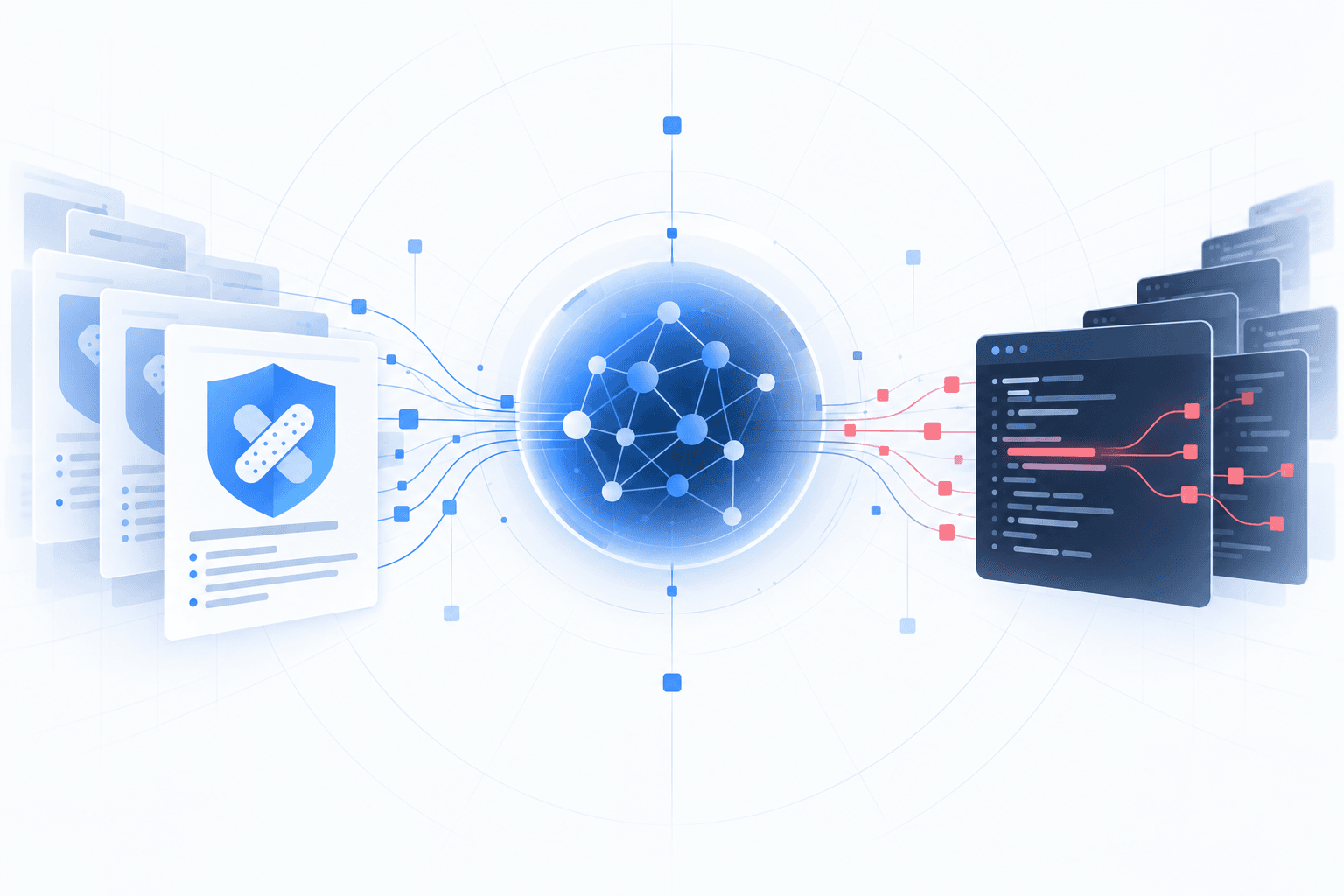
Google Threat Intelligence Group (GTIG) reported its first observed case of an autonomous AI workflow converting security patches into working exploits and executing them without human involvement. A suspected Russian-speaking operator used a framework called exploit_agent, found on an exposed staging server alongside stolen organizational data and post-compromise scripts. Telemetry suggested particular interest in French media, entertainment, and education websites. GTIG also described LLM-driven patch analysis and exploit-development activity involving PaperCut NG/MF vulnerabilities, highlighting the potential for attackers to compress the interval between disclosure and exploitation.

The findings reflect broader experimentation with multi-agent offensive frameworks by financially motivated criminals and suspected China-linked espionage actors to automate operational tasks and chain attack paths. In a separate case, attackers used PentAGI with proxy services to target the aerospace sector. GTIG also reported LLMjacking operations that steal enterprise LLM credentials and cloud resources to resell access, while the Chinese-language phishing platform Jieyou embeds an LLM chatbot to help less-skilled users customize phishing panels, templates, and lures. For defenders, the findings reinforce the need for rapid remediation of exposed vulnerabilities, protection of LLM credentials, and monitoring for unauthorized AI-service consumption.

Why it matters

GTIG reports its first observation of attackers automating vulnerability discovery and exploitation without human intervention, potentially shortening remediation windows for internet-facing applications. An exposed exploit_agent server contained stolen organizational data, but reporting does not establish that the framework obtained that data, its exploitation success rate, or compromise of every suspected target. Separate activity demonstrates substantial financial exposure from stolen AI-service credentials, with reported LLMjacking charges exceeding $100,000 per day and reaching $1 million cumulatively.

  • Industry-specific impact: Established targeting includes Communication Services through interest in French media and entertainment websites, and Industrials through activity against US aerospace organizations (SecurityWeek). Separately, the cited FBI warning identifies ARTEX activity against Energy, Financials, Information Technology, Health Care, Government & Public Sector, and Military & Defense organizations (Help Net Security). Education websites were also of interest, but their public/private status is unspecified; no additional sector code is inferred. These are reported targeting patterns, not evidence that every organization in these sectors was compromised.
  • Geography-specific impact: Established targeting includes France, supported by exploit_agent-associated telemetry concerning French websites, and the United States, supported by observed CAIRN activity against US aerospace organizations (SecurityWeek). Other reporting identifies organizations across Asia and cryptocurrency firms in North America and Europe without sufficient precision to add countries. Russian-language comments do not establish operator nationality or an affected geography.

New surface, new adversariesTrack how attackers are adapting to this technology.
Track this risk
Event timeline

How this story unfolded

Events from the most recent confirmed update back to the earliest known activity.

12 events · Aug 2026 – Nov 13, 2026
  1. Reported Nov 16, 202612d ago

    Google identifies China-nexus effort to automate likely espionage attacks

    Google identified a China-nexus group developing an automated attack framework for likely espionage purposes. The reference does not identify the group or establish that the framework was deployed in attacks.

    Google says Russian-speaking hackers ran the first fully automated AI cyberattack | CyberScoop
  2. Reported Nov 16, 202612d ago

    Google observes CAIRN AI framework in U.S. aerospace intrusions

    Google observed attackers using the offensive AI framework CAIRN in intrusions targeting U.S. aerospace organizations. CAIRN coordinates specialized agents through a shared blackboard and an observe-orient-decide-act loop that uses task results to determine subsequent actions.

    Security patches are supposed to protect you. Google found AI agents turning them into exploits. - The New Stack
  3. Reported Nov 16, 202612d ago

    UNC6836 abuses Claude Code settings to deliver SOMBERMEME at cryptocurrency firms

    GTIG observed UNC6836, an activity cluster with suspected links to Midnight Neptune, attacking cryptocurrency firms in North America and Europe. After initial compromise, the attackers modified Claude Code settings so that launching the application triggered a download of the SOMBERMEME backdoor.

    Google warns that fully-automated AI attacks are coming soon
  4. Reported Nov 16, 202612d ago

    Jieyou integrates an LLM assistant into its phishing platform

    The Chinese-language phishing platform Jieyou integrated an LLM chatbot that lets customers configure phishing panels and modify templates through natural-language commands. The integration enables less-skilled affiliates to customize lures and interfaces without manually editing payloads.

    Google Finds Hackers Using AI Agents to Build and Run Exploits From Software Patches
  5. Reported Nov 16, 202612d ago

    LLMjacking operators steal enterprise AI access for underground resale

    Threat actors stole LLM credentials and cloud resources from compromised enterprise environments. They resold access at discounted prices through underground proxy services such as APIMart and JetNight.

    Google Finds Hackers Using AI Agents to Build and Run Exploits From Software Patches
  6. Reported Nov 16, 202612d ago

    Attackers use PentAGI and proxy services to target aerospace

    GTIG observed a separate case in which attackers used the offensive AI framework PentAGI alongside proxy services to target the aerospace sector.

    Google: AI agent turned a security patch into a working exploit with no human help
  7. Reported Nov 16, 202612d ago

    Researchers discover exposed exploit_agent staging server

    Researchers found an exposed staging server containing exploit_agent, stolen organizational data, and scripts for reconnaissance, brute-force attacks, and webshell management. Victim telemetry suggested particular interest in French media, entertainment, and education websites.

    Google: AI agent turned a security patch into a working exploit with no human help
  8. Reported Nov 16, 202612d ago

    Suspected Russian-speaking operator automates patch-to-exploit attacks

    A suspected Russian-speaking operator used exploit_agent to compare software patches, identify vulnerabilities, develop exploits, and execute them without human involvement, ultimately stealing organizational data. GTIG described this as its first observed instance of an autonomous patch-to-exploit workflow.

    Google: AI agent turned a security patch into a working exploit with no human help
  9. Reported Nov 16, 202612d ago

    Attackers use AI-assisted weaponization against PaperCut NG/MF flaws

    Google cited activity involving PaperCut NG/MF vulnerabilities earlier in September as an example of AI-assisted weaponization of newly disclosed flaws. LLM-driven analysis helped automate the transition from patch analysis to exploit development.

    Google Finds Hackers Using AI Agents to Build and Run Exploits From Software Patches
  10. Nov 13, 202616d ago

    FBI warns of ARTEX use in attacks across multiple sectors

    The FBI issued a FLASH alert warning that attackers had used the ARTEX agentic framework since at least August 2026 against financial services, government, technology, defense, healthcare, energy, and other sectors.

    Google finds AI agent writing and launching exploits with no human in the loop - Help Net Security
  11. Oct 2026

    Mandiant details ARTEX multi-agent attacks on cloud environments

    Mandiant described ARTEX as a multi-agent offensive platform that analyzes cloud infrastructure, seeks additional privileges, and generates commands automatically. Reported observations included attackers progressing deeply into an environment within 15 minutes and ARTEX generating 27 permission-testing events in 23 seconds in AWS.

    Google découvre une véritable usine à pirater pilotée par l'IA, des sites français dans le viseur
  12. Aug 2026

    Google discovers platform automating influence operations

    Google discovered an end-to-end Influence-as-a-Service platform that automated the influence-operation lifecycle, from persona creation to interactive posting across multiple platforms.

    AI Framework Autonomously Weaponized Flaws in Real Attacks, Google Says - SecurityWeek
Linked entities

Related entities

Vulnerabilities, threat actors, malware, products, organizations, and breaches Mallory has linked to this story.

Open in app →

Malware

1 linked

Affected products

3 linked
Papercut NgPapercut MfPapercut
Do you run this?Follow how adversaries are adapting to this technology, and where it touches your stack today.
Track This Risk
Mallory platform

See the full picture, correlated to your attack surface.

This page covers what’s public. Mallory adds the parts that aren’t: which of your assets are affected, which threat actors are using it right now, and what to deploy next.

Exposure mappingMap indicators from this story to your assets and identify affected systems in minutes.
Threat actor evidenceEvery observed campaign, victim, and pivot linked to actors named in this story.
Associated malwareMalware, exploits, and IOCs connected to the activity described here.
Detection signaturesYARA, Sigma, and Snort rules deployed to your SIEM as soon as they’re published.
Scheduled alertsGet matching new stories delivered to your team as they break, not the next morning.
AI threadsAsk questions about this story and take action on the answers.