Hijacked GitHub Accounts Deploy CI Secret Stealer in at Least 1,806 Repositories
Supply Chain Risk · 32 sources · Updated 11d ago · First seen Nov 12, 2026

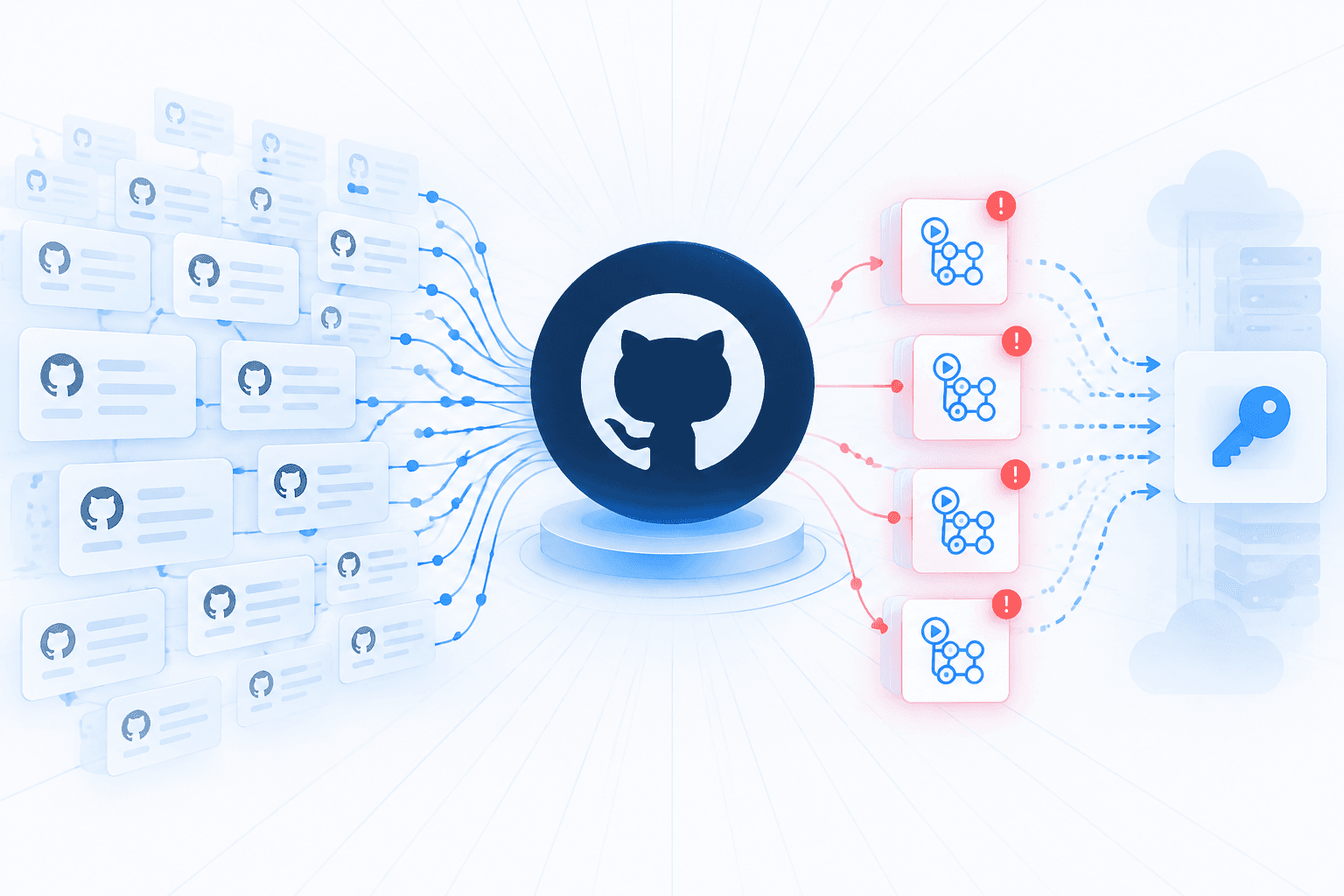
An unidentified attacker used stolen credentials for 4,837 GitHub accounts to probe 61,764 repositories and execute a CI secret stealer in at least 1,806 public repositories, according to Aikido Security. The campaign, which began November 10, used innocuous-looking pull requests, malicious workflow changes, npm installation hooks, and temporary branches to target GitHub Actions secrets, runner memory, repository data, and AWS, Google Cloud, and Azure credentials. Malicious commits were reverted within a minute, and workflow logs were usually deleted to conceal execution. Reported indicators include pull requests titled “docs: dependency audit notes” and branches named “wfx-docs.”
The stealer also has capabilities to establish AWS and Azure persistence that can survive credential rotation, making secret replacement alone potentially insufficient for recovery. Automated publishing propagated malicious content into one Packagist package and two Go module versions, although the Go module’s source code and release binaries remained unchanged. Defenders should review recent workflow and dependency changes, investigate suspicious pull requests and deleted logs, rotate exposed credentials, and inspect cloud environments for unauthorized persistence. Compromised accounts substantially overlap with October’s GhostActions activity, but Aikido has not attributed the campaigns to the same actor because their infrastructure, tooling, and tradecraft differ.
Why it matters
The wfx-loot campaign used 4,837 compromised GitHub accounts to probe 61,764 repositories beginning November 10, 2026; Aikido reported payload execution and credential exfiltration in at least 1,806 repositories, while other supplied reports cite 1,835. Confirmed execution creates high-severity exposure of CI secrets, publishing credentials, repository data, and connected cloud identities, with potential downstream software compromise and persistent AWS or Azure access that survives secret rotation. This is observed exploitation of stolen credentials, not a disclosed GitHub vulnerability; probes, malicious commits, execution, and confirmed theft are distinct populations, and private-repository exposure remains unquantified.
- Industry-specific impact: Information Technology and Government & Public Sector are specifically affected. StepSecurity documented execution in
nextcloud/dockerand malicious commits through WebdriverIO's bot account; reports also identify compromised accounts associated with the U.S. General Services Administration and French government bodies. These establish software-sector and government account exposure, not confirmed compromise of every associated organization's production systems. Sources: StepSecurity, BleepingComputer. - Geography-specific impact: The United States and France are specifically represented through compromised accounts associated with the U.S. General Services Administration and French government bodies. This is evidence of affected government-associated accounts, not evidence of country-selective targeting or confirmed intrusion into government networks. The campaign's wider geographic distribution is not established. Source: BleepingComputer.
- Scope and limitations: Researchers identified malicious commits in 8,093 public repositories, but commits alone do not establish execution or theft. Collaborator, organization, and bot permissions extended exposure beyond repositories owned by the compromised accounts; at least 50 affected accounts had package-publishing access. No WebdriverIO package release was reported affected, and ordinary Go builds do not execute the malicious workflow files found in affected Go modules.