Microsoft Fixes VS Code Workspace Trust Bypass That Could Enable Code Execution
Vulnerability Disclosure · 3 sources · Updated 18d ago · First seen Nov 11, 2026

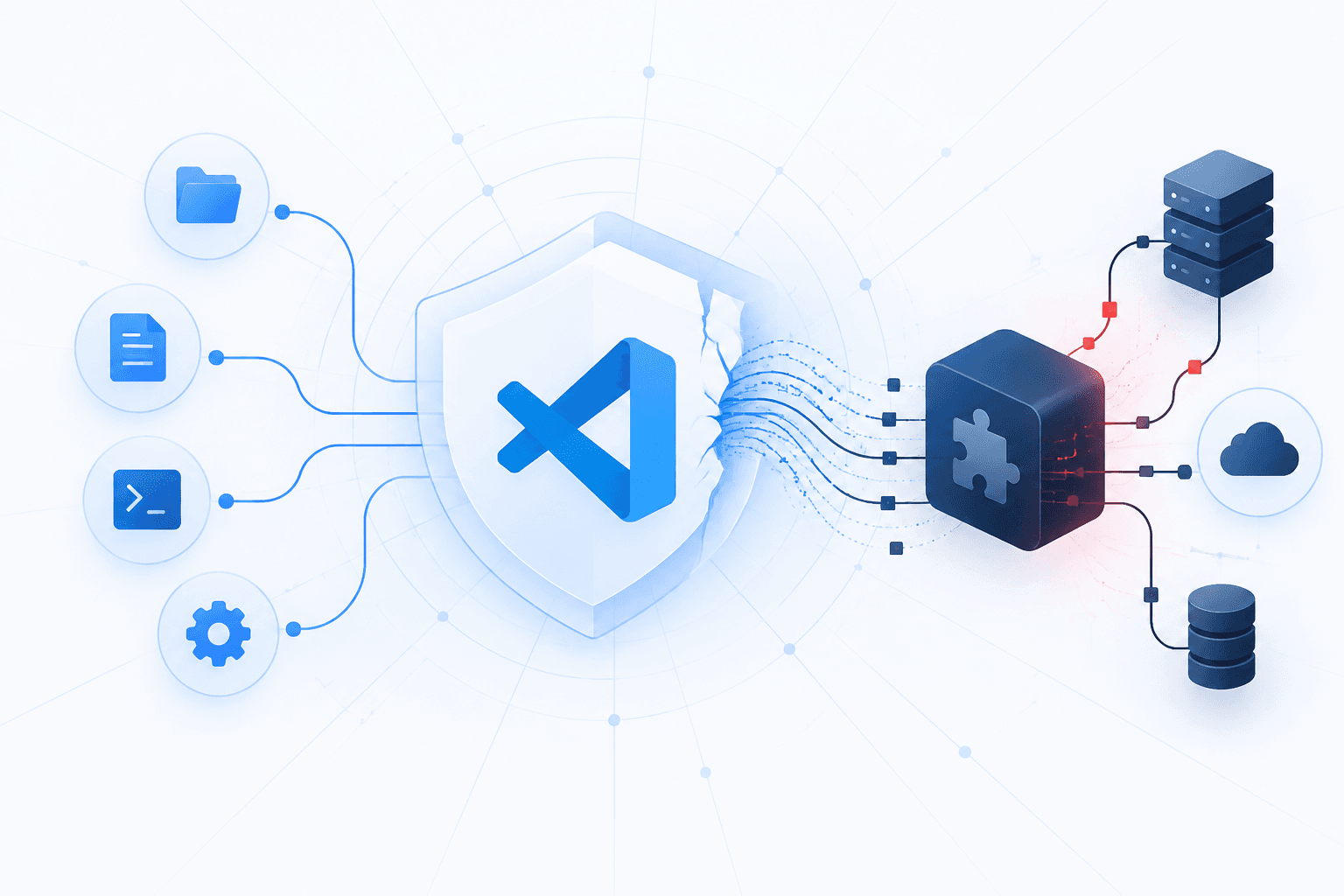
Microsoft released a fix for CVE-2026-102236, a Visual Studio Code security feature bypass that could let attacker-controlled workspace content execute commands or code without the user granting trust. Exploitation requires convincing a user to open a specially crafted workspace, after which execution could occur in that user's context. Microsoft rates the vulnerability Important, with a CVSS v3.1 base score of 8.6. At publication, Microsoft reported no prior public disclosure or exploitation and assessed exploitation as less likely.
Organizations should deploy the available VS Code update rather than rely solely on Workspace Trust to contain unfamiliar projects. The feature normally places untrusted workspaces in Restricted Mode, limiting capabilities such as terminals, tasks, debugging, AI agents, workspace settings, and certain extensions. Users should continue reviewing unfamiliar repositories before granting trust and install extensions only from trusted publishers: Microsoft's documentation warns that malicious extensions can ignore Restricted Mode, so Workspace Trust is not a complete security boundary.
Why it matters
CVE-2026-102236 exposes users of affected Visual Studio Code installations to command or code execution when they open an attacker-crafted workspace, even without granting Workspace Trust. Execution in the user's context could compromise accessible source code, credentials, and local resources or disrupt development operations; exposure depends on opening malicious workspace content, not merely having VS Code installed. Microsoft rates the vulnerability Important and reported no known exploitation or prior public disclosure at original publication on November 10, 2026, assessing exploitation as less likely.
- Industry-specific impact is not established: The supplied content identifies a developer-tool exposure but no affected organizations, targeted sectors, or industry-specific obligations.
- Geography-specific impact is not established: No affected locations, geographic targeting, or jurisdiction-specific obligations are identified.
- Scope: Potential exposure across affected VS Code deployments, rather than a documented targeted campaign. Affected version ranges and deployment counts are not supplied.
Source: Microsoft advisory.