Mallory
← Back to News
open-source-dependency-vulnerabilityactively-exploited-vulnerabilitygovernment-vulnerability-cataloginternet-facing-service-vulnerability

Node2Shell Brotli Flaw Exposes Node.js and Embedded Decoders to Remote Code Execution

Active Exploitation · 4 sources · Updated 16d ago · First seen Nov 10, 2026
Node2Shell Brotli Flaw Exposes Node.js and Embedded Decoders to Remote Code Execution

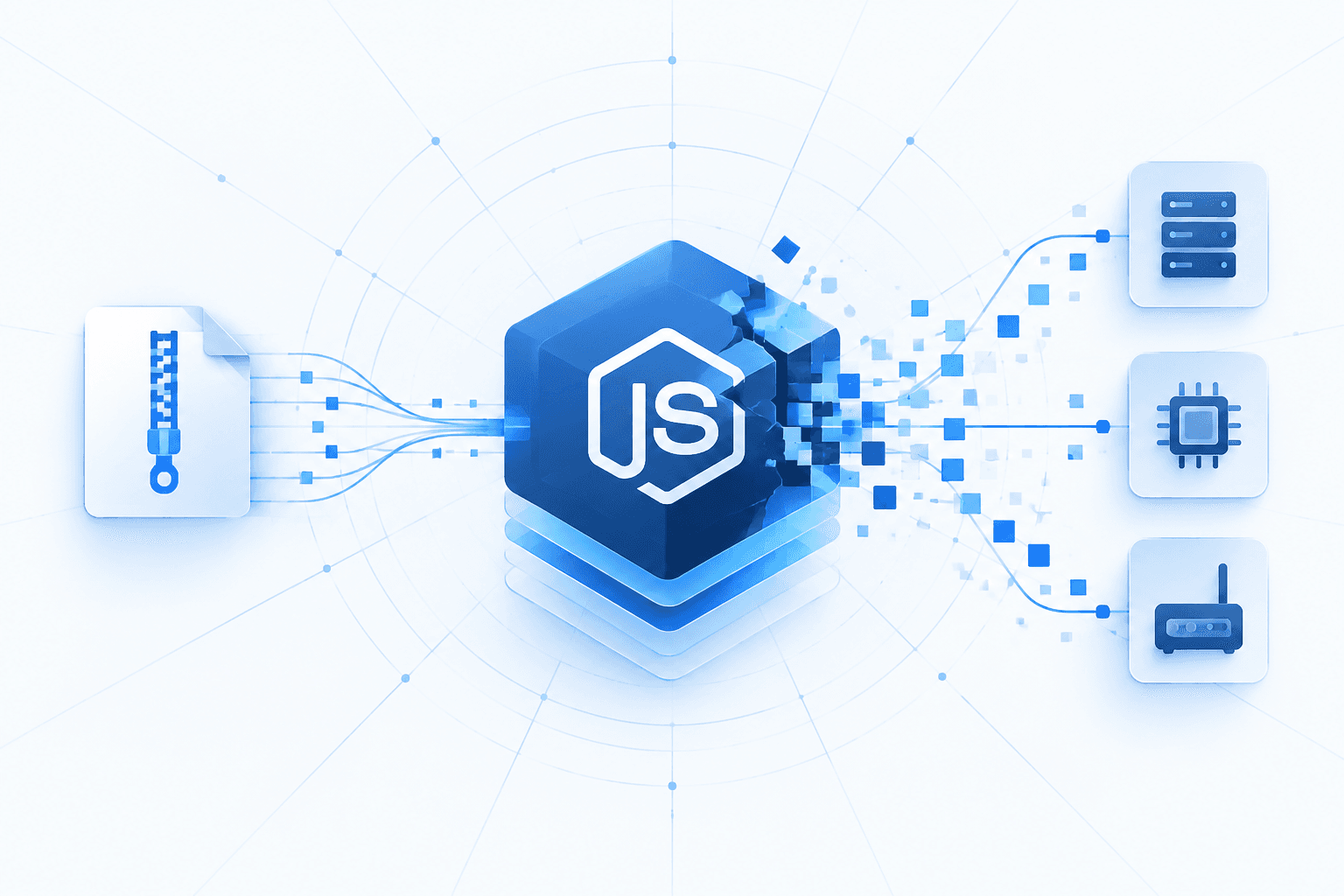
Node2Shell (CVE-2026-111497) is an out-of-bounds write in Google's Brotli decoder that can enable unauthenticated remote code execution when applications decompress attacker-controlled data. Exposure requires a vulnerable decoder and a reachable decompression path, including Express 5 request-body parsing or automatic decompression of outbound HTTP responses. SafeBreach reports a CVSS 4.0 score of 9.2, exploitation observed on October 26, 2026, and addition to CISA's Known Exploited Vulnerabilities catalog the following day; Xint's report does not independently establish exploitation or identify an attacker. Successful exploitation could crash services or execute code with the affected service account's privileges.

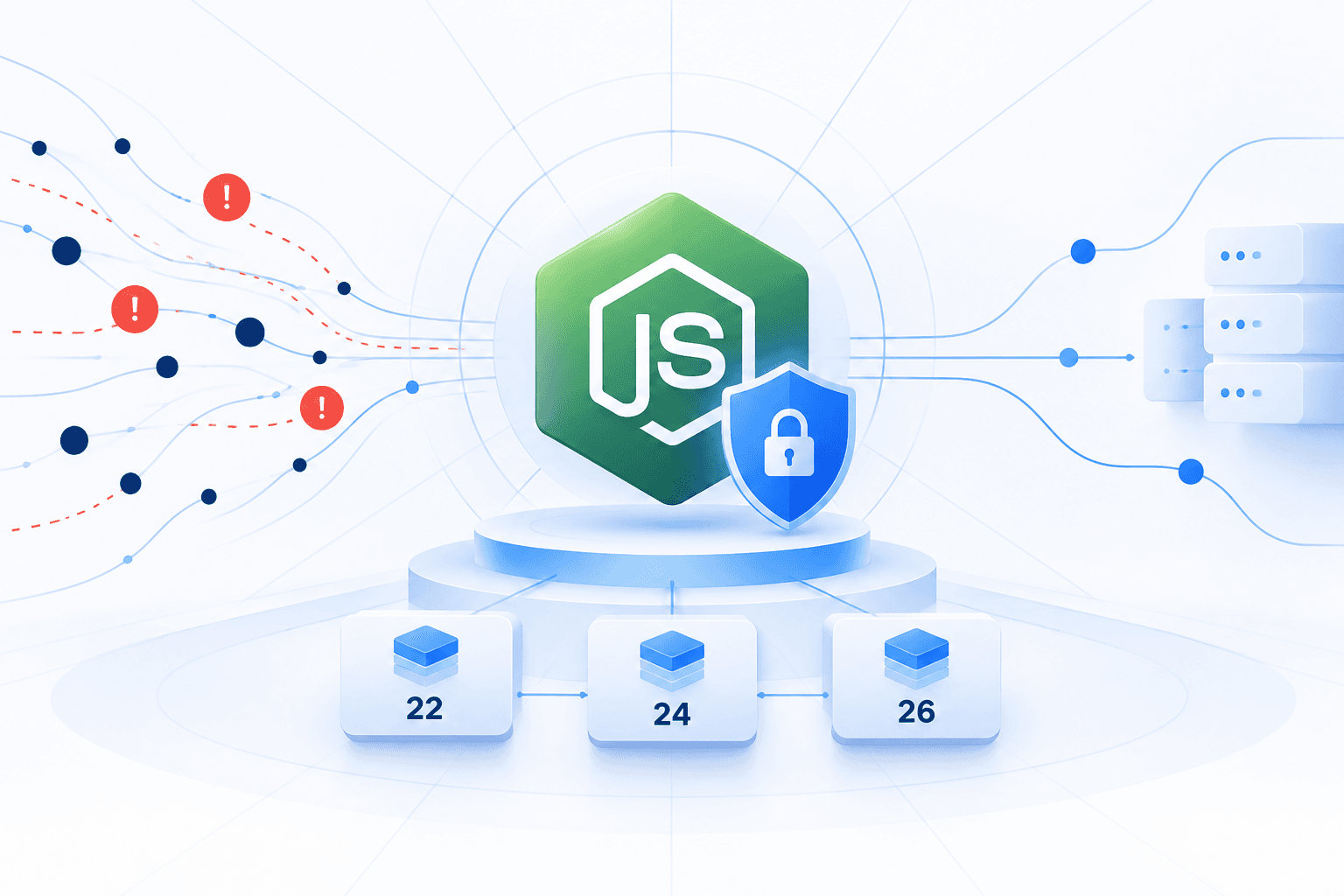
Xint identifies Node.js 22.23.4, 24.22.1, and 26.12.1 as fixed releases. Defenders should update and restart affected processes, rebuild and redeploy containers, and separately verify distribution builds that use shared Brotli libraries. SafeBreach warns that vulnerable decoder copies can also reside in other runtimes, proxies, applications, and firmware, making component-level inventory essential. Temporarily rejecting Brotli-encoded request bodies offers only partial protection because malicious responses to outbound requests remain another entry point. Investigation should prioritize unusual decompression errors, worker crashes or restarts, response delays, and suspicious child processes.

Why it matters

Node2Shell (CVE-2026-111497) exposes applications that pass attacker-controlled Brotli data to a vulnerable decoder to unauthenticated code execution, service crashes, CPU exhaustion, and possible memory disclosure. Exposure spans multiple runtimes and embedded components, but installing Node.js alone does not establish remote exploitability; SafeBreach reports exploitation on October 26, 2026, while other supplied reports do not independently confirm it.

  • Industry-specific impact: Government & Public Sector is specifically affected through a remediation obligation: SafeBreach reports CISA KEV inclusion on October 27 and a November 10, 2026 deadline for U.S. federal agencies. That reported deadline has passed as of November 12. Other sector-specific impact is not established; broad software exposure does not establish affected industries.
  • Geography-specific impact: The United States is specifically implicated by that federal-agency remediation obligation, not by evidence of geographically targeted exploitation. The supplied content does not establish affected countries for the reported exploitation.
  • Operational stakes: Successful code execution inherits the service account's access, potentially exposing secrets and cloud credentials. Worker crashes and decompression stalls can disrupt applications; automatic restarts may give attackers repeated attempts.
  • Evidence limits: SafeBreach attributes observed exploitation to ELLIO and reports one 23 MB request against Node.js 24.22.0, without identifying a victim or attacker. Cloudflare's October 25 review predates that observation; the Cyberveille report states no active exploitation, and Xint does not establish exploitation independently. Treat the exploitation and KEV claims as attributed reporting pending authoritative verification.
This is being exploited nowSee which actors are running it and whether you're in range.
Check your exposure
Event timeline

How this story unfolded

Events from the most recent confirmed update back to the earliest known activity.

14 events · Feb 27, 2026 – Oct 27, 2026
  1. Reported Nov 9, 202619d ago

    Xint verifies Brotli request-body exposure across Express 5 parsers

    Xint reported testing that Express 5's JSON, URL-encoded, text and raw body parsers decompress Brotli request bodies when the Content-Type matches. Its analysis also explained that shared-Brotli builds require runtime decoder verification because Node.js version strings and build-time constants alone may not establish patch status.

    Node2Shell (CVE-2026-111497) Emergency Response Plan - Xint Blog | Insights from Offensive Security Researchers
  2. Reported Nov 9, 202619d ago

    Researchers report the Brotli decoder vulnerability to Node.js

    OpenAI Codex Security researchers Khai Tran and Sylvie Mayer reported the vulnerability later designated CVE-2026-111497 to the Node.js project.

    Node2Shell (CVE-2026-111497) Emergency Response Plan - Xint Blog | Insights from Offensive Security Researchers
  3. Reported Nov 9, 202619d ago

    Istio releases patched service-mesh versions

    Fixed Istio releases were identified as 1.29.9, 1.30.6 and 1.31.2.

    Node2Shell CVE-2026-111497: Actively Exploited Brotli RCE
  4. Reported Nov 9, 202619d ago

    Envoy releases patched proxy versions

    Fixed Envoy releases were identified as 1.36.12, 1.37.8, 1.38.6, 1.39.3 and 1.40.0.

    Node2Shell CVE-2026-111497: Actively Exploited Brotli RCE
  5. Reported Nov 9, 202619d ago

    Python Brotli packages receive fixes

    Python Brotli 1.2.1 and brotlicffi 1.2.1.0 were identified as fixed releases addressing the vulnerable decoder.

    Node2Shell CVE-2026-111497: Actively Exploited Brotli RCE
  6. Reported Nov 9, 202619d ago

    Bun ships a fixed release

    Bun 1.4.4 was identified as a fixed release for the Brotli vulnerability. Bun-compiled executables require rebuilding to replace bundled vulnerable decoder code.

    Node2Shell CVE-2026-111497: Actively Exploited Brotli RCE
  7. Reported Nov 9, 202619d ago

    Researchers demonstrate code execution on stock Node.js builds

    Imperva's Red Team demonstrated code execution against the official, unmodified Node.js 24.22.0 Linux arm64 image, and ELLIO reproduced shells on default x86-64 builds. Exploitation required build-specific memory offsets, with most attempts crashing the worker rather than immediately achieving code execution.

    Node2Shell CVE-2026-111497: Actively Exploited Brotli RCE
  8. Oct 27, 20261mo ago

    CISA adds Node2Shell to its Known Exploited Vulnerabilities catalog

    CISA added CVE-2026-111497 to its Known Exploited Vulnerabilities catalog and set a November 10, 2026 remediation deadline for U.S. federal agencies.

    Node2Shell CVE-2026-111497: Actively Exploited Brotli RCE
  9. Oct 26, 20261mo ago

    PHP rebuilds official Windows packages with patched Brotli

    PHP released replacement Windows builds 8.5.12-1, 8.4.27-1, 8.3.36-1 and 8.2.35-1, bundling Brotli 1.2.1 to fix CVE-2026-111497 while retaining earlier PHP2Shell fixes. The vulnerable decoder was reachable through PHP’s cURL extension when automatic HTTP response decompression was enabled, including through Guzzle’s reported default settings.

    PHP reconstruit ses packages Windows pour corriger CVE-2026-111497 dans la bibliothèque Brotli | CyberVeille
  10. Oct 26, 20261mo ago

    ELLIO records Node2Shell exploitation traffic

    ELLIO recorded exploitation traffic targeting Node.js 24.22.0 from an IP address previously observed in mass-exploitation campaigns. The observed sample consisted of a single 23 MB request.

    Node2Shell CVE-2026-111497: Actively Exploited Brotli RCE
  11. Oct 25, 20261mo ago

    Cloudflare documents two WAF rules for Node2Shell

    Cloudflare documented two WAF rules targeting Node2Shell request patterns. Both default to Log, so customers must configure them to Block to enable blocking mitigation.

    node2shell | Zero Wire | Cloudflare Radar
  12. Oct 25, 20261mo ago

    Microsoft releases .NET fixes for the Brotli vulnerability

    Microsoft released .NET 8.0.33, 9.0.22 and 10.0.14 to address the vulnerable Brotli decoder.

    Node2Shell CVE-2026-111497: Actively Exploited Brotli RCE
  13. Oct 21, 20261mo ago

    Google and Node.js disclose Node2Shell and release fixes

    Google and Node.js disclosed CVE-2026-111497, an out-of-bounds write in Brotli decompression that can enable remote code execution on attacker-controlled data. Fixed releases included Brotli 1.0.10, 1.1.1 and 1.2.1, and Node.js 22.23.4, 24.22.1 and 26.12.1.

    Node2Shell (CVE-2026-111497) Emergency Response Plan - Xint Blog | Insights from Offensive Security Researchers
  14. Feb 27, 20269mo ago

    Brotli decoder fix written months before disclosure

    According to ELLIO, the fix was written on February 27 and remained in Brotli's public source repository without a release or advisory for approximately eight months.

    Node2Shell CVE-2026-111497: Actively Exploited Brotli RCE
Linked entities

Related entities

Vulnerabilities, threat actors, malware, products, organizations, and breaches Mallory has linked to this story.

Open in app →

Vulnerabilities

1 linked

Affected products

6 linked
NetEdk IiEnvoyClickhouseNode.JsBun

Organizations

2 linked
ClickhouseSiemens
Do you run this?Correlate live exploitation activity against the software you actually run, and see where you're exposed.
See Who's Exploiting This
Mallory platform

See the full picture, correlated to your attack surface.

This page covers what’s public. Mallory adds the parts that aren’t: which of your assets are affected, which threat actors are using it right now, and what to deploy next.

Exposure mappingMap indicators from this story to your assets and identify affected systems in minutes.
Threat actor evidenceEvery observed campaign, victim, and pivot linked to actors named in this story.
Associated malwareMalware, exploits, and IOCs connected to the activity described here.
Detection signaturesYARA, Sigma, and Snort rules deployed to your SIEM as soon as they’re published.
Scheduled alertsGet matching new stories delivered to your team as they break, not the next morning.
AI threadsAsk questions about this story and take action on the answers.