Mallory
← Back to News
loader-delivery-mechanismcredential-stealer-activitydefense-evasion-methodinitial-access-method

Fake CAPTCHA Campaigns Use Mshta and PowerShell to Deliver Lumma Stealer

Malware Intelligence · 3 sources · Updated 25d ago · First seen Mar 2, 2025
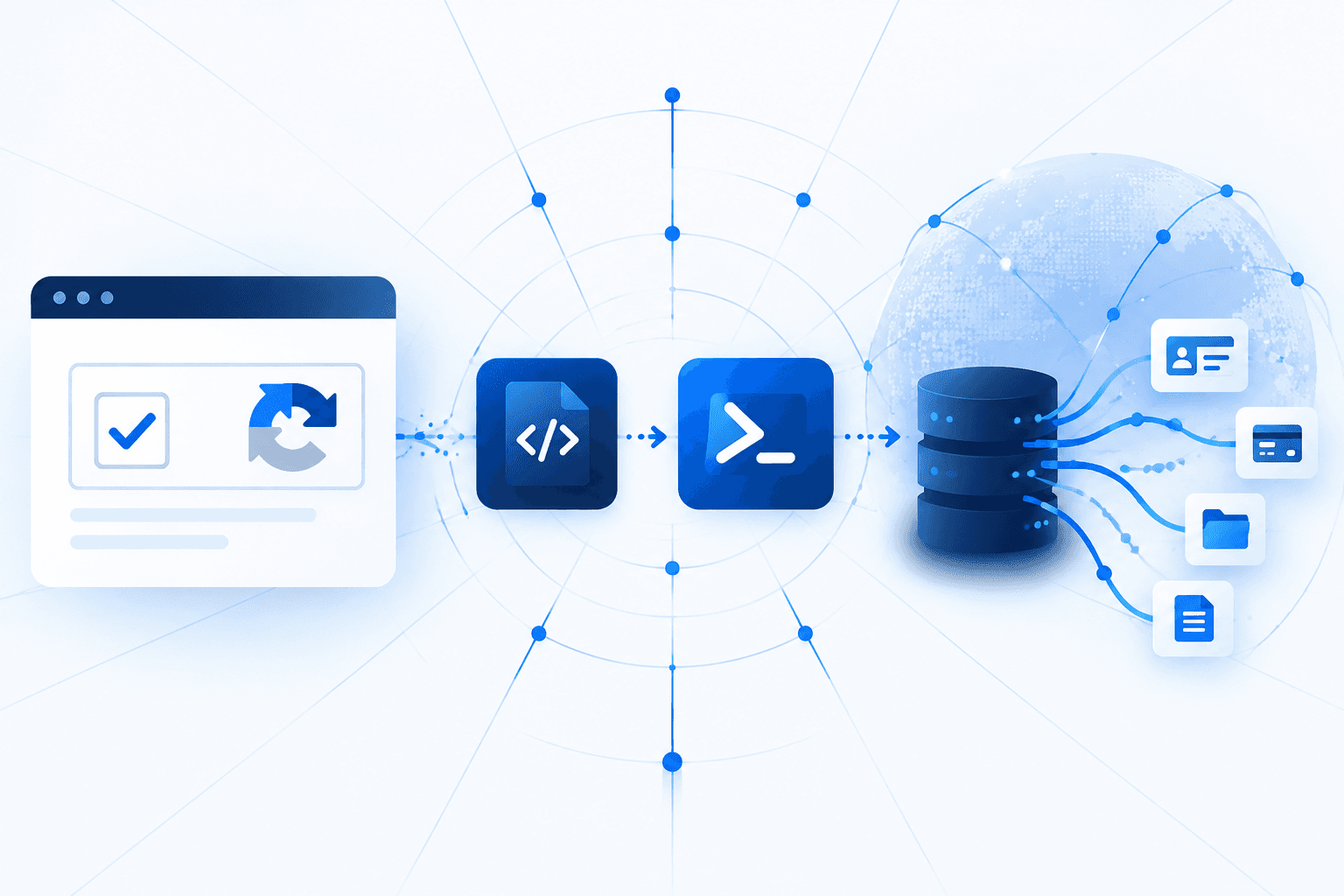
Fake CAPTCHA Campaigns Use Mshta and PowerShell to Deliver Lumma Stealer

Fake CAPTCHA campaigns are tricking users into executing commands that deliver Lumma Stealer through legitimate Windows utilities. Hexastrike traced the activity from fraudulent GitHub vulnerability notifications to a customer incident in which CrowdStrike detected suspicious mshta.exe and PowerShell activity, blocked an encrypted payload, and responders isolated the affected host. Investigators identified a fake CAPTCHA page hosted on Oracle Cloud infrastructure that copied a command to launch malicious JavaScript disguised as an audio file, but could not confirm that the affected user visited that specific page.

The delivery chain used multiple JavaScript and PowerShell layers, character encoding, AES encryption, XOR operations, and misleading file extensions to retrieve and decode additional payloads. Several antivirus vendors classified the extracted executable as Heracles Trojan, while Hexastrike assessed it as another Lumma Stealer stager. The technique exploits mshta.exe, a legitimate Windows HTML Application utility documented by LOLBAS as supporting malicious script execution and payload retrieval, mapped to MITRE ATT&CK T1218.005 and T1105. Defenders should prioritize monitoring unexpected mshta.exe and PowerShell execution, restrict mshta.exe where operationally feasible, and warn users that legitimate CAPTCHA checks do not require running operating-system commands.

Why it matters

Fake CAPTCHA campaigns trick Windows users into executing commands that deliver malware assessed by Hexastrike as Lumma Stealer, creating potential credential theft, account compromise, and follow-on intrusion risk. One customer incident involved suspicious mshta.exe and PowerShell execution; CrowdStrike blocked an encrypted payload and responders isolated the host, but the supplied evidence does not establish completed data theft or the campaign's overall scale. The reporting documents activity beginning in September 2024, not confirmed ongoing activity as of November 2026.

  • Industry-specific impact is not established. GitHub repository users and an unnamed customer's Windows endpoint were affected or targeted, but their industries are not identified; use of GitHub does not establish Information Technology sector impact.
  • Geography-specific impact is not established. No affected population or customer location is identified. Oracle Cloud's Seoul-region infrastructure is a hosting detail, not evidence of geographic targeting.
  • Attribution limits: Investigators found a CAPTCHA page containing a command matching the incident chain, but could not prove the affected user visited that exact page. Several antivirus vendors labeled the extracted executable Heracles Trojan, while Hexastrike assessed it as a Lumma Stealer stager.

Source: Hexastrike.

Hunt this familyPull IOCs and campaign context straight into your stack.
Get the IOCs
Event timeline

How this story unfolded

Events from the most recent confirmed update back to the earliest known activity.

5 events · Sep 2024
  1. Reported Mar 2, 20252y ago

    Payload analysis reveals a multistage chain and suspected Lumma stager

    Researchers decoded JavaScript and PowerShell layers using character encoding, AES encryption, Base64, and XOR, uncovering a roughly 17 MB PowerShell payload disguised as a PNG. They extracted Xdijuggvmys.exe, which several vendors classified as Heracles Trojan but the researchers identified as another Lumma Stealer stager, potentially protected by a .NET packer.

    Lumma Stealer Distribution via Fake CAPTCHAs - Hexastrike Cybersecurity
  2. Reported Mar 2, 20252y ago

    Investigators identify an Oracle Cloud-hosted fake CAPTCHA

    DNS telemetry led investigators to a fake CAPTCHA on Oracle Cloud that copied a PowerShell command launching mshta.exe against kelliver[.]live/hathforurub.m4a. The matching command strongly linked the page to the infection chain, but investigators could not prove that the affected user visited that exact URL.

    Lumma Stealer Distribution via Fake CAPTCHAs - Hexastrike Cybersecurity
  3. Reported Mar 2, 20252y ago

    Security controls block a payload and responders isolate the affected host

    The customer's prevention policy blocked an encrypted PowerShell payload, and responders network-isolated the affected host. Investigators collected forensic artifacts and examined email traces, URL-click logs, and browser history but could not establish the initial access source.

    Lumma Stealer Distribution via Fake CAPTCHAs - Hexastrike Cybersecurity
  4. Reported Mar 2, 20252y ago

    CrowdStrike detects suspicious mshta and PowerShell activity at a customer

    In a later customer incident, CrowdStrike generated multiple escalations involving mshta.exe, heavily obfuscated PowerShell, and kelliver[.]live/hathforurub.m4a. The apparent audio file contained malicious HTML and JavaScript.

    Lumma Stealer Distribution via Fake CAPTCHAs - Hexastrike Cybersecurity
  5. Sep 2024

    Fake GitHub vulnerability notifications distribute Lumma Stealer

    Researchers observed a campaign using fraudulent GitHub vulnerability emails to direct recipients to github-scanner[.]com in September 2024. Its fake CAPTCHA instructed users to execute a clipboard-copied PowerShell command that downloaded a payload distributing Lumma Stealer.

    Lumma Stealer Distribution via Fake CAPTCHAs - Hexastrike Cybersecurity
Linked entities

Related entities

Vulnerabilities, threat actors, malware, products, organizations, breaches, and observables Mallory has linked to this story. Indicator values are masked here and available in full in the app.

Open in app →

Malware

1 linked

Observables

31 linked

Indicator values are masked on this page. View all 31 in Mallory Domains, IPs, hashes, and URLs are exportable to your SIEM.

Do you run this?Pull the IOCs, campaigns, and victimology behind this family, ready to push into your SIEM and EDR.
Hunt This Malware
Mallory platform

See the full picture, correlated to your attack surface.

This page covers what’s public. Mallory adds the parts that aren’t: which of your assets are affected, which threat actors are using it right now, and what to deploy next.

Exposure mappingMap indicators from this story to your assets and identify affected systems in minutes.
Threat actor evidenceEvery observed campaign, victim, and pivot linked to actors named in this story.
Associated malwareMalware, exploits, and IOCs connected to the activity described here.
Detection signaturesYARA, Sigma, and Snort rules deployed to your SIEM as soon as they’re published.
Scheduled alertsGet matching new stories delivered to your team as they break, not the next morning.
AI threadsAsk questions about this story and take action on the answers.