Mallory
← Back to News
credential-stealer-activityloader-delivery-mechanismsearch-ad-manipulationdefense-evasion-method

Fake CAPTCHA Campaigns Deliver Lumma Stealer Through PowerShell and HTA Chains

Malware Intelligence · 8 sources · Updated 5mo ago · First seen Mar 19, 2025

Fake CAPTCHA Campaigns Deliver Lumma Stealer Through PowerShell and HTA Chains

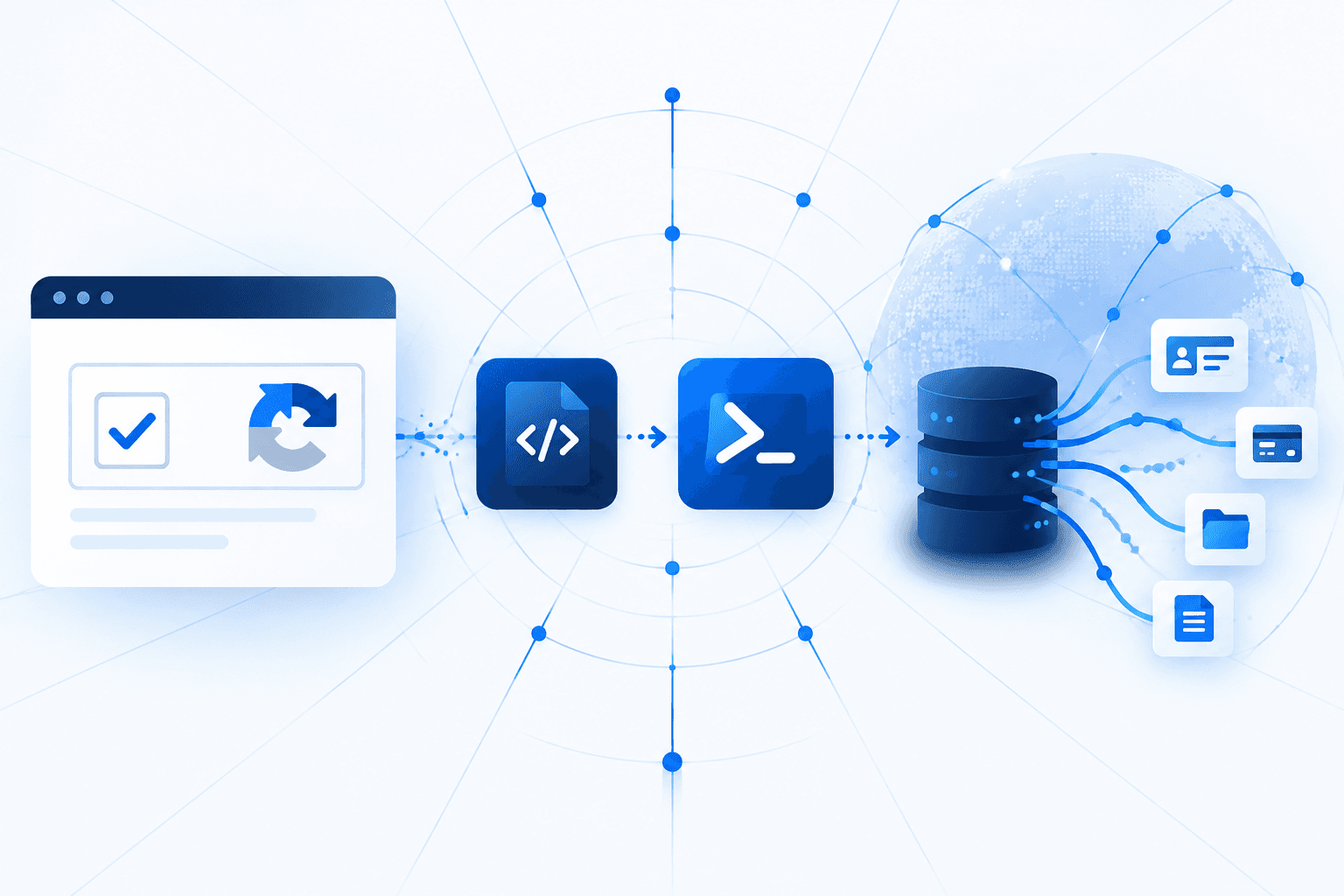
Researchers documented multiple Lumma Stealer infection chains that begin with fake CAPTCHA or verification pages and trick Windows users into launching malicious PowerShell from the Run dialog. In one case, victims reached the lure through malicious pop-up ads on a pirated-content site; in another, a page at you-checked.com copied a hidden command to the clipboard that fetched follow-on payloads from domains including ferrydero.com and fill-tomap.com. The malware family, also known as LummaC2, is a malware-as-a-service infostealer designed to steal browser data, credentials, cryptocurrency wallets, session tokens, and other sensitive information.

The observed chains used mshta.exe, obfuscated HTA and JavaScript, layered PowerShell stages, and multiple packed .NET components to retrieve and execute the final payload while evading analysis. Analysts reported AES and XOR decryption, SmartAssembly and .NET Reactor packing, AMSI bypass attempts, anti-sandbox and anti-debugging checks, Windows Defender evasion, and cleanup steps such as deleting downloaded archives after execution. One intrusion created files under C:\ProgramData, contacted iplogger.co, and launched an infostealer executable named jegule.exe, while another sample ultimately communicated through winhttp.dll and ws2_32.dll; investigators also recovered additional URLs from a Steam Community profile using ROT15 decoding.

Why it matters

Impact assessment

Fake CAPTCHA campaigns delivering Lumma Stealer primarily affect Windows users, with elevated risk for enterprises whose users browse untrusted sites, interact with malvertising, or can execute copied commands from the Run dialog. The impact is high because Lumma is an infostealer focused on credentials, browser data, session tokens, cryptocurrency wallets, and other sensitive information that can enable account takeover, fraud, and follow-on intrusion.

The exposure is widespread rather than narrowly targeted because the lures are delivered through fake verification pages, pop-up ads, and commodity web infrastructure. There is clear evidence of active exploitation in the wild across multiple observed infection chains, with consistent tradecraft centered on clipboard injection, PowerShell, mshta.exe, HTA/JavaScript loaders, and staged payload retrieval.

Affected populations and products

  • Windows systems, including Windows 7 through Windows 11
  • End users exposed to fake CAPTCHA or fake verification pages
  • Organizations with users accessing pirated-content sites or malvertising-driven redirects
  • Environments where PowerShell, mshta.exe, and HTA execution are permitted without strong controls
  • Browsers and applications storing credentials or tokens locally, including Chromium-based browsers and Firefox

Severity and business consequences

  • Credential theft from browsers, email accounts, collaboration tools, VPN clients, Wi-Fi profiles, and Windows credential stores
  • Theft of session tokens and cookies that can bypass MFA in some scenarios
  • Cryptocurrency wallet theft and financial fraud risk
  • Potential reputational and operational impact from compromised employee accounts and downstream business application access
  • Possible secondary intrusion risk because stolen credentials can support lateral movement or additional malware deployment

Scope and exploitation status

  • Multiple independent analyses describe active Lumma delivery chains using the same social-engineering pattern
  • Campaign infrastructure spans domains on Tigris, b-cdn, S3-compatible storage, .shop domains, and standalone domains
  • Observed chains include both direct PowerShell execution and mshta-delivered HTA/JavaScript loaders
  • Published reporting confirms in-the-wild use of these techniques, not just proof-of-concept activity
Hunt this familyPull IOCs and campaign context straight into your stack.
Get the IOCs
Event timeline

How this story unfolded

Events from the most recent confirmed update back to the earliest known activity.

7 events · Aug 16, 2024 – Jul 3, 2026
  1. Jul 3, 20265mo ago

    Researchers document Avalon framework leading to CrownX ransomware

    Blackpoint Cyber documented a previously unknown Windows malware framework named Avalon that used a legal-document phishing lure, Proton Drive-hosted archive, ISO/LNK execution chain, and MSBuild-based stages before deploying a ransomware component called CrownX. The report detailed credential theft, lateral movement, ETW/AMSI interference, recovery sabotage, and file encryption with the .8hn2yc extension.

    Avalon Malware Framework Leads to CrownX Ransomware
  2. Mar 19, 20252y ago

    Additional Lumma Stealer campaign details published

    A separate analysis reported a Lumma Stealer campaign using a fake verification page at you-checked.com to copy a hidden PowerShell command, which fetched additional code and a ZIP payload from attacker-controlled domains. The write-up also described file creation under C:\ProgramData, contact with iplogger.co, execution of an infostealer named jegule.exe, and a second obfuscated mshta/HTA-based sample.

    Analyzing and Hunting Lumma Stealer | by Ameer Mane | Medium
  3. Mar 14, 20252y ago

    Researchers analyze Lumma Stealer fake CAPTCHA infection chain

    A forensic write-up detailed a multi-stage Lumma Stealer infection chain that began with a fake CAPTCHA page and led victims to execute a malicious PowerShell command via the Windows Run dialog. The analysis described subsequent HTA, PowerShell, .NET loader, AMSI bypass, and evasion stages culminating in Lumma Stealer execution.

    Lumma Stealer - A tale that starts with a fake Captcha - Vital Digital Forensics
  4. Oct 5, 20242y ago

    Researchers analyze Lumma Stealer fake CAPTCHA delivery chain

    A malware analysis detailed a Lumma Stealer infection chain in which a fake CAPTCHA page tricked users into running a clipboard-copied PowerShell command that fetched additional payloads and launched a masqueraded executable. The report also documented persistence behavior, suspicious network destinations, and multiple indicators of compromise including hashes, an IP address, and a DigitalOcean Spaces URL.

    Malware Analysis - Lumma Stealer
  5. Sep 9, 20242y ago

    Researchers dissect Lumma fake CAPTCHA loader and BitLockerToGo injection

    A 2024-09-09 analysis examined the second stage of a Lumma Stealer infection chain triggered by a fake CAPTCHA page, detailing an mshta-delivered loader that used layered JavaScript and PowerShell obfuscation plus AES-decrypted content to fetch additional payloads. The report linked the final injected payload in the legitimate BitLockerToGo process to Lumma Stealer and published IOCs including b-cdn URLs, .shop C2 domains, and SHA-256 hashes.

    Dissecting Lumma Malware: Analyzing the Fake CAPTCHA and Obfuscation Techniques - Part 2
  6. Aug 30, 20242y ago

    Researchers publish Part 1 analysis of Lumma fake CAPTCHA attack

    A late-August 2024 analysis documented a Lumma Stealer campaign using fake human-verification and CAPTCHA pages to trick users into executing a malicious PowerShell chain. The report described clipboard injection, mshta.exe abuse, payload delivery URLs, ZIP archives containing legitimate tools with malicious DLLs, and command-and-control domains used for exfiltration.

    Anatomy of a Lumma Stealer Attack via Fake CAPTCHA Pages - Part 1
  7. Aug 16, 20242y ago

    Researchers document Dolphin Loader abusing ITarian RMM

    A public analysis described how Dolphin Loader abused the ITarian remote monitoring and management tool as part of its activity. The reference indicates the abuse pattern was documented and published by the researcher.

    The Abuse of ITarian RMM by Dolphin Loader
Linked entities

Related entities

Vulnerabilities, threat actors, malware, products, organizations, breaches, and observables Mallory has linked to this story. Indicator values are masked here and available in full in the app.

Open in app →

Malware

1 linked

Observables

79 linked

Indicator values are masked on this page. View all 79 in Mallory Domains, IPs, hashes, and URLs are exportable to your SIEM.

Do you run this?Pull the IOCs, campaigns, and victimology behind this family, ready to push into your SIEM and EDR.
Hunt This Malware
Mallory platform

See the full picture, correlated to your attack surface.

This page covers what’s public. Mallory adds the parts that aren’t: which of your assets are affected, which threat actors are using it right now, and what to deploy next.

Exposure mappingMap indicators from this story to your assets and identify affected systems in minutes.
Threat actor evidenceEvery observed campaign, victim, and pivot linked to actors named in this story.
Associated malwareMalware, exploits, and IOCs connected to the activity described here.
Detection signaturesYARA, Sigma, and Snort rules deployed to your SIEM as soon as they’re published.
Scheduled alertsGet matching new stories delivered to your team as they break, not the next morning.
AI threadsAsk questions about this story and take action on the answers.