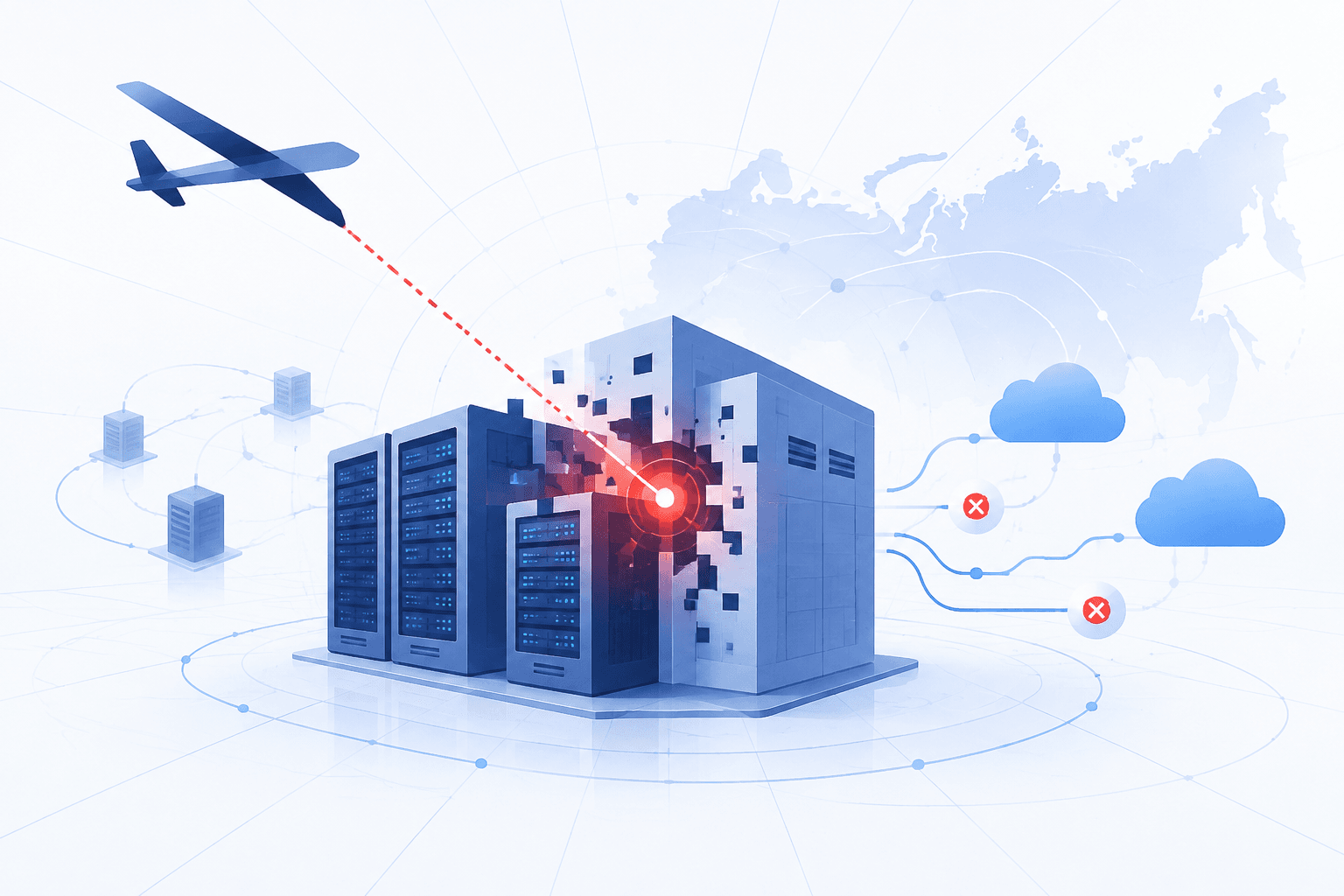
Russia Orders Data Centers to Reserve 10% Capacity After Ukrainian Drone Strikes
Sector Threat Intelligence · 3 sources · Updated 24d ago · First seen Nov 2, 2026
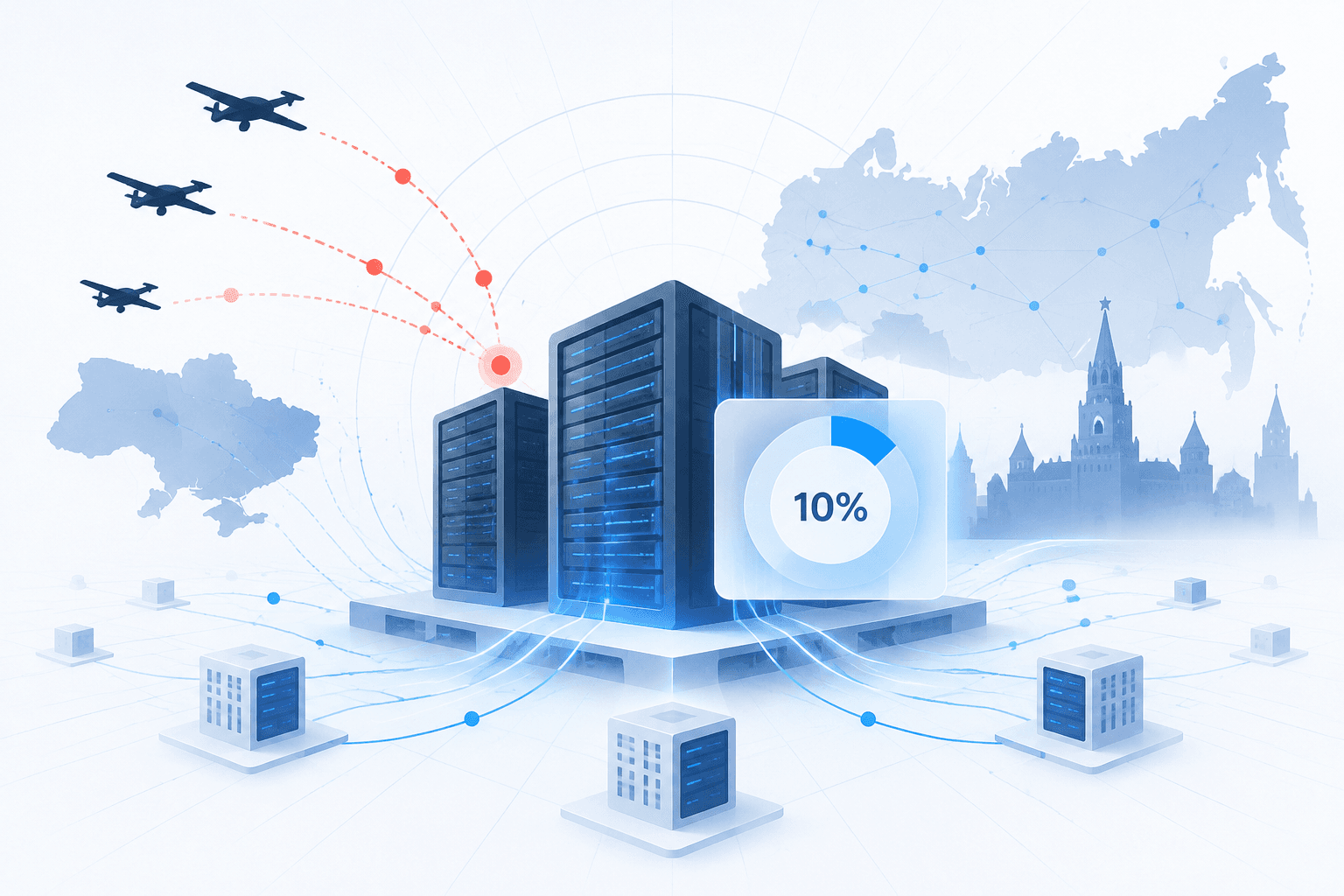
Russian President Vladimir Putin has directed privately owned data centers to reserve 10% of their capacity for state IT infrastructure after Ukrainian drone strikes damaged facilities and disrupted online services. A new government commission will be able to activate that capacity, requiring operators to comply within 24 hours. Reported targets included Russia’s largest data center and a Finance Ministry facility. Meduza also reported that Yandex relocated all three of its main supercomputers after strikes targeted the AI data centers housing them.
Russia is also reportedly planning underground data centers, while a Putin decree permits a special government commission, in consultation with the Federal Security Service, to authorize foreign data-center use. The measures highlight the physical-security and continuity risks of Russia’s highly centralized digital infrastructure. Ukraine has pursued a more distributed resilience strategy through overseas cloud migration supported by Amazon and Microsoft, infrastructure dispersal, and Starlink backup communications. Those safeguards remain important as attacks continue: Russian strikes on Ukrainian data centers in September reportedly left 100,000 households without internet connectivity.
Why it matters
Russian private data-center operators face a reported requirement to reserve at least 10% of capacity for state infrastructure and release it within 24 hours of an order, creating capacity-planning, contractual, and compliance risks. Reported drone strikes have damaged facilities and interrupted cloud-dependent services; a Finance Ministry facility housing tax databases and state registries was also reportedly hit, although database loss is not established. Exposure includes nationwide obligations for Russian operators and localized physical attacks in both Russia and Ukraine, rather than a demonstrated software-exploitation campaign.
- Industry-specific impact: Information Technology (45) is directly affected through damaged data centers, cloud-service disruption, and the capacity mandate. Financials (40) is affected through reported strikes on Sberbank facilities and disruption to payment and digital-banking applications. Consumer Discretionary (25) is affected through interrupted e-commerce, ride-hailing, and food-delivery services. Communication Services (50) is affected through streaming disruptions and loss of internet connectivity. Government & Public Sector (90) is affected through attacks on state infrastructure, including the Finance Ministry facility. Sources: BFMTV, Ars Technica, and Tom’s Hardware.
- Geography-specific impact: Russia (RU) has reported facility damage, service interruptions, and jurisdiction-specific capacity obligations. Ukraine (UA) has reported connectivity losses affecting 100,000 households after September attacks on data centers. These impacts are supported by Tom’s Hardware; countries potentially hosting Russian emergency capacity are not identified.