Apple Adds Selfie-Based Adult Age Checks to iOS, Raising Privacy and Access Concerns
Regulatory & Policy · 2 sources · Updated 1mo ago · First seen Oct 28, 2026
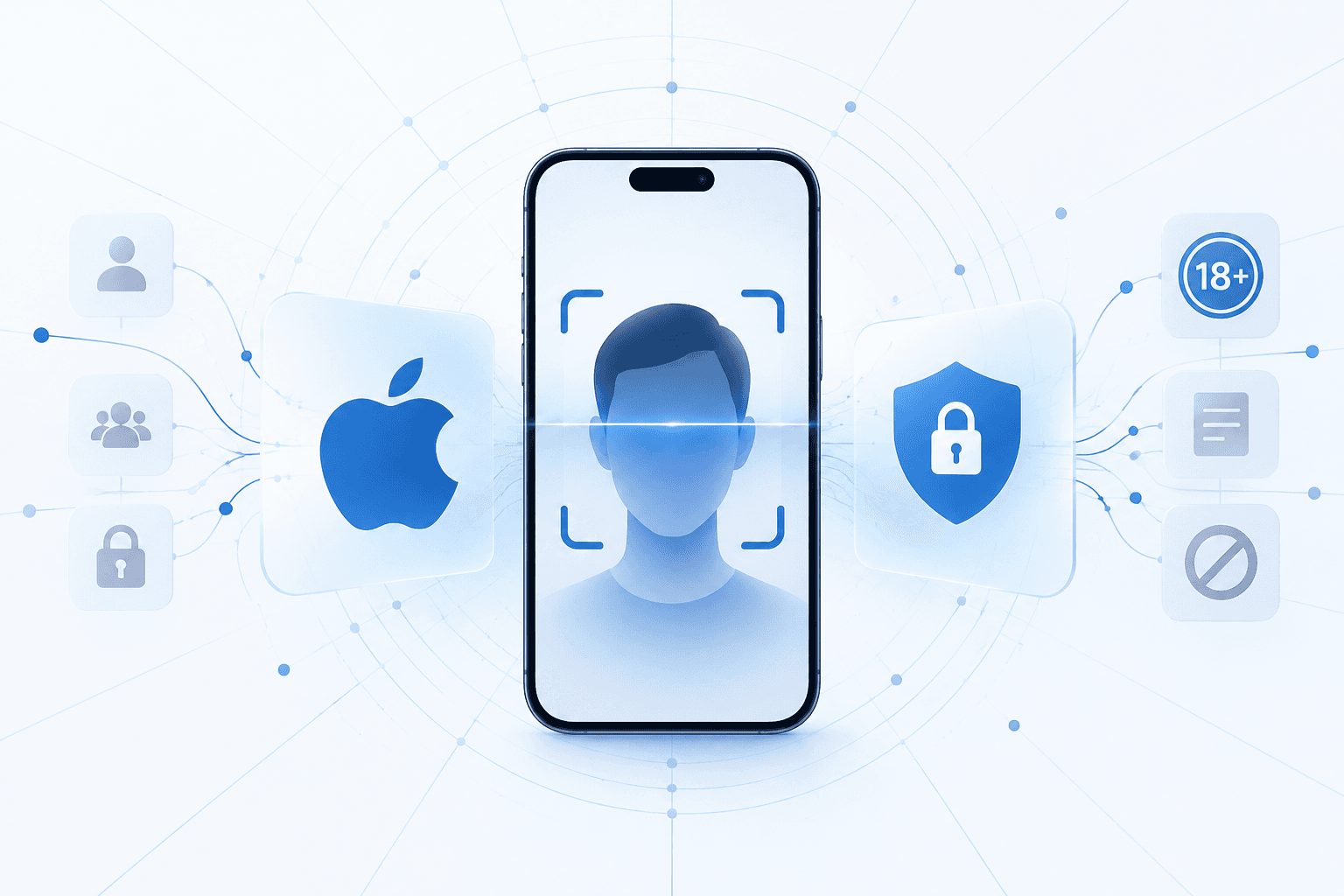
Apple has documented selfie-based adult age confirmation for Apple Accounts on iOS and iPadOS 27.2 or later, subject to regional availability and requirements. Confirmation can govern changes to safety settings, access to certain services, and downloads or purchases of apps rated 18+. Apple says age-estimation models analyze selfies on-device and through Private Cloud Compute, with results combined on the device. According to Apple, no one—including Apple—can access the selfie during analysis, and it is deleted after confirmation without being retained in any form.
Tech Times reports facial age-estimation deployments in Australia, Brazil, Singapore, and the United Kingdom, alongside carrier-based verification in South Korea and alternatives involving credit cards, account-history signals, or government identification. Those rollout details have not been independently verified in the supplied material. The report raises concerns about undisclosed accuracy, demographic misclassification, limited independent assurance, and the privacy and access implications of operating-system-level enforcement. Organizations managing Apple devices should assess regional requirements and potential effects on account access and app distribution; the references describe an age-assurance feature, not a breach, cyberattack, or exploited vulnerability.
Why it matters
Apple's adult age-confirmation feature introduces regional access and privacy considerations for organizations and users running iOS or iPadOS 27.2 or later. Failure to complete verification can restrict eligible account actions, safety-setting changes, and adult-rated app access; the supplied references describe no breach, exploitation, or device-wide lockout.
- Affected populations: Apple Account holders in regions requiring age assurance, including employees using Apple devices and organizations distributing age-restricted applications. Applicability to managed accounts and enterprise distribution requires validation.
- Operational impact: Verification failures or unavailable identity-document alternatives can increase support demand and interrupt access to restricted applications or services. Actual organizational impact depends on regional rules and account configurations.
- Privacy impact: Facial-image processing introduces sensitive-data governance considerations. Apple states that selfies are inaccessible during analysis and deleted after confirmation; the supplied material does not establish unauthorized access or retention.
- Scope: Apple confirms regional availability but does not enumerate countries in the supplied support facts. Tech Times reports deployments in Australia, Brazil, Singapore, and the United Kingdom; those rollout details are not independently verified here.