TeamViewer Patches Five High-Severity Client and Host Vulnerabilities
Vulnerability Disclosure · 8 sources · Updated 2mo ago · First seen Sep 29, 2026
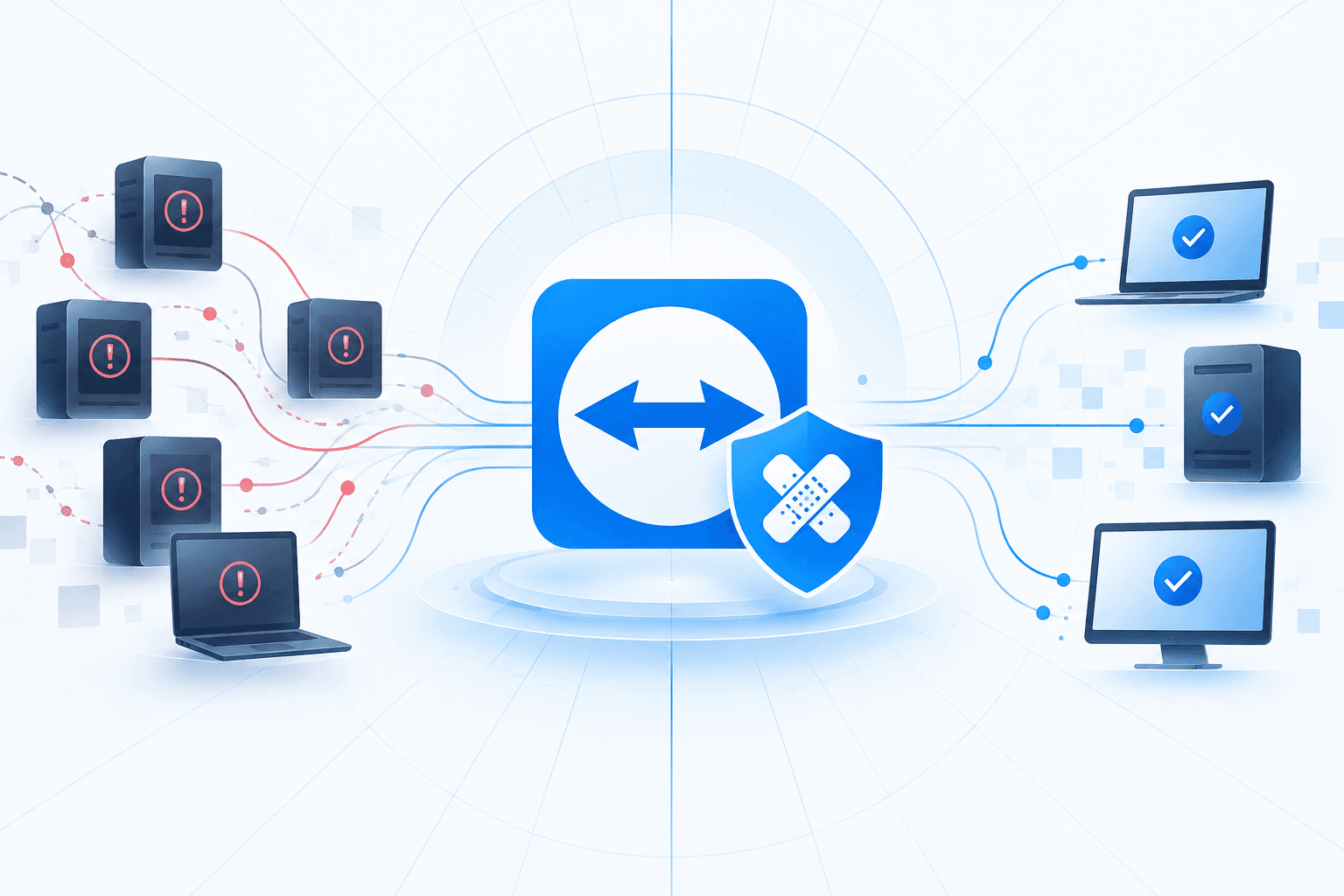
TeamViewer released fixes for five high-severity vulnerabilities in its Full Client and Host products for Windows, Linux, and macOS. The issues primarily affect versions earlier than 15.82 and include local privilege-escalation flaws, a heap-based buffer overflow in session-recording playback that could enable code execution, and an access-control bypass that could allow unauthorized remote actions and potentially remote code execution.
The Canadian Centre for Cyber Security issued advisory AV26-977 urging organizations to review TeamViewer’s security bulletins and apply available updates. TeamViewer said version 15.82, along with specified maintenance and legacy releases, remediates the flaws; it reported no known public disclosure or active exploitation at the time of publication. Organizations should prioritize updating TeamViewer endpoints, especially systems that permit unattended remote access or use session recording.
Why it matters
Impact assessment
TeamViewer Full Client and Host deployments on Windows, Linux, and macOS are exposed to five high-severity flaws, including an authenticated remote access-control bypass with potential remote code execution and several local privilege-escalation paths. Organizations using TeamViewer Remote, Tensor, or ONE are affected where their underlying Client or Host components remain unpatched, particularly unattended hosts, administrator workstations, and systems that process session recordings.
- The highest-impact issue, CVE-2026-92370, can let an authenticated remote operator bypass configured session restrictions and perform unauthorized actions; this undermines permission-based controls used to limit remote-support sessions.
- Local attackers may gain SYSTEM or root privileges through privileged IPC, installer rollback, or Cloud Session Recording file-operation flaws.
- A crafted
.tvsrecording can execute code when opened in affected Linux or macOS session-recording playback functionality. - No public exploit code, public disclosure preceding the vendor bulletin, or active exploitation was known to TeamViewer as of September 29, 2026. The broad cross-platform installed base and frequent use of TeamViewer for privileged remote administration make rapid patching important.
Affected scope
- TeamViewer Full Client and TeamViewer Host on Windows, Linux, and macOS.
- Derived deployments through TeamViewer Remote, Tensor, and ONE where affected Client or Host components are installed.
- Primary affected versions: 15.x releases before 15.82.
- Legacy affected branches: Windows 7/8 15.64.x before 15.64.8; 14.7.x before 14.7.48855; and 13.2 releases requiring platform-specific updates.