Storm-3068 Abuses Password Reset to Steal Kubernetes Credentials via Azure DevOps
Supply Chain Risk · 2 sources · Updated 2mo ago · First seen Sep 29, 2026
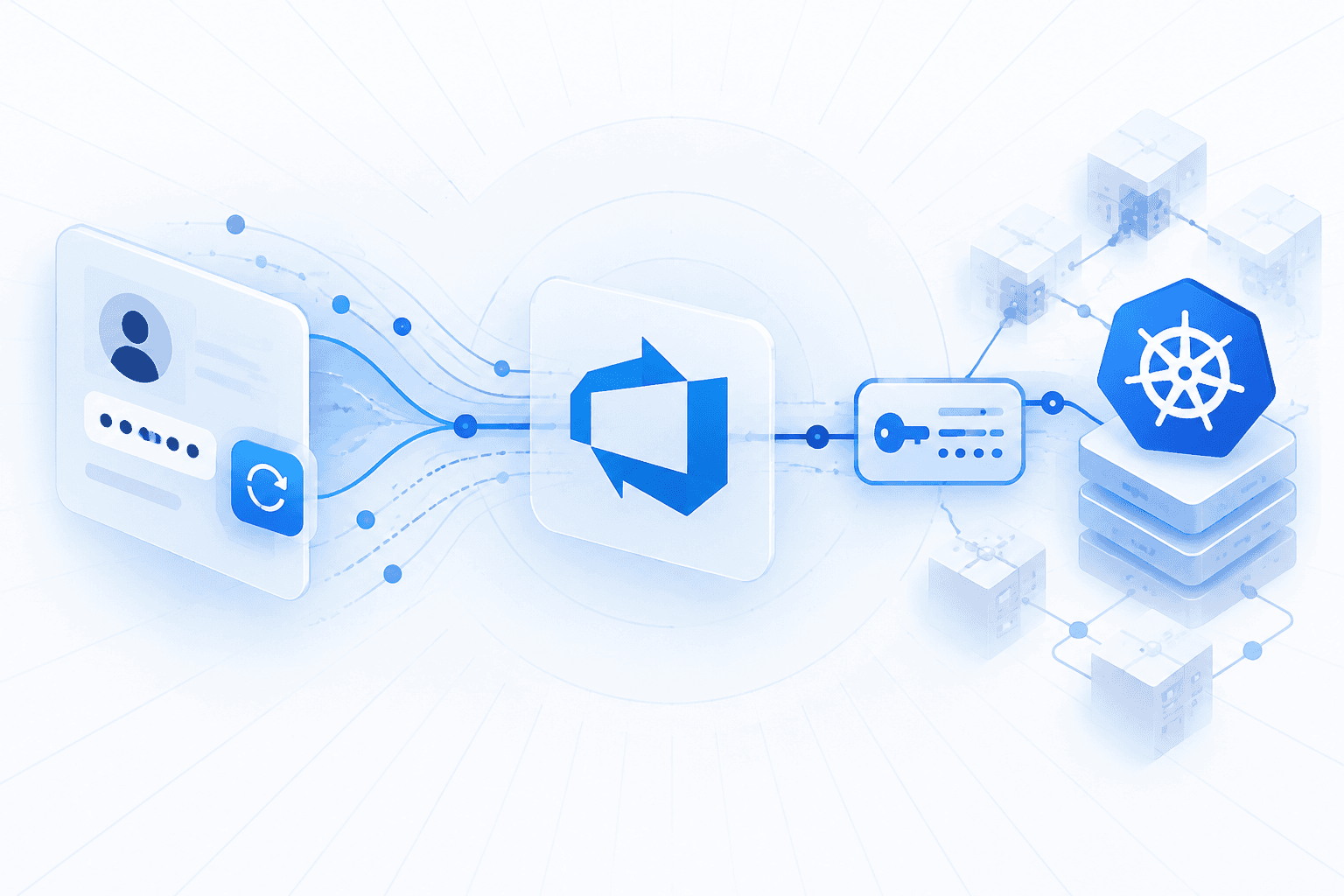
Microsoft attributed a cloud and DevOps intrusion to Storm-3068, which abused a self-service password-reset workflow to take over a user identity and register attacker-controlled authentication methods. Using the account’s legitimate privileges rather than malware or a software exploit, the actor enumerated Azure DevOps projects, repositories, pipelines, deployment environments, and connected cloud resources.
Storm-3068 created and altered Azure DevOps pipelines to deploy a Kubernetes agent and collect cluster kubeconfig files and credentials. One malicious pipeline could access more than 50 resources and services, and investigators found seven stolen Kubernetes configuration files committed to a repository. The actor also modified pipeline scripts to install Atera and Chisel for alternate remote access and reverse tunneling. Microsoft recommends phishing-resistant MFA, limiting self-service password-reset access for privileged accounts, enforcing pipeline approvals and branch protections, constraining pipeline permissions, and applying least privilege across identity, DevOps, and cloud environments.
Why it matters
Impact assessment
Storm-3068 demonstrated that a single identity compromise can become a high-impact DevOps and cloud compromise when the account can create or alter Azure DevOps pipelines. Organizations using Azure DevOps with connected Kubernetes clusters, broad pipeline service connections, or privileged self-service password reset (SSPR) eligibility are exposed to cluster credential theft, unauthorized cloud access, and persistent remote access.
- Affected environments: Microsoft Entra ID identities, Azure DevOps organizations/projects, build and deployment pipelines, connected cloud resources, and Kubernetes clusters.
- Severity: High. Stolen
kubeconfigfiles contain Kubernetes API connection details and authentication material, enabling unauthorized cluster administration, workload manipulation, secret access, and potential lateral movement into cloud resources. - Scope: The observed campaign relied on legitimate identity and DevOps capabilities rather than a product vulnerability. Exposure is therefore driven by identity recovery controls, account privilege, pipeline permissions, service connections, and repository protections.
- Demonstrated blast radius: One malicious pipeline was authorized to access more than 50 resources and authenticated services. Investigators identified seven stolen Kubernetes configuration files committed to an Azure DevOps repository.
- Known activity: Microsoft attributed the intrusion to Storm-3068 and investigated it with the affected organization. The provided reporting does not identify a broader set of victim organizations or public infrastructure indicators.
Affected entities
- Threat actor: Storm-3068
- Platforms: Microsoft Entra ID self-service password reset, Azure DevOps, Kubernetes
- Remote-access tooling abused: Atera, Chisel
- Investigating entities: Microsoft Detection and Response Team (DART), Microsoft Threat Intelligence