EU DMA AI Interoperability Measures Open Android to Third-Party AI Agents
Regulatory & Policy · 2 sources · Updated 2mo ago · First seen Mar 7, 2024
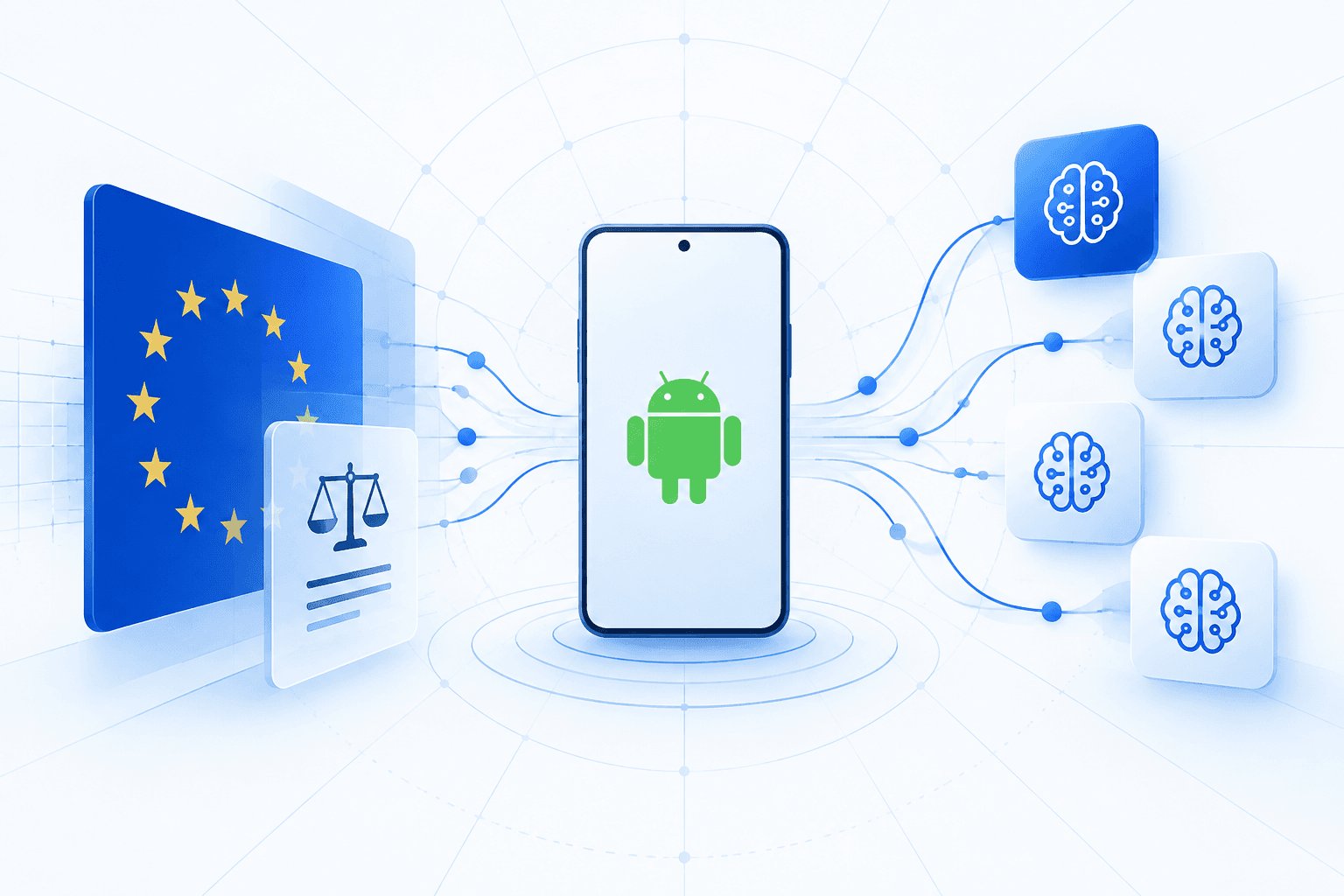
The European Commission opened specification proceedings to define how Google must meet Digital Markets Act (DMA) interoperability requirements for Android and data-access requirements for Google Search. The Android proceeding concerns whether third-party AI-service providers must receive access to the same hardware and software features used by Google's own services, including Gemini, under Article 6(7). A separate Article 6(11) proceeding examines fair, reasonable, and non-discriminatory access to anonymised Search ranking, query, click, and view data for rival search engines, including whether AI chatbot providers qualify. The Commission said the proceedings themselves did not establish non-compliance but could inform later enforcement, including fines or periodic penalty payments.
Google said the Commission's final Android AI interoperability measures would require deeper access for user-downloaded AI agents to sensitive capabilities such as ambient microphones, cameras, on-screen content, and screen automation. The company warned that fraud, social engineering, polymorphic malware, and indirect prompt injection could abuse such access to compromise user data, accounts, and devices. Google also opposed a Trusted Certification Authorities model that could allow third parties to certify restricted-feature access without Google or device manufacturers retaining final approval, suspension, and revocation authority, and called for cybersecurity-expert consultation and strong platform enforcement controls during implementation.
Why it matters
Impact assessment
The prospective DMA interoperability measures could expand access by third-party AI agents to sensitive Android capabilities, increasing exposure for Android users and enterprises that allow user-installed AI applications on managed or BYOD devices. The greatest risk is unauthorized access to communications, financial accounts, identity data, on-screen content, and device settings following malicious permission grants or compromised agent behavior.
- Scope: Potentially broad across Android devices in the EU if implementation makes privileged capabilities available beyond platform-vetted integrations.
- Affected parties: Android device users, enterprises with mobile fleets, mobile-device-management teams, financial and identity-sensitive applications, and third-party AI providers.
- Business impact: Account takeover, payment fraud, data disclosure, unauthorized configuration changes, regulatory exposure, and loss of trust in enterprise mobile controls.
- Exploitation status: No vulnerability, malicious application, or confirmed in-the-wild exploitation tied to these prospective DMA measures has been reported. Google’s cited risks are forward-looking security concerns.
- Regulatory status: The European Commission stated that its specification proceedings do not themselves establish DMA non-compliance; they may inform future enforcement, including fines or periodic penalty payments.