EU Orders Google to Open Android Assistant Access and Share Search Data
Regulatory & Policy · 3 sources · Updated 4mo ago · First seen Jul 17, 2026

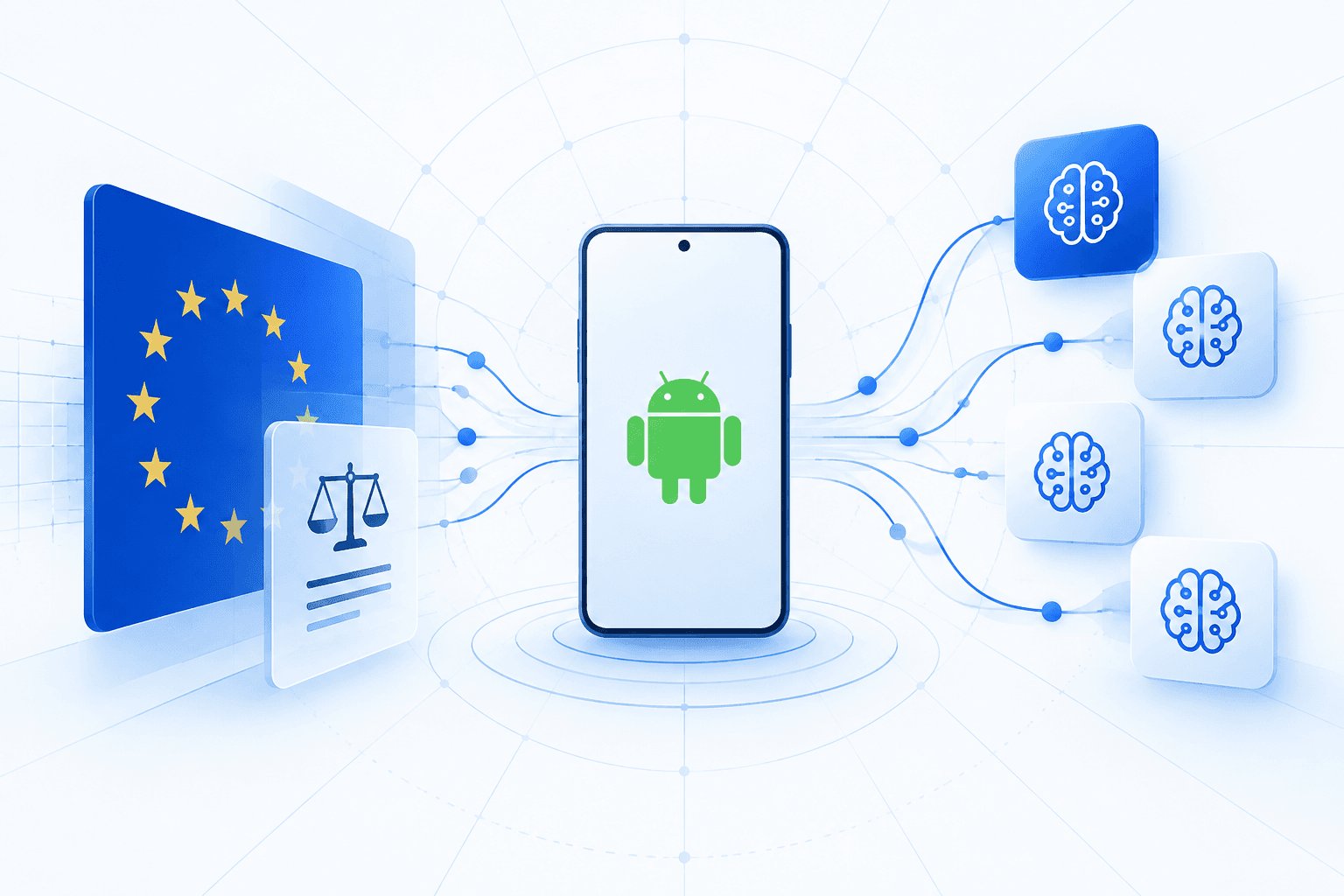
The European Commission issued two binding decisions under the Digital Markets Act requiring Google to expand interoperability on Android and provide certain Google Search data to qualifying rivals. Under the Android ruling, third-party AI assistants must be allowed access to capabilities that Google Gemini already uses, including microphone, camera, screen interaction, ambient sensor data, hotword activation, background execution, and app-driving automation, with most changes tied to Android 18 and a broader compliance deadline of 1 August 2027. For a smaller set of more sensitive functions, Google may require certification through a Qualified AI Assistant Programme, but the Commission limited Google’s discretion and required equal treatment with Gemini.
A second ruling compels Google to share anonymized search query, click, and ranking data with eligible rival search engines and AI chatbots that perform search, with rollout beginning in 2027 under contractual, audit, and independent review safeguards. Google said the measures could weaken privacy and security protections, expose sensitive search histories and trade secrets, and create broader national security risks, while the Commission said the final terms include tighter safeguards than earlier drafts. Google is expected to appeal the decisions.
Why it matters
Impact assessment
The immediate impact is governance and exposure-related rather than an active cyber incident. Organizations using Android in the EU, especially regulated sectors such as finance, healthcare, and government, will face increased security and privacy risk from broader third-party AI assistant access to sensitive device capabilities and from future sharing of anonymized Google Search data with qualifying rivals.
The scope is potentially widespread across EU Android users and enterprises once Android 18 and the 2027 rollout milestones arrive, but there are no reported exploitation-in-the-wild incidents tied to the Commission decisions themselves. The main business risk is expanded attack surface, more complex mobile-device policy decisions, vendor-risk reviews for third-party assistants, and possible data-protection, reputational, and operational consequences if privileged assistant access is abused.
Supporting facts
- The European Commission adopted two binding specification decisions against Google on 16 July under the Digital Markets Act.
- One decision requires Google to give rival AI assistants Android access comparable to Gemini.
- The Android decision covers 11 operating system features.
- Most Android interoperability measures are due in Android 18 and by 1 August 2027 at the latest.
- Support for multiple assistants listening concurrently was deferred to Android 19 and 1 August 2028.
- The second decision requires Google to provide anonymized search query, click, and ranking data to rival search engines and AI chatbots that perform search.
- Search-data rollout begins in 2027, with Google required to publish an eligibility form and beneficiary webpage by the end of August, complete the dataset by November, and set pricing by January 2027.
- Regulated sectors may face greater impact because assistant access can extend to business applications, location data, contacts, voice commands, messaging, and app automation.
- A certified assistant may retrieve and draft Gmail, manage Calendar events, access Drive and Docs content, trigger Maps navigation, control YouTube playback and query watch history, read and write SMS, MMS, and RCS in Messages, and place phone calls.
- Google argued the measures could weaken privacy and security protections, expose sensitive search histories and trade secrets, and create national security risks.
- No source reports confirmed malicious exploitation or breach activity resulting from these rulings.