Mallory
← Back to News
ai-platform-securityopen-source-dependency-vulnerabilitypackage-repository-poisoningai-enabled-threat-activity

AI-Generated Code Overwhelms Open-Source Review and Security Controls

Emerging Technology Risk · 2 sources · Updated 2mo ago · First seen Sep 17, 2026
AI-Generated Code Overwhelms Open-Source Review and Security Controls

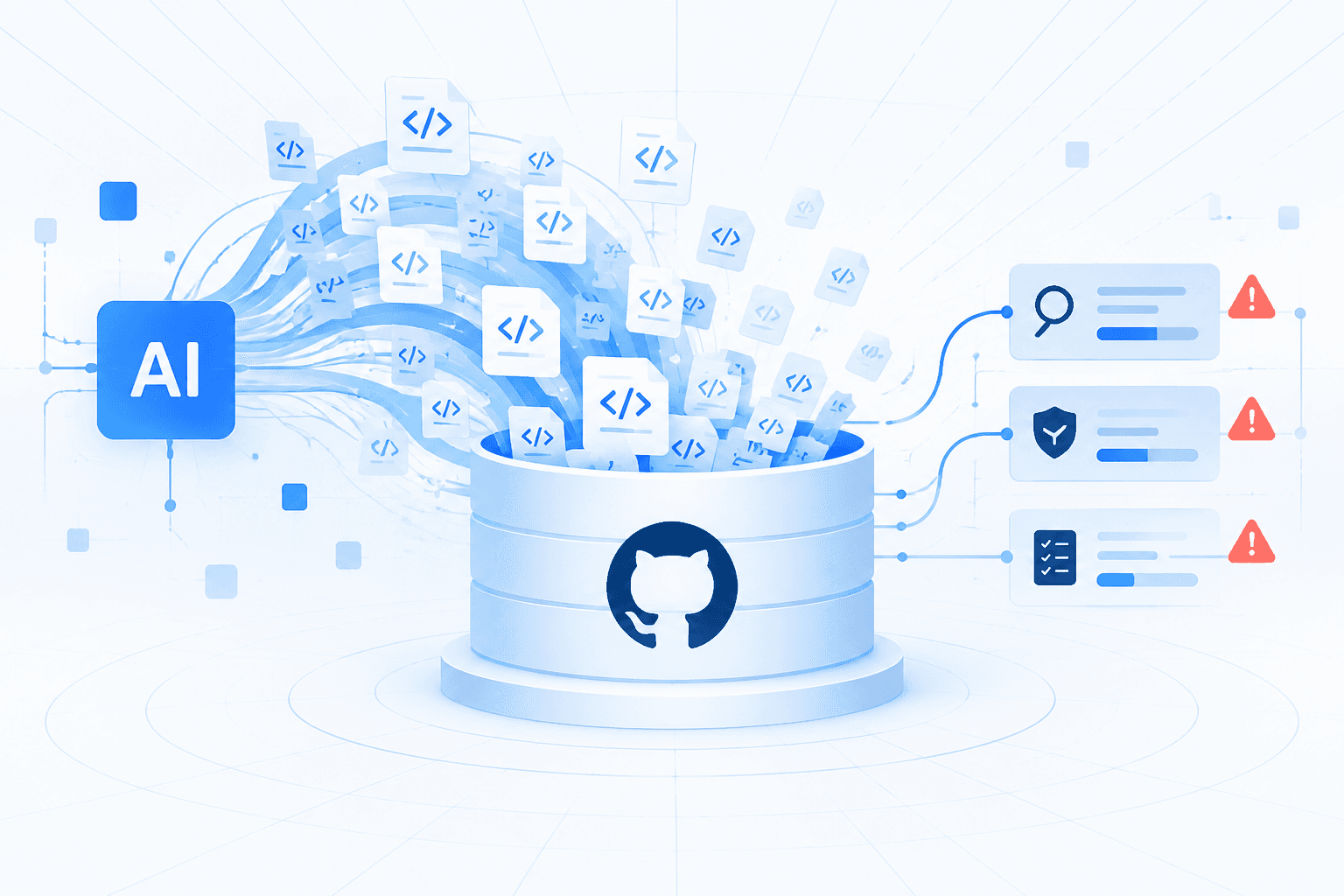
AI coding tools are accelerating software contribution and vulnerability remediation, but they are also expanding the volume of code that maintainers and enterprise engineering teams must validate. Open-source projects—many operating with limited funding and staff—face added exposure from AI-assisted flaw discovery and exploitation, malicious packages, incomplete software bill of materials adoption, and poor visibility into the dependencies organizations rely on.

Security leaders are being urged to treat AI-generated code as disposable implementation governed by explicit requirements, specifications, and tests rather than trusting it as inherently reviewable. AI-assisted review can help identify defects, including a generated regular expression vulnerable to catastrophic backtracking and application denial of service, but it does not remove the need for governance. Recommended controls include investing in project maintenance, documentation, secure packaging, dependency inventories, fundraising, and requirements-focused review while using automated tools to remediate issues and remove obsolete code.

Why it matters

Impact assessment

AI-assisted development is expanding the volume of code and third-party contributions that enterprises and under-resourced open-source maintainers must validate, increasing software supply-chain and application-security risk. The exposure is widespread across organizations that consume open-source software, including cloud, AI, automotive, mobile, and enterprise environments; impact can include vulnerable releases, malicious dependencies, application denial of service, emergency patching, and service disruption.

Supporting details

  • Open-source components are extensively embedded in phones, vehicles, cloud systems, and AI platforms.
  • Maintainers remain accountable for approving release code even as AI increases the volume of external contributions and potential low-quality changes.
  • Weak funding and deferred maintenance can leave widely consumed dependencies vulnerable or abandoned.
  • AI can accelerate both vulnerability remediation and adversarial flaw discovery or exploit development, reducing defenders' patch-response window.
  • Complex dependency trees can delay remediation because upstream and downstream components may require sequential upgrades and re-releases.
  • No named organization, software product, or confirmed exploitation incident is reported in the source material.
  • A demonstrated risk is regular-expression denial of service: an AI-generated regex with catastrophic backtracking can lock an application while processing crafted non-matching input.

New surface, new adversariesTrack how attackers are adapting to this technology.
Track this risk
Event timeline

How this story unfolded

Events from the most recent confirmed update back to the earliest known activity.

6 events · 1989 – 2025
  1. Reported Sep 18, 20262mo ago

    Carta automates feature-flag and dead-code removal with Claude

    Carta’s Feature Flag Reaper Claude skill autonomously removed more than 400 feature flags and tens of thousands of lines of dead code. Carta also implemented a Claude skill using observability data to help remediate software problems, though it was not fully autonomous.

    Complexity and Creativity in Software Engineering - InfoQ
  2. Reported Sep 18, 20262mo ago

    AI review detects denial-of-service risk in generated regex

    Phillip Mortimer described an AI code review that found catastrophic backtracking in an AI-generated regular expression. The overlapping repeated pattern could cause exponential processing when rejecting inputs and potentially lock an application in a denial-of-service condition.

    Complexity and Creativity in Software Engineering - InfoQ
  3. Reported Sep 17, 20262mo ago

    ACM authors warn AI increases open-source maintenance burden

    Six authors writing for the ACM Technology Policy Council said AI coding tools increase the volume of code that human open-source maintainers must review and can aid both vulnerability remediation and attackers. They called for improved funding, governance, documentation, packaging, and dependency management.

    AI is adding to the review load on open-source projects, many of them thinly funded - Help Net Security
  4. 2025

    Google CodeMender contributes 72 open-source security fixes

    Between April and October 2025, Google reported that its CodeMender agent contributed 72 security fixes to open-source projects, including projects containing up to 4.5 million lines of code.

    AI is adding to the review load on open-source projects, many of them thinly funded - Help Net Security
  5. 2024

    Linux and Apache foundations report 2024 revenue

    The Linux Foundation reported $292,217,236 in revenue for 2024, while the Apache Software Foundation reported $2,379,402, illustrating uneven funding among open-source institutions.

    AI is adding to the review load on open-source projects, many of them thinly funded - Help Net Security
  6. 1989

    Arthur Whitney releases the J Incunabulum

    Arthur Whitney’s 1989 J Incunabulum provided a compact C implementation of an interpreter for the J programming language, later cited by Phillip Mortimer as an example of dense and difficult-to-read software.

    Complexity and Creativity in Software Engineering - InfoQ
Do you run this?Follow how adversaries are adapting to this technology, and where it touches your stack today.
Track This Risk
Mallory platform

See the full picture, correlated to your attack surface.

This page covers what’s public. Mallory adds the parts that aren’t: which of your assets are affected, which threat actors are using it right now, and what to deploy next.

Exposure mappingMap indicators from this story to your assets and identify affected systems in minutes.
Threat actor evidenceEvery observed campaign, victim, and pivot linked to actors named in this story.
Associated malwareMalware, exploits, and IOCs connected to the activity described here.
Detection signaturesYARA, Sigma, and Snort rules deployed to your SIEM as soon as they’re published.
Scheduled alertsGet matching new stories delivered to your team as they break, not the next morning.
AI threadsAsk questions about this story and take action on the answers.