Mallory
← Back to News
ai-platform-securitystandards-framework-updateoperational-disruption

AI Coding Tools Boost Output While Increasing Review, Security, and Burnout Risks

Emerging Technology Risk · 16 sources · Updated 5mo ago · First seen Mar 17, 2026
AI Coding Tools Boost Output While Increasing Review, Security, and Burnout Risks

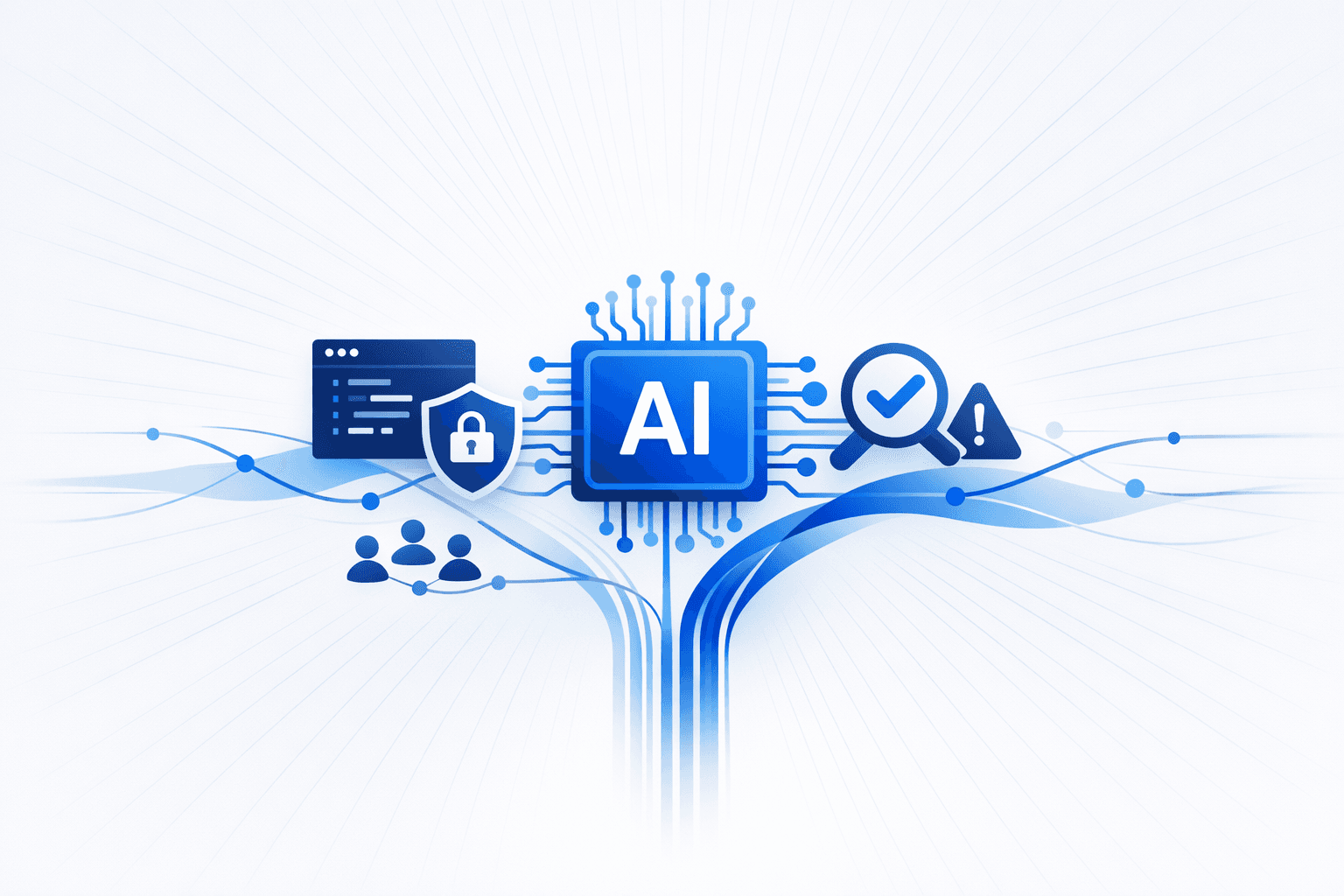
Enterprises are accelerating adoption of AI coding assistants and agents, with vendors and engineering leaders reorganizing around tools such as GitHub Copilot, Codex, Claude Code, and formal-verification agents to increase software output and support smaller teams. OpenAI has reportedly shifted strategy toward coding and enterprise customers, while companies such as Cursor are deploying always-on security agents that scan pull requests, patch dependencies, and block risky changes before release. Research and industry reporting also show AI is changing how developers work: Copilot users spend more time coding and less time on collaboration and project-management tasks, and engineering teams increasingly treat AI as a force multiplier rather than a replacement for human developers.

At the same time, multiple studies and incident reports say the gains are being offset by a growing review and supervision tax. Reports from Harness, DORA, Sonar, and other researchers found that heavier AI use often correlates with more code review effort, higher defect and deployment risk, longer remediation and recovery times, and rising burnout among senior engineers who must validate AI-generated changes. Security researchers at RSAC 2026 said AI assistants reproduce common flaws such as SSRF, XSS, path traversal, command injection, and open redirects at scale, while reporting tied AI-assisted changes to outages and operational failures, including an AWS disruption. Across the coverage, experts urged organizations to keep humans in the loop, apply stricter governance and testing for AI-generated code, and measure validation workload, defect escape, and technical debt rather than code volume alone.

Why it matters

Impact assessment

AI coding assistants materially affect software-producing organizations across technology, SaaS, enterprise IT, regulated industries, and any business shipping code with tools such as GitHub Copilot, Codex, Claude Code, Cursor, and prompt-to-app platforms. The immediate impact is less about a single exploit and more about elevated defect rates, insecure code introduction, review bottlenecks, longer remediation cycles, and burnout among senior engineers who must validate AI-generated changes.

The exposure is widespread rather than narrowly targeted because survey and industry reporting indicate near-universal AI use somewhere in development and substantial production deployment of AI-generated code. There are reported real-world incidents tied to AI-assisted changes, including AWS disruption reporting and disclosed vulnerabilities in AI-generated open-source projects, showing the risk is operational and already manifesting in the wild.

Supporting details

  • Nearly half of surveyed organizations run AI-generated code in production; almost all surveyed organizations use AI somewhere in development.
  • More than 80% of organizations changed development and release processes to account for AI-generated code.
  • Harness reported 69% of frequent AI users said deployment problems occur more often when AI-generated code is involved.
  • Harness reported frequent AI users had longer incident recovery times: 7.6 hours average versus 6.3 hours for occasional or limited users.
  • Harness reported 96% of frequent AI users work evenings or weekends multiple times each month due to release-related work.
  • Harness reported 81% of developers spend more time in code review after AI adoption.
  • Multiple sources describe a review and supervision tax concentrated on senior engineers and maintainers.
  • Reported exploitation-relevant incidents include:
    • AWS customer cost calculator interruption reportedly lasting 13 hours after Kiro deleted and recreated an environment.
    • OX Security disclosure of unauthenticated remote code execution in DeepSeek OCR App.
    • OX Security disclosure of open redirect and SSRF flaws in SaaS-Starter.
  • Security researchers at RSAC 2026 said AI assistants reproduce common vulnerability classes at scale, increasing the volume of insecure code entering pipelines.
  • Regulated and customer-facing environments face higher risk because human reviewers must still validate authorization boundaries, failure behavior, audit readiness, and policy compliance.
  • Non-security business impacts include technical debt accumulation, reduced junior developer learning opportunities, and reputational damage from outages or insecure releases.
New surface, new adversariesTrack how attackers are adapting to this technology.
Track this risk
Event timeline

How this story unfolded

Events from the most recent confirmed update back to the earliest known activity.

15 events · Mar 16, 2026 – Jul 1, 2026
  1. Jul 1, 20265mo ago

    Flux survey finds nearly half of organizations run AI-generated code in production

    A Flux survey reported that nearly half of surveyed engineering organizations are running AI-generated code in production, while almost all use AI somewhere in software development and fewer than 5% have no adoption plans within a year. The survey said organizations are adding safeguards such as automated code review, code quality analysis, software composition analysis, and training as they adapt development processes to manage security, legal, and compliance risks.

    AI-generated code risks reach security, legal, and compliance teams - Help Net Security
  2. May 15, 20267mo ago

    Harness reports AI adoption creates more 'invisible work' for developers

    Harness' 2026 State of Engineering Excellence research found that widespread AI adoption in software development is increasing time spent on code reviews, bug fixing, and validating AI-generated output. The company said much of this remediation burden is untracked 'invisible work' and called for new metrics covering validation effort, AI acceptance rates, and tool costs.

    AI might help speed up software development, but 81% of devs now spend more time reviewing code - and it’s creating an ‘invisible work’ trend that’s pushing teams to the limit | IT Pro
  3. May 8, 20267mo ago

    InfoWorld panel says AI shifts engineering bottleneck to review and deployment

    An InfoWorld panel on agentic AI said engineering teams can deliver larger scopes of work with smaller staffs, but the main bottleneck has shifted from writing code to safely reviewing and operationalizing AI-generated output. Panelists said organizations are producing more pull requests through AI assistance while review capacity and deployment risk management lag behind.

    What happens when engineering teams reorganize around AI agents | InfoWorld
  4. May 5, 20267mo ago

    TechTrenches says AI-generated code quality worsens over time

    A TechTrenches article argued that code-generation systems amplify software quality problems because they are trained on buggy, vulnerable, and increasingly AI-generated code. It said AI-assisted development may boost short-term velocity while increasing complexity, duplication, defects, and security issues over time.

    Why AI-Generated Code Gets Worse Over Time, Not Better
  5. Apr 24, 20267mo ago

    Mistral launches Leanstral formal-verification code agent

    Mistral AI launched Leanstral in March as an open-source code agent that uses Lean 4 and formal verification to generate machine-checkable proofs that code matches a specification. The launch was positioned as a way to reduce human review bottlenecks, though experts cited in later coverage said human oversight is still needed for requirements, edge cases, and production risk.

    Mistral’s Leanstral wants to kill off human-in-the-loop code checks, but is it blowing in the wind? - The New Stack
  6. Apr 8, 20268mo ago

    Salesforce CEO says AI still cannot replace software engineers

    Salesforce CEO Marc Benioff said AI is improving engineering productivity but remains far from replacing human developers because current models cannot operate autonomously at the required level. The report pointed to continued hiring by major AI firms and ongoing security and remediation burdens from AI-generated code as evidence humans remain essential.

    Big tech is still hiring software engineers despite claims AI will replace them - and Marc Benioff says that’s the ‘canary in the coal mine’ for whether the technology is up to scratch | IT Pro
  7. Apr 7, 20268mo ago

    TechTrenches argues AI productivity gains impose a human supervision tax

    A TechTrenches article argued that generative AI increased workload for software engineers by accelerating output while leaving humans to validate it at biological limits. It said senior engineers face larger review queues, heavier cognitive demands, and greater burnout risk as they remain accountable for AI-assisted code.

    The Human Cost of 10x AI Productivity - by Denis Stetskov
  8. Apr 2, 20268mo ago

    The New Stack says AI-generated code shifts bottlenecks into review

    An April analysis argued that AI coding tools have not removed software delivery bottlenecks but instead moved them into code review queues, especially for senior engineers. It cited 2025 DORA data saying increased AI tool usage had not improved lead time, deployment frequency, change failure rate, or MTTR.

    There’s a hidden tax on every AI-generated merge request - The New Stack
  9. Mar 27, 20268mo ago

    OX Security discloses flaws in AI-generated open-source apps at RSAC 2026

    At RSAC 2026, OX Security researchers said AI coding assistants reproduce insecure coding patterns at roughly the same proportional rate as humans and disclosed an unauthenticated RCE in DeepSeek OCR App plus three flaws in SaaS-Starter. They said the main danger is that AI enables insecure code to be produced and deployed much faster and at greater scale.

    RSAC 2026: Treat AI like a ‘junior developer’ to catch coding errors | news | SC Media
  10. Mar 27, 20268mo ago

    CIO highlights AWS disruptions as warning on AI-built enterprise apps

    A follow-up CIO article argued that rapidly building enterprise tools with AI-assisted 'vibe coding' without governance is risky because organizations can create software faster than they can understand, integrate, and maintain it. It cited recent AWS disruptions related to AI-generated code as an example of those risks.

    Por qué desarrollar aplicaciones empresariales propias con Vibe es una apuesta arriesgada | CIO
  11. Mar 26, 20268mo ago

    CIO warns unmanaged enterprise 'vibe coding' raises operational risk

    A CIO article warned that AI-assisted software development should be tightly controlled with strict access controls, peer review, strong testing, and separation from sensitive systems. It said unmanaged use by non-IT employees building ad hoc enterprise apps could create disorder and serious technical debt.

    코딩 도우미로 자체 개발하는 기업용 앱, 민첩성과 함께 운영 부담도 증가 | CIO
  12. Mar 20, 20268mo ago

    Harness report links frequent AI coding use to more deployment issues

    Harness' 2026 State of DevOps Modernization report found that frequent users of AI coding tools shipped code faster but also reported more deployment problems, longer recovery times, and greater burnout risk. The report argued that AI accelerates coding faster than QA, security testing, validation, and incident response can scale.

    'AI doesn't solve the burnout problem. If anything, it amplifies it': AI coding tools might supercharge software development, but working at 'machine speed' has a big impact on developers | IT Pro
  13. Mar 17, 20269mo ago

    Harvard paper finds Copilot shifts developers away from collaboration

    A Harvard Business School working paper surveying 187,000 open-source developers found that free access to GitHub Copilot changed how developers allocated time. The study said developers spent more time coding and less time on project management and peer collaboration, suggesting AI is reshaping software engineering work patterns.

    GitHub Copilot's effect on collaboration has stunned researchers - The New Stack
  14. Mar 17, 20269mo ago

    OpenAI refocuses on coding tools and enterprise customers

    OpenAI reportedly narrowed its strategy toward coding products and enterprise adoption after internal leaders viewed Anthropic's gains as a wake-up call. The report said the company had recently released a refreshed Codex app and GPT 5.4 while pushing more resources toward business productivity use cases.

    OpenAI shifts to coding and enterprise after Anthropic
  15. Mar 16, 20269mo ago

    Cursor open-sources AI security agent templates

    Cursor released templates and Terraform for four always-on AI security agents built on its Cursor Automations platform: Agentic Security Review, Vuln Hunter, Anybump, and Invariant Sentinel. The company said the agents had already run on thousands of pull requests, blocked hundreds of issues from reaching production, and found vulnerabilities including SSRF and overly broad permissions.

    Cursor built a fleet of security agents to solve a familiar frustration - The New Stack
Linked entities

Related entities

Vulnerabilities, threat actors, malware, products, organizations, and breaches Mallory has linked to this story.

Open in app →

Affected products

5 linked
Claude CodeGithub CopilotCursorCursorClaude

Organizations

2 linked
Amazon Web ServicesCursor
Do you run this?Follow how adversaries are adapting to this technology, and where it touches your stack today.
Track This Risk
Mallory platform

See the full picture, correlated to your attack surface.

This page covers what’s public. Mallory adds the parts that aren’t: which of your assets are affected, which threat actors are using it right now, and what to deploy next.

Exposure mappingMap indicators from this story to your assets and identify affected systems in minutes.
Threat actor evidenceEvery observed campaign, victim, and pivot linked to actors named in this story.
Associated malwareMalware, exploits, and IOCs connected to the activity described here.
Detection signaturesYARA, Sigma, and Snort rules deployed to your SIEM as soon as they’re published.
Scheduled alertsGet matching new stories delivered to your team as they break, not the next morning.
AI threadsAsk questions about this story and take action on the answers.