Mallory
← Back to News
privacy-surveillance-policycybersecurity-regulationai-platform-security

EU Kids Act Would Mandate Age Checks for Social Media, Chatbots, and Online Games

Regulatory & Policy · 5 sources · Updated 2mo ago · First seen Sep 16, 2026

EU Kids Act Would Mandate Age Checks for Social Media, Chatbots, and Online Games

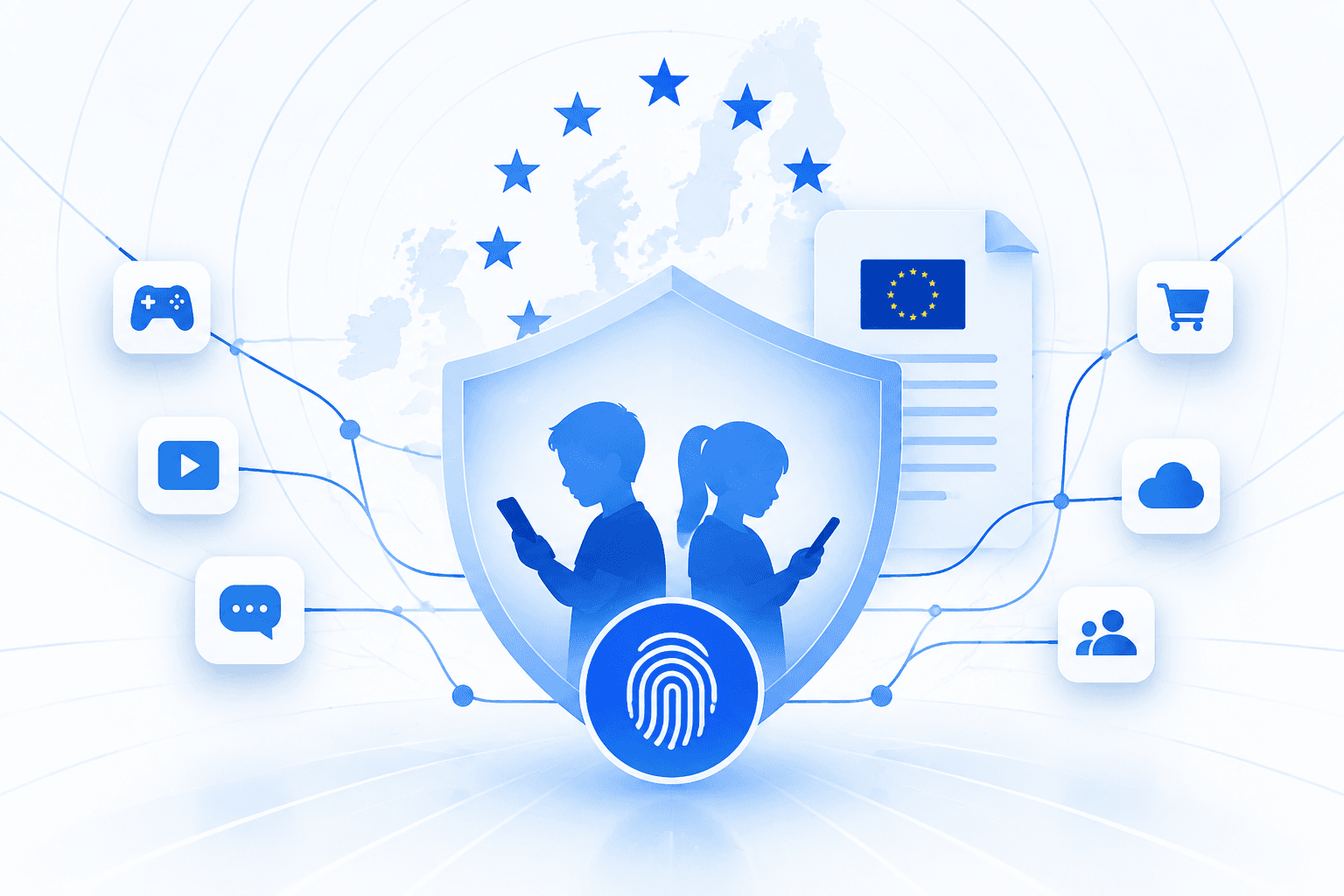
The European Commission is reportedly preparing an EU Kids Act that would curb unsupervised access by children under 15 to social-media and video-sharing platforms, AI chatbots or companion services, and online games. The draft would require age verification during account creation and before online-game downloads, restrict addictive design patterns and harmful recommendation feeds, and extend obligations to app stores; noncompliant organizations could face fines of up to 6% of worldwide annual revenue.

The proposal reportedly includes stricter protections for under-13s and limited service functionality for users below 15, with an age-verification “Mini-Wallet” envisioned to validate age using identity documents and facial-biometric comparison before sharing an age signal with services. Critics warn that identity-based checks could burden parents, expose sensitive identity and custody data, weaken anonymity and access to information, and create surveillance-enabling infrastructure. The measure remains a draft and must be approved by EU member states and the European Parliament, leaving its final thresholds, enforcement approach, and implementation date unresolved.

Why it matters

Impact assessment

The proposed EU KIDS Act would materially affect operators serving EU users, including social-media, video-sharing, online-game, app-store, AI chatbot, and AI-companion providers. If enacted, it would impose significant compliance, product-engineering, privacy, and third-party-risk obligations; noncompliance could result in fines of up to 6% of worldwide annual sales.

  • Scope: The measure remains a draft requiring approval by the European Parliament and EU member states. Final technical standards, enforcement model, age thresholds, and effective date are unresolved.
  • Affected users: Children and parents or guardians would face account restrictions and age/relationship-verification workflows. Services may need to support guardian-created restricted accounts for users aged 13–15 and block or limit younger users.
  • Operational impact: Covered providers would need to redesign onboarding, account controls, recommender systems, notifications, contact features, and child-data handling. Very large providers would face compliance-plan and independent-audit requirements.
  • Security and privacy impact: Proposed identity, custody, document, and biometric age-verification flows would create high-value personal-data processing and vendor dependencies. Centralized or poorly governed verification implementations raise risks of identity theft, sensitive-data disclosure, exclusion, and account abuse.
  • Market impact: Smaller, decentralized, open-source, and volunteer-operated services may face disproportionate administrative and implementation burdens if no exemption applies.
  • Exploitation status: No cyberattack, vulnerability exploitation, malware activity, or confirmed compromise is described.
What this changes for youSee the reporting duties and controls this puts on the clock.
Get the context
Event timeline

How this story unfolded

Events from the most recent confirmed update back to the earliest known activity.

4 events · Sep 17, 2026
  1. Reported Sep 17, 20262mo ago

    European Commission presents Mini-Wallet age-verification app

    The Commission presented a proposed age-verification application called Mini-Wallet, intended to provide services with a data-minimized age signal. The design described would use identity documents and biometric facial comparison against the document photograph.

    EU Kids Act: Dieses Gesetz macht es für Eltern nicht besser, sondern schlimmer - netzpolitik.org
  2. Sep 17, 20262mo ago

    EU Kids Act details parent-account and age-verification requirements

    The European Commission's proposed EU Kids Act would require parent accounts for under-15 users of social-media and video platforms, with verification of the parent’s and child’s ages and the adult’s custodial status. According to the CCC, these platforms would also be required to use an EU-provided age-verification platform.

    CCC | Schlimmer als Stoppschilder fürs Internet: Der EU Kids Act
  3. Reported Sep 16, 20262mo ago

    European Commission proposes EU Kids Act

    The European Commission is reported to be proposing the EU Kids Act, establishing age-based restrictions and supervised accounts for covered online services, including social media, video platforms, chatbots, and games. The draft also includes measures against addictive platform designs and harmful feeds, with potential fines of up to 6% of annual global sales for violations.

    EU Proposes Restricting Under-15s From Social Media, Chatbots, and Online Games - gHacks Tech News
  4. Reported Sep 16, 20262mo ago

    Brussels flags Meta’s youth-access safeguards and addictive features

    Brussels identified infinite scrolling, autoplay, and push notifications as concerning platform features and questioned whether Meta was adequately preventing younger children from accessing its platforms.

    EU Proposes Restricting Under-15s From Social Media, Chatbots, and Online Games - gHacks Tech News
Linked entities

Related entities

Vulnerabilities, threat actors, malware, products, organizations, and breaches Mallory has linked to this story.

Open in app →

Organizations

2 linked
European UnionEuropean Commission
Do you run this?See what this changes for your reporting obligations and which controls it puts on the clock.
Get the Regulatory Context
Mallory platform

See the full picture, correlated to your attack surface.

This page covers what’s public. Mallory adds the parts that aren’t: which of your assets are affected, which threat actors are using it right now, and what to deploy next.

Exposure mappingMap indicators from this story to your assets and identify affected systems in minutes.
Threat actor evidenceEvery observed campaign, victim, and pivot linked to actors named in this story.
Associated malwareMalware, exploits, and IOCs connected to the activity described here.
Detection signaturesYARA, Sigma, and Snort rules deployed to your SIEM as soon as they’re published.
Scheduled alertsGet matching new stories delivered to your team as they break, not the next morning.
AI threadsAsk questions about this story and take action on the answers.