Iranian MOIS Actors Deploy HEAVYGRAM Malware Through Telegram C2
Threat Actor Intelligence · 7 sources · Updated 2mo ago · First seen Sep 15, 2026
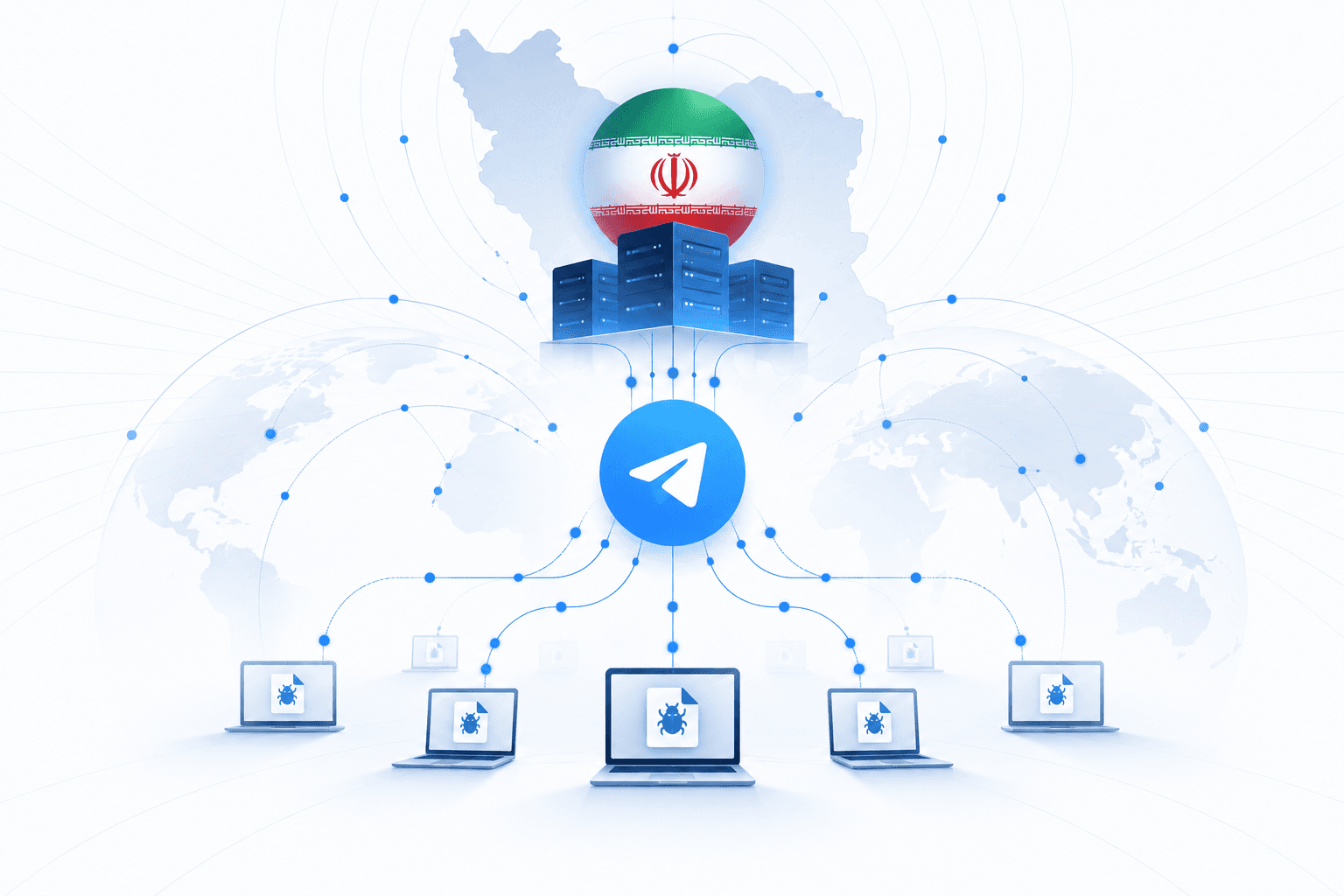
The FBI assesses that cyber actors linked to Iran’s Ministry of Intelligence and Security (MOIS) have used the modular Windows malware framework HEAVYGRAM since fall 2023 against Iranian dissidents, anti-government journalists, opposition groups, and other individuals Tehran considers threats worldwide. The operators use Telegram, WhatsApp, and Instagram social-engineering lures, impersonating IT-service providers to persuade targets to install AnyDesk or trojanized applications posing as Pictory Premium, Telegram Authenticator, and KeePass.
HEAVYGRAM uses Telegram Bot API infrastructure for command-and-control and data exfiltration, while Vultr S3 storage supports payload and data staging. Its implants can conduct host reconnaissance, execute commands, capture screenshots, steal browser credentials and sessions, collect Telegram and WhatsApp data and Outlook and Gmail content, and access removable media; optional modules enable screen and audio recording. Organizations supporting at-risk Iranian communities should scrutinize suspicious remote-access deployments and look for Telegram-based C2 activity, credential theft, and counterfeit software installers.
Why it matters
Impact assessment
HEAVYGRAM is an active, targeted Windows surveillance operation attributed by the FBI to Iranian MOIS cyber actors and linked with moderate confidence to Handala Hack/Void Manticore. It creates a high risk of intelligence loss, exposure of confidential sources and private communications, account takeover, doxxing, and reputational harm for Iranian dissidents, opposition organizations, journalists, and entities supporting these populations worldwide.
- Affected populations: Iranian dissidents, anti-government journalists, Farsi-language media, opposition groups, diaspora organizations, and their IT/support personnel.
- Exposure scope: targeted social engineering rather than indiscriminate mass exploitation; delivery occurs through Telegram, WhatsApp, and Instagram impersonation of trusted contacts or IT-service providers.
- Operational impact: attackers can establish persistent access, steal browser and messaging sessions, collect Outlook and Gmail content, capture screens and audio, execute arbitrary commands, and deploy follow-on payloads.
- Known activity: FBI reports MOIS use of HEAVYGRAM since fall 2023. Public reporting describes compromises involving a UK-based Farsi-language journalist and a US-based victim; prior Telegram-account compromises were associated with leaks concerning Iran International journalists.
- Escalation risk: the associated CRUDEEXCLUDE utility adds Microsoft Defender exclusions, reducing endpoint detection and enabling staged payload deployment. Void Manticore has a reported history of hack-and-leak and destructive wiping activity.
Structured facts
- Entities: Iran Ministry of Intelligence and Security (MOIS); Handala Hack; Void Manticore; Banished Kitten; Red Sandstorm; Storm-0842.
- Malware: HEAVYGRAM, also tracked by UK NCSC as CHOSEN BRICK; CRUDEEXCLUDE.
- Platforms: Windows endpoints.
- Objectives: intelligence collection, data leakage, and reputational harm.