
Loading story…
The FBI warned that cyber actors working on behalf of Iran’s Ministry of Intelligence and Security (MOIS) used Telegram as command-and-control infrastructure in a long-running malware campaign targeting Iranian dissidents, anti-regime journalists, and other opposition figures around the world. In FLASH-20260320-001, the bureau said the activity has been ongoing since at least fall 2023 and relied on social engineering and victim-tailored lures to deliver multi-stage Windows malware disguised as legitimate applications including Telegram, KeePass, WhatsApp, and Pictory.
According to the alert, the second-stage implant enabled persistent remote access and bidirectional communications through Telegram infrastructure, allowing operators to steal files, compressed archives, screen captures, and audio from infected systems. The FBI also linked some July 2025 hack-and-leak activity claimed by Handala Hack to malware used in the campaign and assessed that Handala Hack is connected to Homeland Justice, which it described as another MOIS-operated online entity, underscoring Iran’s broader use of proxy personas and cyber operations to combine espionage, data theft, and information operations.
TTPs, infrastructure, and targeting history in one profile.
3 events from the most recent confirmed update back to the earliest known activity.
On 2026-03-20, the FBI issued FLASH-20260320-001 warning that MOIS-linked cyber actors were using Telegram as command-and-control infrastructure to deliver and operate multi-stage malware. The alert described the malware’s persistent remote-access and data-theft capabilities, including collection of screen captures, audio, files, and compressed archives.
In July 2025, some hack-and-leak activity publicly claimed by Handala Hack was linked by the FBI to malware used in the broader MOIS-associated campaign. The FBI also assessed that Handala Hack is connected to Homeland Justice, another online entity operated by MOIS.
Cyber actors working on behalf of Iran’s Ministry of Intelligence and Security began a malware campaign targeting Iranian dissidents, anti-regime journalists, and other opposition figures worldwide. The activity, active since at least fall 2023, used social engineering and trojanized Windows applications masquerading as tools such as Telegram, KeePass, WhatsApp, and Pictory.
See this adversary's TTPs, infrastructure, and targeting history, correlated against your exposure.
2 references tracked. Mallory keeps watching after this page renders.
Map indicators from this story to your assets and identify affected systems in minutes.
Every observed campaign, victim, and pivot linked to actors named in this story.
Malware, exploits, and IOCs connected to the activity described here.
YARA, Sigma, and Snort rules deployed to your SIEM as soon as they’re published.
Get matching new stories delivered to your team as they break — not the next morning.
Ask questions about this story and take action on the answers.
Other stories Mallory is tracking that overlap on entities, sources, or topic labels.
The FBI warned that hackers linked to Iran’s Ministry of Intelligence and Security (MOIS) are using Telegram as command-and-control infrastructure in malware campaigns targeting Iranian dissidents, journalists, and opposition groups worldwide. The activity, observed since late 2023, relies on social engineering in which attackers impersonate trusted contacts or tech support and deliver malware disguised as legitimate apps such as Telegram, WhatsApp, or KeePass. Once installed on Windows systems, the multi-stage malware establishes persistence and connects to Telegram bots, allowing operators to steal files, capture screenshots and audio, record Zoom calls, compress data, and exfiltrate information. U.S. authorities said the operations appear tailored to victims’ behavior, suggesting prior reconnaissance, and tied the activity to broader MOIS influence and disruption efforts. The FBI said the same ecosystem includes the fake hacktivist brands **Handala Hack** and **Homeland Justice**, which it linked to hack-and-leak operations that combine APT-style intrusions with disinformation and selective data leaks to cause reputational and political harm. The Justice Department has separately described Handala as an MOIS front involved in the recent Stryker attack, while the FBI has seized websites associated with Handala and Homeland Justice.
Jun 29, 2026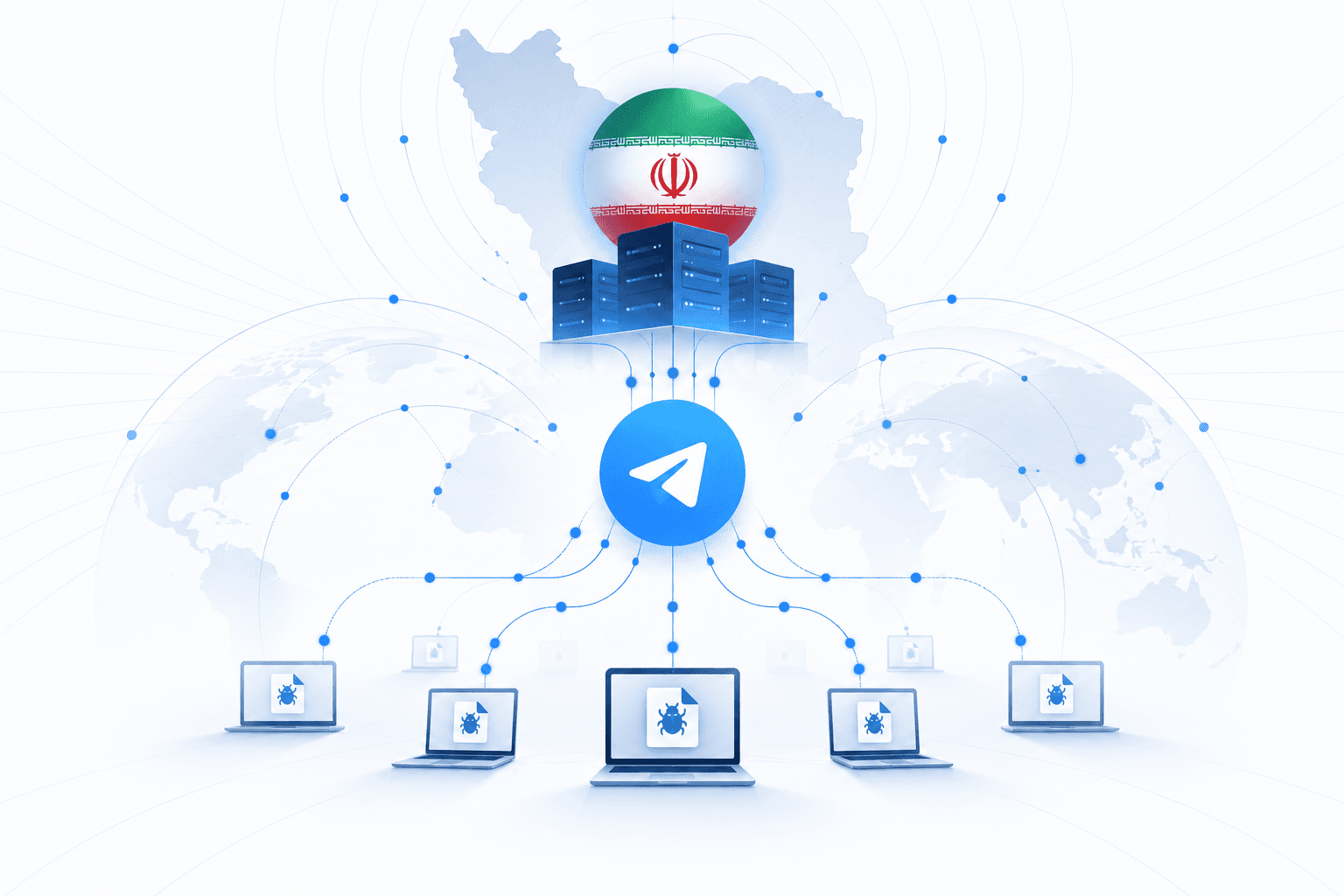
The FBI assesses that cyber actors linked to Iran’s Ministry of Intelligence and Security (MOIS) have used the modular Windows malware framework **HEAVYGRAM** since fall 2023 against Iranian dissidents, anti-government journalists, opposition groups, and other individuals Tehran considers threats worldwide. The operators use Telegram, WhatsApp, and Instagram social-engineering lures, impersonating IT-service providers to persuade targets to install AnyDesk or trojanized applications posing as Pictory Premium, Telegram Authenticator, and KeePass. HEAVYGRAM uses Telegram Bot API infrastructure for command-and-control and data exfiltration, while Vultr S3 storage supports payload and data staging. Its implants can conduct host reconnaissance, execute commands, capture screenshots, steal browser credentials and sessions, collect Telegram and WhatsApp data and Outlook and Gmail content, and access removable media; optional modules enable screen and audio recording. Organizations supporting at-risk Iranian communities should scrutinize suspicious remote-access deployments and look for Telegram-based C2 activity, credential theft, and counterfeit software installers.
Sep 18, 2026
Check Point Research reported that the **Rampant Kitten** espionage campaign targeted Iranian expats, dissidents, minorities, and anti-regime organizations in a long-running intelligence-gathering operation attributed to Iran-linked actors. The activity focused on collecting sensitive victim data, including **Telegram Desktop** files, **KeePass** password data, documents, and SMS-based two-factor authentication codes, indicating a strong emphasis on surveillance of perceived opponents of the Iranian regime. Researchers tied the operation to multiple malware families and infrastructure clusters active since 2014, including **TelB**, **TelAndExt**, a Python infostealer, and **HookInjEx**. The attackers used several delivery methods across platforms, including malicious documents, fake software downloads, phishing pages impersonating Telegram, Windows infostealers, and an Android backdoor, showing a sustained and multi-vector effort to compromise targets and exfiltrate communications and credentials.
Aug 15, 2026