China Spy Chief Warns US AI Models Could Accelerate Cyberattacks
Emerging Technology Risk · 2 sources · Updated 2mo ago · First seen Sep 15, 2026
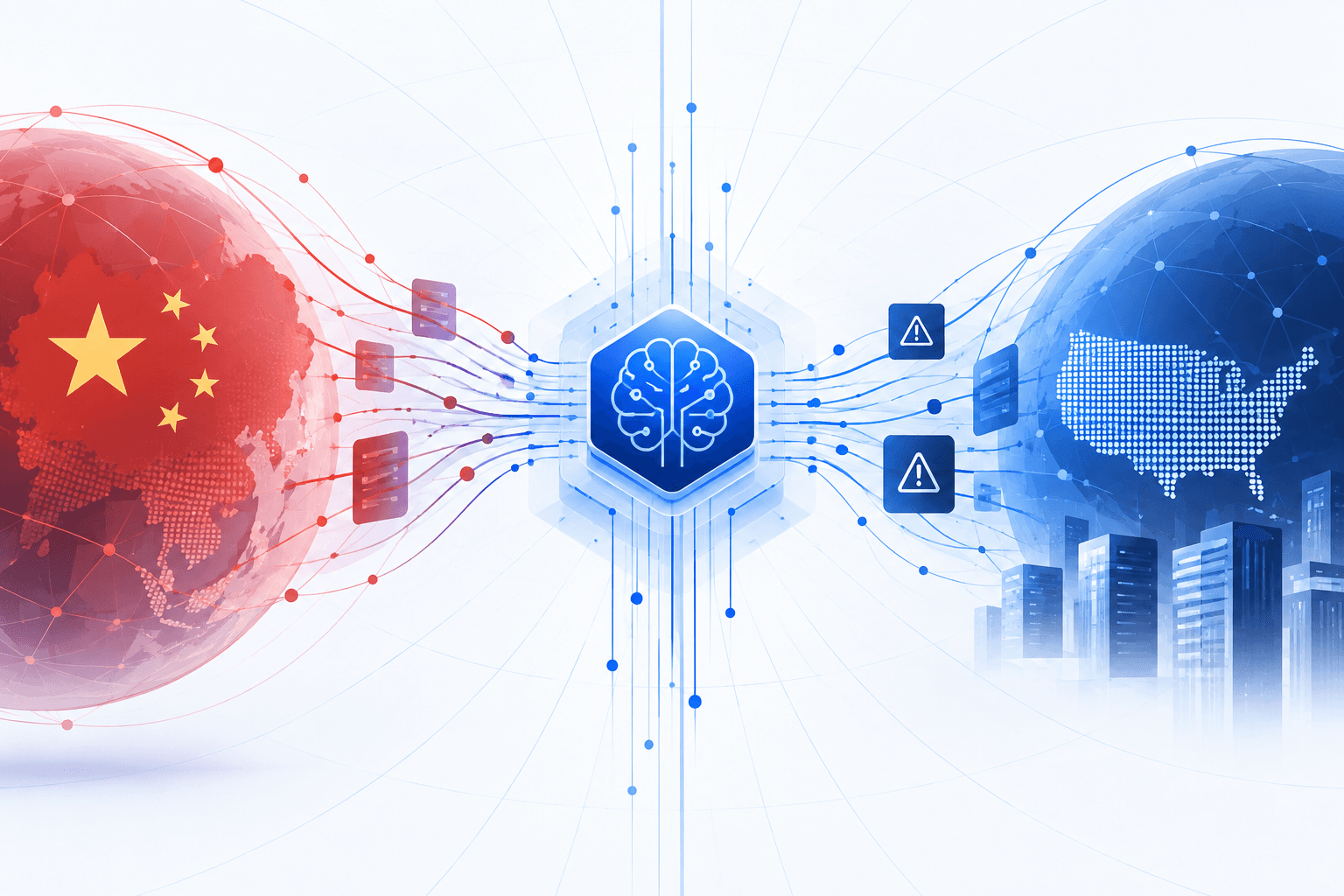
China’s Minister of State Security Chen Yixin warned that advanced generative AI has become a strategic-security risk, citing its potential to accelerate vulnerability discovery, automate attack-path construction and malware development, compromise critical infrastructure, and enable theft of industrial and state secrets. Chen singled out Anthropic’s Claude Mythos and OpenAI’s GPT-5.5-Cyber as examples of models that could increase cyberattack scale, while not alleging either company had attacked China; he also warned that Chinese users may expose sensitive information through foreign AI services and remotely managed products.
The warning followed Anthropic’s disclosure that a Chinese-speaking group used Claude in an autonomous vulnerability-research effort that reportedly identified zero-day flaws in a major security product. Chinese regulators subsequently issued version 3.0 of the AI Safety Governance Framework, calling for AI-specific laws, standards, supervision, and risk-controllable measures such as regulatory sandboxes, with added attention to autonomous agents, embodied AI, and loss-of-control risks. Chen urged China to preserve independent control over core AI technologies and technological sovereignty.
Why it matters
Impact assessment
AI-assisted vulnerability research, attack-path construction, and malware development can lower the cost and time required for capable actors to target enterprise and critical-infrastructure environments. The story describes strategic warnings and reported research activity, not a disclosed mass-exploitation campaign or confirmed compromise of the cited vendors' customers.
- Affected populations: operators of critical infrastructure, organizations holding industrial or state-sensitive data, enterprises using public foreign AI services for sensitive work, and users of remotely managed products.
- Potential impact: accelerated discovery and weaponization of vulnerabilities, theft of intellectual property and sensitive data, compromise of critical services, and reputational or regulatory harm from AI-related data leakage.
- Scope: the exposure is broad in principle because AI-assisted offensive workflows can be adopted by state-linked, criminal, and other capable actors; this reporting does not identify a specific victim set, affected product version, or active campaign.
- Exploitation status: Anthropic reportedly observed a Chinese-speaking group conducting an autonomous vulnerability-research effort that found several zero days in an unnamed major security product. No CVEs, exploited-vulnerability details, victim organizations, or public indicators were provided.
Supporting facts
- Chen Yixin, head of China’s Ministry of State Security, warned that AI could support attacks on critical infrastructure and theft of industrial and state secrets.
- The reporting states that vulnerability reports have reached record levels, while a proportionate rise in cyberattacks has not been observed.
- China’s concerns also include sensitive data submitted by domestic users to foreign AI platforms and data exposure through remotely managed products such as OpenClaw.