Mallory
← Back to News
build-pipeline-compromiseleaked-secret-api-keydata-exfiltration-methoddetection-content-update

GitHub Actions Workflow Compromises Expose CI/CD Secrets and Enable RCE

Supply Chain Risk · 5 sources · Updated 3mo ago · First seen Sep 5, 2025

GitHub Actions Workflow Compromises Expose CI/CD Secrets and Enable RCE

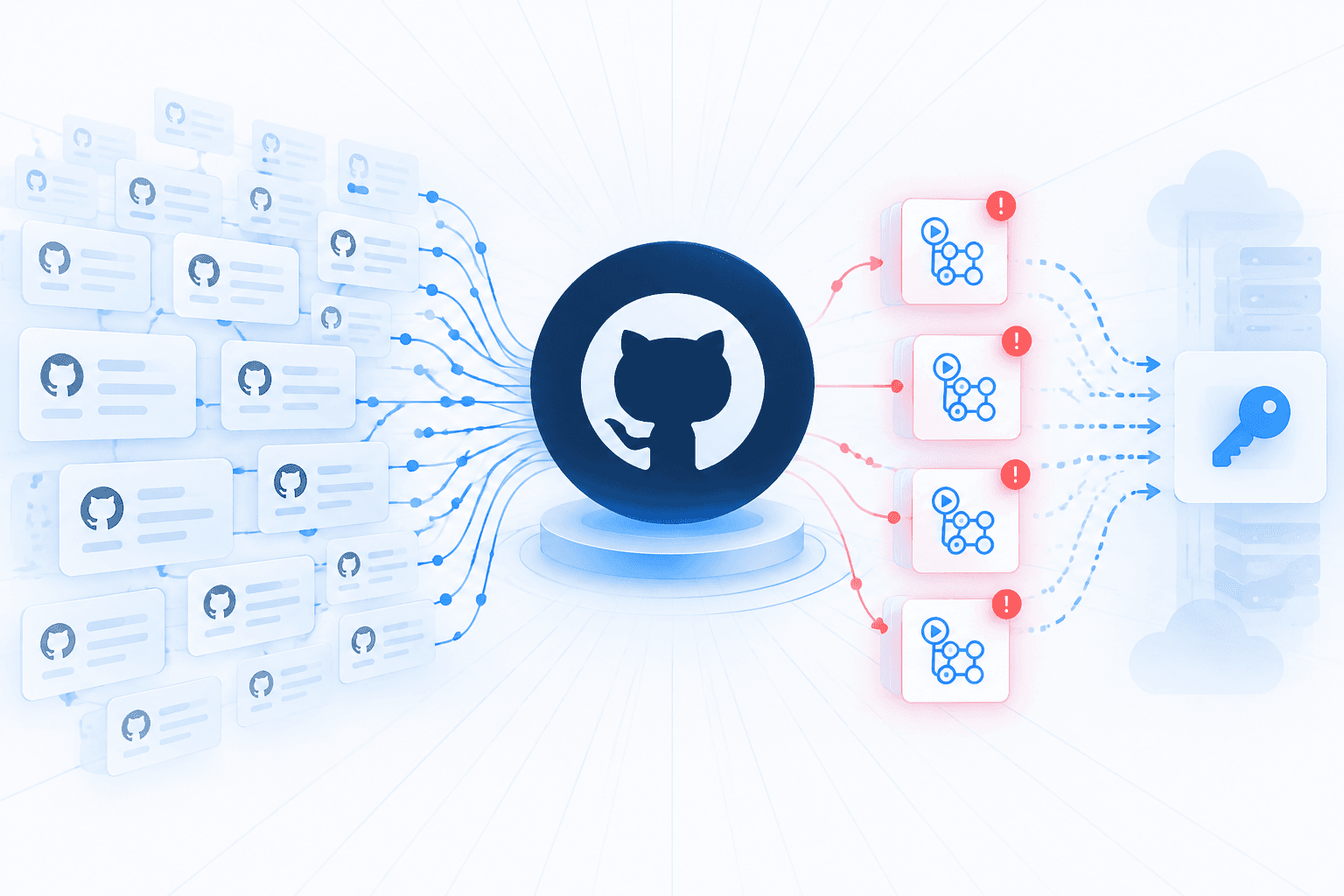
The GhostAction supply-chain campaign compromised 327 GitHub users and inserted malicious workflows into 817 repositories, stealing 3,325 CI/CD secrets. Workflows masquerading as “Github Actions Security” sent PyPI, npm, DockerHub, GitHub, AWS, database, and Cloudflare credentials by HTTP POST to attacker infrastructure, including 45.139.104.115; a later wave added exfiltration domains and hundreds of commits. Although no malicious package releases had been confirmed at disclosure, 24 affected packages—nine npm and 15 PyPI—remained at immediate risk, while some stolen credentials were reportedly already abused.

CI/CD workflows are also vulnerable to remote-code-execution exposure from unsafe pull_request_target configurations, artifact-token leaks such as ArtiPACKED, and attacks including HackerBot-Claw. Elastic Security Labs released the open-source cicd-abuse-detector to review GitHub Actions, GitLab CI, and Azure DevOps changes before merge or deployment, extracting more than 50 signals from pipeline files and analyzing diffs for secret exfiltration, privileged pull-request triggers, permission escalation, self-hosted-runner targeting, supply-chain manipulation, and timestamp abuse. The tool can issue pull-request, issue, Slack, and Elasticsearch alerts and optionally block risky pull requests.

Why it matters

Impact assessment

GhostAction demonstrated high-impact compromise of CI/CD identities: 327 GitHub users and 817 repositories were affected, with 3,325 secrets stolen. Affected organizations include maintainers and users of npm, PyPI, DockerHub, GitHub, AWS, database, and Cloudflare-integrated projects; stolen publishing and cloud credentials can enable package backdoors, cloud access, data theft, and downstream supply-chain compromise.

  • Known abuse: affected developers reported active exploitation of stolen AWS access keys and database credentials.
  • Package exposure: 24 packages were at immediate risk at disclosure, comprising nine npm and 15 PyPI packages. No malicious package release was confirmed in the disclosed GhostAction window.
  • Scope: GhostAction was widespread across public repositories and likely included private repositories owned by compromised maintainers. The initial account-compromise vector was not established.
  • Operational consequence: unsafe GitHub Actions configurations can convert an untrusted pull request into code execution on privileged runners, exposing repository secrets, cloud credentials, release credentials, and self-hosted-runner environments.
  • Related exposure: artifact uploads containing the full workspace can expose .git/config and a GITHUB_TOKEN; developer environment files such as .vscode/tasks.json can execute code when a repository is opened.

Affected populations

  • Organizations operating GitHub Actions, GitLab CI, or Azure DevOps pipelines.
  • Teams using long-lived repository, package-registry, cloud, database, DockerHub, or Cloudflare credentials in CI/CD.
  • Projects using pull_request_target, self-hosted runners, broad workflow permissions, unpinned third-party actions, or full-workspace artifact uploads.
  • Package maintainers whose CI credentials can publish to npm or PyPI.

Does this reach your builds?Trace attribution and downstream blast radius.
Trace the chain
Event timeline

How this story unfolded

Events from the most recent confirmed update back to the earliest known activity.

9 events · Sep 2, 2025 – Feb 2026
  1. Reported Apr 29, 20267mo ago

    Shai-Hulud npm worm publishes malicious packages

    The Shai-Hulud npm worm harvested GitHub Personal Access Tokens, conducted secret reconnaissance with TruffleHog, and propagated through packages owned by compromised developers. Its first wave published more than 46,000 malicious packages.

    CI/CD pipeline abuse: the problem no one is watching
  2. Reported Apr 29, 20267mo ago

    Elastic Security Labs open-sources cicd-abuse-detector

    Elastic Security Labs released cicd-abuse-detector, an open-source CI/CD review template for GitHub Actions, GitLab CI, and Azure DevOps. The tool analyzes pipeline-related diffs and metadata for risky changes, produces schema-validated LLM verdicts, and can alert, gate pull requests, or export findings to Elasticsearch.

    CI/CD pipeline abuse: the problem no one is watching
  3. Feb 2026

    HackerBot-Claw scans repositories for privileged PR workflow flaws

    The automated HackerBot-Claw campaign scanned public repositories for pull_request_target misconfigurations and used techniques including poisoned Go init() functions, command injection, direct script injection, and AI prompt injection. In its most severe reported case, Aqua Security's Trivy repository was fully compromised, leading to a downstream supply-chain attack exposing 33,000 secrets across nearly 7,000 machines.

    CI/CD pipeline abuse: the problem no one is watching
  4. Reported Sep 5, 20251y ago

    GhostAction launches second wave of malicious commits

    GitGuardian observed a second GhostAction wave involving approximately 500 new commits, largely against repositories already compromised in the first wave. The attackers used new exfiltration domains, including carte-avantage.com.

    The GhostAction Campaign: 3,325 Secrets Stolen Through Compromised GitHub Workflows
  5. Sep 5, 20251y ago

    Primary GhostAction exfiltration hostname stops resolving

    The primary GhostAction exfiltration hostname, bold-dhawan.45-139-104-115.plesk.page, stopped resolving at 4:15 PM. The campaign had sent stolen secrets to infrastructure associated with IP address 45.139.104.115.

    The GhostAction Campaign: 3,325 Secrets Stolen Through Compromised GitHub Workflows
  6. Sep 5, 20251y ago

    GitGuardian notifies GitHub, npm, and PyPI

    GitGuardian notified the security teams at GitHub, npm, and PyPI about GhostAction at 3:50 PM and created alert issues for affected repositories. It identified 24 packages at immediate risk of compromise, though no malicious package releases had been confirmed.

    The GhostAction Campaign: 3,325 Secrets Stolen Through Compromised GitHub Workflows
  7. Sep 5, 20251y ago

    PyPI restricts FastUUID and maintainer reverts workflow

    PyPI placed FastUUID in read-only status at 12:11 after GitGuardian reported the incident. The compromised FastUUID user reverted the malicious commit at 12:30.

    The GhostAction Campaign: 3,325 Secrets Stolen Through Compromised GitHub Workflows
  8. Sep 5, 20251y ago

    GitGuardian discovers GhostAction campaign

    GitGuardian identified the GhostAction supply-chain campaign while investigating FastUUID, finding malicious GitHub Actions workflows across hundreds of repositories. The campaign ultimately affected 327 GitHub users and 817 repositories and stole 3,325 CI/CD secrets.

    The GhostAction Campaign: 3,325 Secrets Stolen Through Compromised GitHub Workflows
  9. Sep 2, 20251y ago

    Malicious workflow committed to FastUUID

    GitHub user Grommash9 pushed a malicious commit titled “Add Github Actions Security workflow” to FastUUID. The injected workflow exfiltrated a PyPI token to attacker-controlled infrastructure.

    The GhostAction Campaign: 3,325 Secrets Stolen Through Compromised GitHub Workflows
Linked entities

Related entities

Vulnerabilities, threat actors, malware, products, organizations, breaches, and observables Mallory has linked to this story. Indicator values are masked here and available in full in the app.

Open in app →

Affected products

1 linked
Github

Organizations

1 linked
GitHub

Breaches

2 linked
FASTUUID-2025-09GITHUBUSERS-2025-09

Observables

7 linked

Indicator values are masked on this page. See the values in Mallory Domains, IPs, hashes, and URLs are exportable to your SIEM.

Do you run this?See attribution and downstream blast radius, and whether this package or vendor reaches your builds.
Trace the Supply Chain
Mallory platform

See the full picture, correlated to your attack surface.

This page covers what’s public. Mallory adds the parts that aren’t: which of your assets are affected, which threat actors are using it right now, and what to deploy next.

Exposure mappingMap indicators from this story to your assets and identify affected systems in minutes.
Threat actor evidenceEvery observed campaign, victim, and pivot linked to actors named in this story.
Associated malwareMalware, exploits, and IOCs connected to the activity described here.
Detection signaturesYARA, Sigma, and Snort rules deployed to your SIEM as soon as they’re published.
Scheduled alertsGet matching new stories delivered to your team as they break, not the next morning.
AI threadsAsk questions about this story and take action on the answers.