AI Coding-Agent Harnesses Expose Supply-Chain Security Gaps
Emerging Technology Risk · 3 sources · Updated 3mo ago · First seen Sep 9, 2026
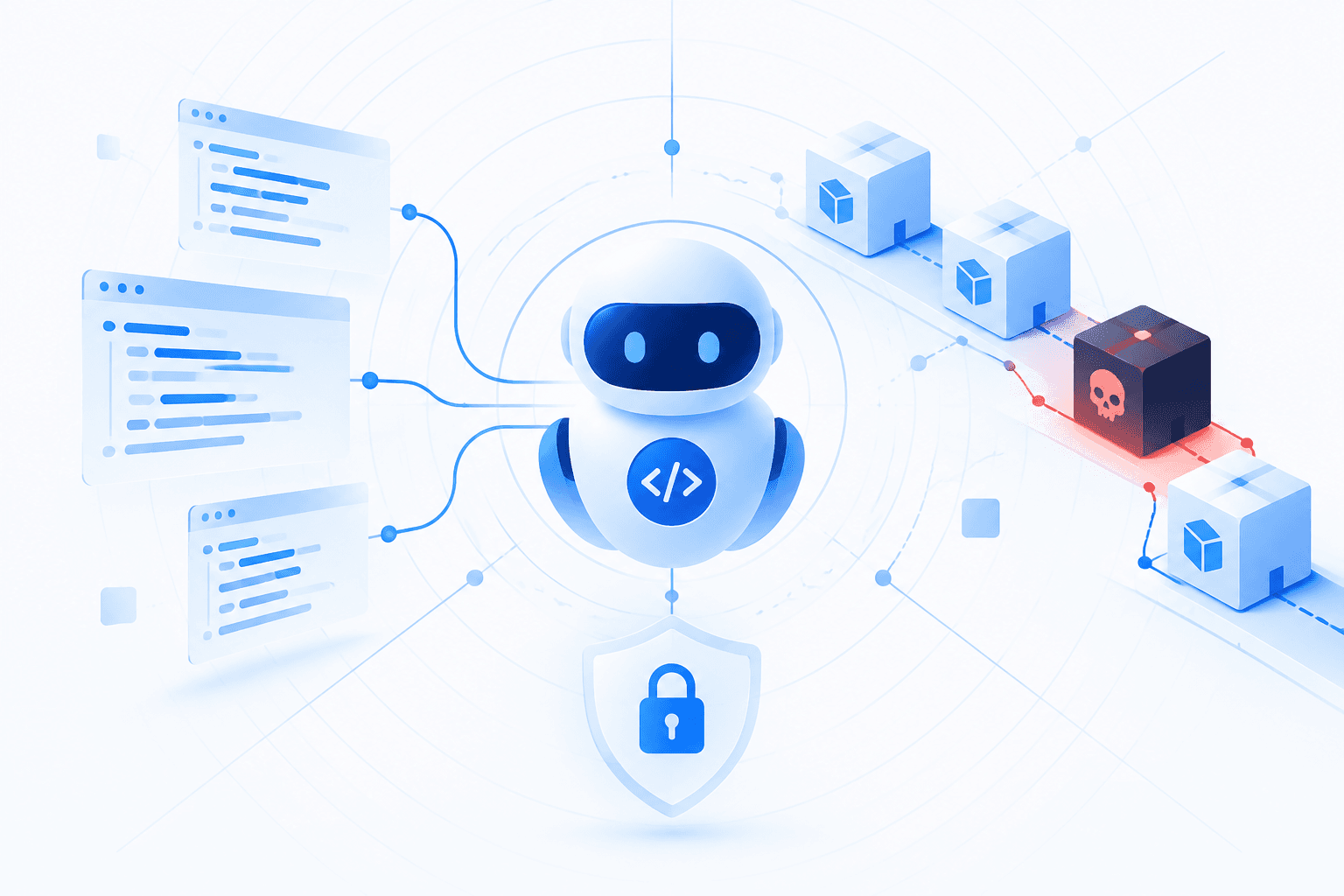
An empirical review of 3,171 public GitHub repositories found confirmed security defects in 16.0% of AI coding-agent harness configurations. The review covered 2,660 multi-component agent setups and 511 published skill collections, assessing instruction files, skills, hooks, subagents, and Model Context Protocol (MCP) server declarations. The most common issues were unpinned MCP server versions, overly broad execution pre-approvals, and skills that pre-authorized shell access for installers; researchers did not confirm a credential-exfiltration path.
The harness surrounding a coding model—its prompts, tools, skills, MCP servers, and orchestration—creates a material supply-chain and prompt-injection attack surface. Mutable remote MCP services, trusted prompt formatting, YAML skill metadata, and self-propagating payloads such as CopyPasta can be abused to influence agent actions. Organizations should inventory harness trust relationships, enforce least privilege and human approvals, pin and validate external components, independently monitor runtime behavior, and assign governance and incident-response ownership for agentic AI.
Why it matters
Summary
AI coding-agent harnesses introduce a material software supply-chain and prompt-injection exposure because they can retrieve untrusted content, invoke tools, execute commands, modify repositories, and use external MCP services with developer-level permissions. A study of 3,171 public GitHub repositories found confirmed security defects in 16.0% of analyzed agent configurations; no credential-exfiltration path was confirmed in that corpus.
Affected population and severity
- Affected organizations include enterprises deploying or permitting Claude Code, Cursor, GitHub Copilot, OpenAI Codex, or comparable coding agents configured with instruction files, skills, hooks, subagents, and MCP servers.
- Development, platform engineering, DevOps, and software supply-chain teams are most exposed where agents can access source repositories, CI/CD-adjacent tooling, package registries, terminals, documentation, or outbound network services.
- Impact can include unauthorized command execution, malicious repository modifications, propagation of injected code or instructions across projects, dependency compromise, data exposure through over-permissive tools, and loss of integrity in development workflows.
- Exposure is widespread rather than tied to a named victim or active campaign: 9.8% of analyzed setups used unpinned MCP versions, 3.1% contained overly broad execution pre-approvals, and 3.8% included installer-related shell pre-approval.
Exploitation status
- The references describe demonstrated attack patterns and configuration weaknesses, not confirmed exploitation in the wild.
- The reviewed public corpus did not yield a confirmed credential-exfiltration path.