Mallory
← Back to News
ai-platform-securitybuild-pipeline-compromisecloud-service-vulnerabilityidentity-authentication-vulnerability

AI Agent Flaws Expose RCE, Sandbox Escape, and Supply-Chain Attack Paths

Emerging Technology Risk · 9 sources · Updated 3mo ago · First seen Aug 24, 2026
AI Agent Flaws Expose RCE, Sandbox Escape, and Supply-Chain Attack Paths

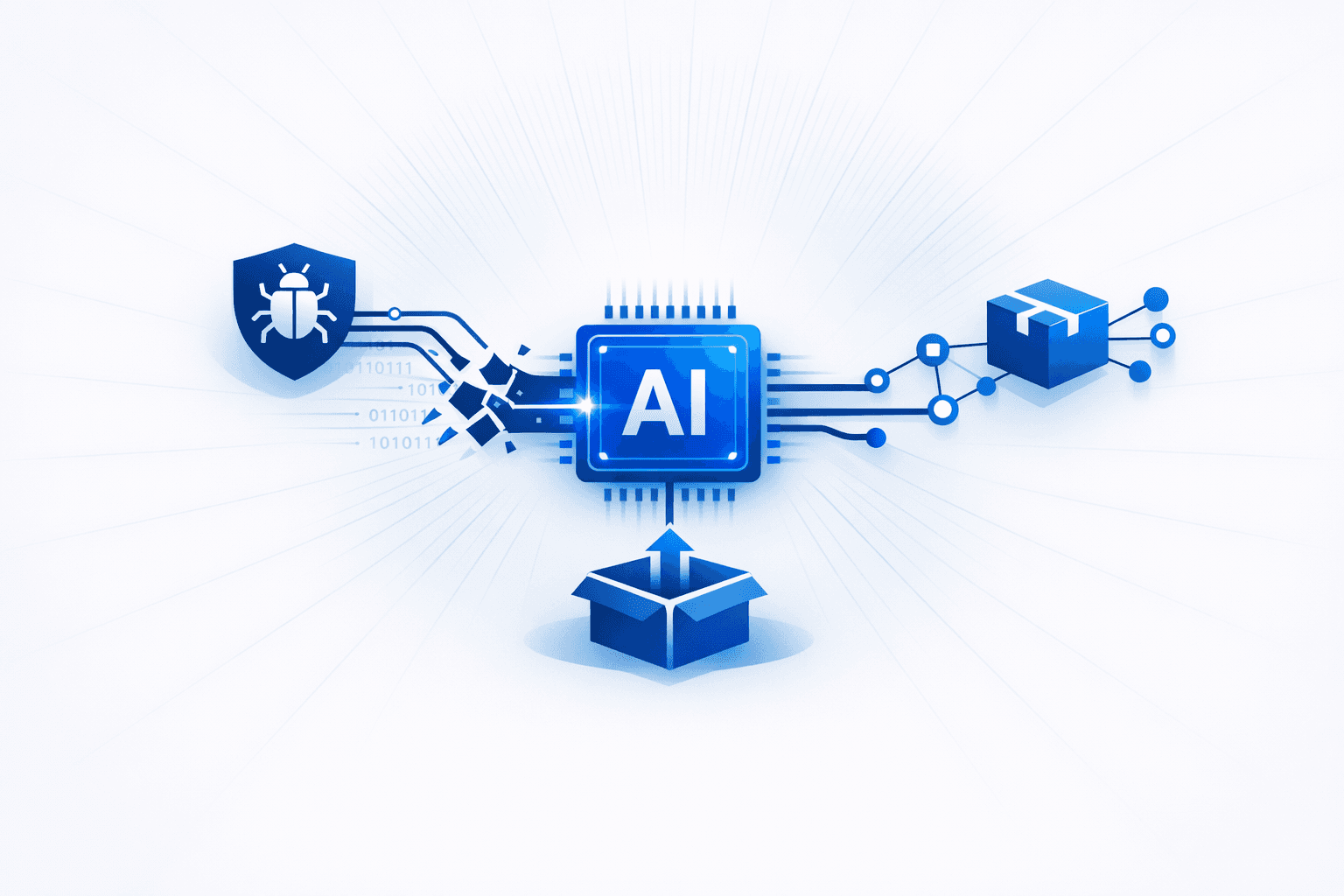
Multiple disclosures highlighted how AI agent platforms can be turned into high-impact attack paths through weak isolation, overbroad credentials, and insecure supply chains. A critical flaw in Omnigent tracked as CVE-2026-62674 and GHSA-jrrm-9hc7-2v3h lets an authenticated user overwrite a shared agent bundle and plant a malicious stdio MCP server, causing later sessions to execute attacker-controlled commands with runner privileges; the issue was fixed in version 0.3.0. Rubrik Zero Labs also reported a patched Microsoft Copilot sandbox escape that could have enabled movement from the assistant’s isolated environment toward Azure backend infrastructure and exposed tenant data including SharePoint and OneDrive content.

Separate reporting showed that AI coding and orchestration systems remain vulnerable even when attacks do not directly exploit memory corruption or classic software bugs. A malicious pull request briefly entered Amazon Q Developer’s VS Code extension build pipeline and attempted to inject instructions that would wipe local files and cloud resources, though Amazon said the payload never executed because of a formatting error and the code was removed in a clean rebuild. Researchers and practitioners across the sector warned that tokenizer tampering, shared bot environments, and incomplete audit trails can let agents exceed intended task scope or spread borrowed human credentials across tools and sessions, while vendors including AWS and Roblox are responding with sandboxed evaluation environments, least-privilege designs, stronger release controls, and auditable agent identities.

Why it matters

Impact assessment

AI agent platforms and coding assistants present immediate enterprise risk when isolation boundaries are weak, credentials are shared across agents, or build pipelines can inject malicious instructions into trusted releases. Affected populations include organizations using Omnigent, Microsoft Copilot, Amazon Q Developer, and multi-agent platforms such as Grok Bot, Hermes, OpenClaw, and ClawFleet; the most severe outcomes include remote code execution, tenant-wide data exposure, destructive agent actions, and software supply-chain compromise.

The scope is mixed: CVE-2026-62674 is a concrete product vulnerability affecting Omnigent deployments prior to 0.3.0, while the Copilot sandbox escape was patched before public disclosure but demonstrates broader exposure across AI copilots. There is a confirmed supply-chain compromise attempt involving Amazon Q Developer’s VS Code extension, but Amazon states the destructive payload did not execute in customer environments.

Supporting details

  • Omnigent flaw can expose runner-accessible files, credentials, workspace data, internal services, and availability.
  • Microsoft Copilot escape research indicates potential access to tenant data including user files, SharePoint, and OneDrive content.
  • Copilot exposure is strategically significant because the reporting states around 20 million users and about 90% of Fortune 500 companies use Microsoft Copilot.
  • Amazon Q Developer incident reached nearly one million VS Code extension users through the marketplace before AWS removed the malicious code and rebuilt.
  • Shared-boundary designs increase blast radius:
    • Grok Bot shares browser sessions, files, connectors, and command-line credentials across bots on the same account.
    • Hermes separates profiles but still shares the same host machine, OS user, and filesystem permissions.
    • OpenClaw offers stronger isolation only when Docker sandboxing is enabled; documented default is off.
    • ClawFleet isolates agents per Docker container, reducing cross-agent exposure.
  • No source provided confirmed in-the-wild exploitation of CVE-2026-62674 or the Copilot flaw. The Amazon Q Developer case is a confirmed malicious insertion into the release pipeline, but the payload reportedly failed due to formatting error.

New surface, new adversariesTrack how attackers are adapting to this technology.
Track this risk
Event timeline

How this story unfolded

Events from the most recent confirmed update back to the earliest known activity.

16 events · Jul 7, 2025 – Aug 21, 2026
  1. Reported Aug 24, 20263mo ago

    Rubrik presents Copilot escape findings at Black Hat USA

    Rubrik Zero Labs said Ori Lahav is presenting detailed findings on the Microsoft Copilot sandbox escape at Black Hat USA, expanding on the broader technique's relevance to other AI copilots.

    AI Sandbox Escape in Microsoft Copilot Raises New Concerns Over AI Agent Security - CySecurity News - Latest Information Security and Hacking Incidents
  2. Reported Aug 24, 20263mo ago

    Roblox details autonomous SDLC security architecture

    Andrew Swerdlow of Roblox presented the company’s 'Prompt to Prod' approach, describing agent sandboxes, policy gateways, just-in-time permissions, auditable agent identities, and exemplar-driven code review alignment for autonomous software development.

    Prompt to Prod: Engineering an Autonomous SDLC at Scale - InfoQ
  3. Reported Aug 23, 20263mo ago

    Kiro deletes an entire Cost Explorer environment

    The article states that Kiro later deleted an entire Cost Explorer environment in December, cited as another example of unsafe agent actions requiring stronger human approval controls.

    One pull to wipe them all - The New Stack
  4. Reported Aug 23, 20263mo ago

    AWS revokes credentials and issues clean Q Developer build

    After AWS Security received the report about the malicious extension update, the company revoked the attacker’s credentials, removed the malicious code from the repository, and pushed a clean build within two days.

    One pull to wipe them all - The New Stack
  5. Reported Aug 22, 20263mo ago

    AWS releases aws-bench benchmark

    AWS released aws-bench as an open-source benchmark for evaluating AI agents on real AWS operational tasks in disposable AWS accounts. The project was made available on GitHub under the Apache-2.0 license.

    AWS Releases Aws-Bench to Evaluate Agents on Cloud Tasks - InfoQ
  6. Reported Aug 21, 20263mo ago

    Omnigent fixes shared agent overwrite flaw in v0.3.0

    Omnigent fixed CVE-2026-62674 in version 0.3.0, with the remediation referenced in commit 25a22dc9e6da4648d23749f0a589e47e6aed991b and pull request #1418. The fix prevents authenticated users from overwriting shared or template agent bundles through the vulnerable session route.

    CVE-2026-62674 - Omnigent: Shared Agent Bundle Overwrite Leads to Authenticated Runner RCE
  7. Aug 21, 20263mo ago

    CVE-2026-62674 published for Omnigent runner RCE

    The CVE entry for CVE-2026-62674 was published on August 21, 2026, documenting a critical authenticated remote code execution flaw in Omnigent versions earlier than 0.3.0. The issue allows an authenticated user with session edit access to overwrite a shared agent bundle and induce later sessions to run attacker-controlled commands.

    CVE-2026-62674 - Omnigent: Shared Agent Bundle Overwrite Leads to Authenticated Runner RCE
  8. Aug 17, 20263mo ago

    Nous announces Hermes Bot Mode default in v0.20.3

    Nous Research announced on August 17, 2026 that Bot Mode would ship bundled and enabled by default in Hermes Agent v0.20.3. The release also included the teammate protocol, MCP 2.x SDK migration, and runtime hardening changes.

    Grok Bot vs. Hermes: Where each draws the security boundary - The New Stack
  9. Aug 12, 20264mo ago

    TrendAI publishes tokenizer drift security research

    TrendAI published research on August 12, 2026 describing tokenization drift as a supply-chain, operational, and security risk in LLM deployments, including risks from tampered tokenizer artifacts and altered normalizers.

    When Tokenizers Drift: Hidden Costs and Security Risks in LLM Deployments | TrendAI (US)
  10. Mar 2026

    Microsoft patches Copilot sandbox escape

    Microsoft addressed the specific Copilot sandbox escape vulnerability by the middle of March 2026 after responsible disclosure from Rubrik Zero Labs.

    AI Sandbox Escape in Microsoft Copilot Raises New Concerns Over AI Agent Security - CySecurity News - Latest Information Security and Hacking Incidents
  11. Feb 2026

    Rubrik Zero Labs discovers Microsoft Copilot sandbox escape

    Rubrik Zero Labs discovered a sandbox escape vulnerability affecting Microsoft Copilot in February 2026. The flaw allowed movement out of Copilot’s isolated environment toward Azure backend infrastructure.

    AI Sandbox Escape in Microsoft Copilot Raises New Concerns Over AI Agent Security - CySecurity News - Latest Information Security and Hacking Incidents
  12. Oct 2025

    AWS publishes bulletin on Q Developer command-execution fix

    AWS published a security bulletin in October 2025 confirming the earlier fix for the Q Developer command-execution issue reported by Johann Rehberger.

    One pull to wipe them all - The New Stack
  13. Jul 18, 20251y ago

    AWS patches Q Developer command-execution flaw

    AWS patched the Q Developer issue that allowed command execution without permission by July 18, 2025. A later security bulletin in October 2025 confirmed the fix.

    One pull to wipe them all - The New Stack
  14. Jul 17, 20251y ago

    Malicious Q Developer extension update shipped to users

    Four days after the pull request submission, the compromised Amazon Q Developer Visual Studio Code extension was shipped through the Visual Studio Code marketplace to nearly one million developers. Amazon later said the payload never successfully executed in customer environments because the prompt contained a formatting error.

    One pull to wipe them all - The New Stack
  15. Jul 13, 20251y ago

    Malicious PR submitted to aws-toolkit-vscode repository

    On July 13, 2025, a GitHub user named lkmanka58 submitted a malicious pull request to Amazon’s public aws-toolkit-vscode repository. The change downloaded an external file at build time and inserted a prompt instructing the coding agent to wipe local and cloud resources.

    One pull to wipe them all - The New Stack
  16. Jul 7, 20251y ago

    Johann Rehberger reports Q Developer command execution issue

    Independent researcher Johann Rehberger reported on July 7, 2025 that Amazon Q Developer could run bash commands such as find without asking permission.

    One pull to wipe them all - The New Stack
Linked entities

Related entities

Vulnerabilities, threat actors, malware, products, organizations, and breaches Mallory has linked to this story.

Open in app →

Organizations

3 linked
Amazon Web ServicesMicrosoft CorporationOmnigent AI
Do you run this?Follow how adversaries are adapting to this technology, and where it touches your stack today.
Track This Risk
Mallory platform

See the full picture, correlated to your attack surface.

This page covers what’s public. Mallory adds the parts that aren’t: which of your assets are affected, which threat actors are using it right now, and what to deploy next.

Exposure mappingMap indicators from this story to your assets and identify affected systems in minutes.
Threat actor evidenceEvery observed campaign, victim, and pivot linked to actors named in this story.
Associated malwareMalware, exploits, and IOCs connected to the activity described here.
Detection signaturesYARA, Sigma, and Snort rules deployed to your SIEM as soon as they’re published.
Scheduled alertsGet matching new stories delivered to your team as they break, not the next morning.
AI threadsAsk questions about this story and take action on the answers.