AI Agent Framework Flaws Enabled Unauthorized Tool Use and Remote Code Execution
Emerging Technology Risk · 3 sources · Updated 4mo ago · First seen Aug 5, 2026
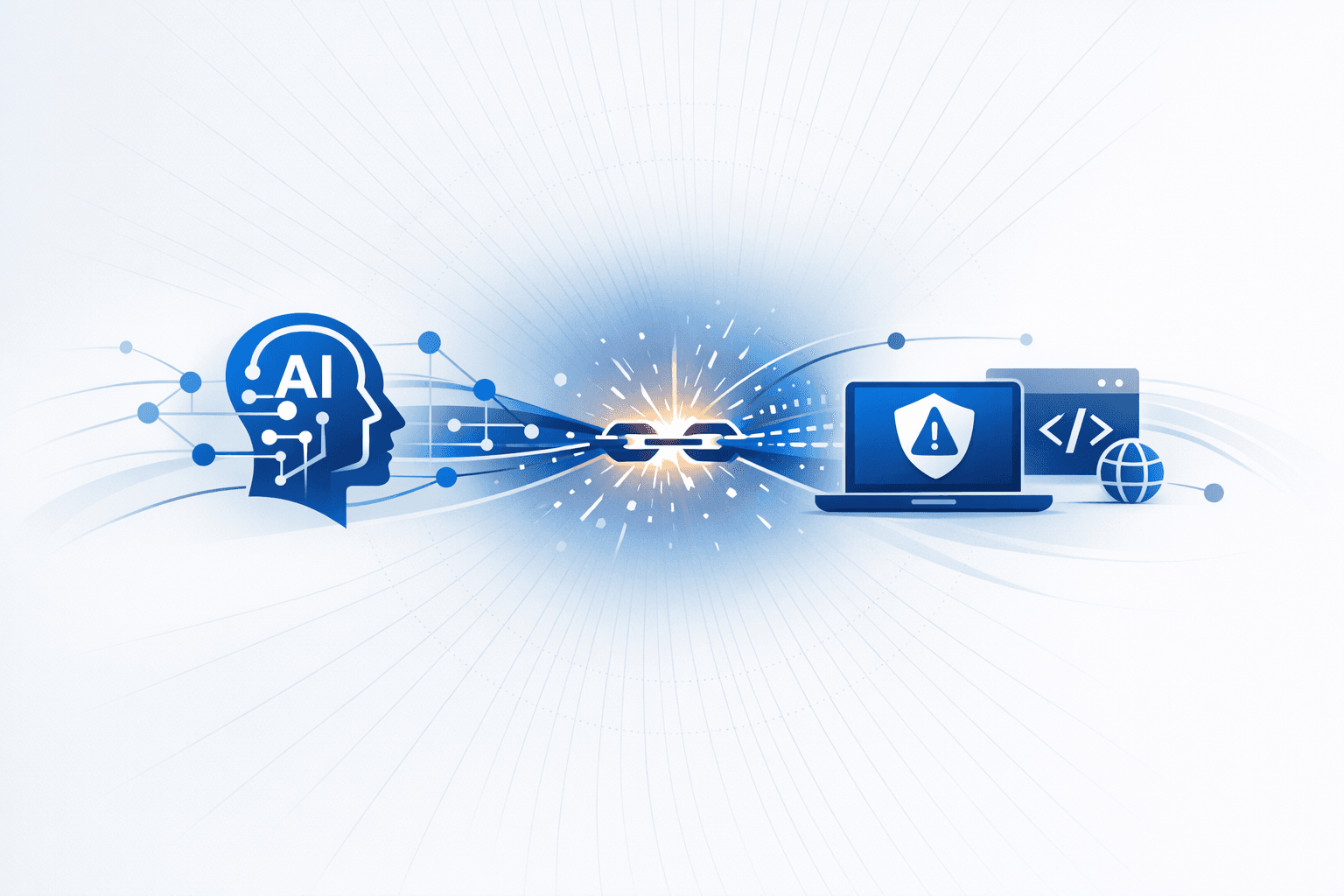
Researchers disclosed multiple vulnerabilities in enterprise AI agent frameworks that allowed attackers to bypass model authorization, trigger tools directly, and in some cases achieve remote code execution. Check Point reported 11 flaws across LangChain, LangGraph, CrewAI, AutoGen, Microsoft Agent Framework, and Google ADK, spanning insecure deserialization, SSRF, path traversal, and use-after-free. One critical issue in Microsoft Agent Framework let untrusted state data reach insecure checkpoint deserialization, enabling RCE; Microsoft fixed the bug and said no CVE was assigned because the product was not generally available.
A separate disclosure described a cross-platform pattern dubbed CoreBreak, where execution layers in Amazon Bedrock AgentCore, Google ADK, and Vercel AI SDK harnesses accepted tool-call-shaped data without confirming that a legitimate model turn had authorized the action. AWS assigned CVE-2026-18830 and automatically patched the managed service, Google fixed CVE-2026-18236 in ADK for Python version 2.5.0, and Vercel patched @ai-sdk/harness-codex 1.0.29 and @ai-sdk/harness-opencode 1.0.28. Researchers said the findings show that the main risk lies in insecure agent orchestration and tool-execution logic, not prompt injection alone, with Google ADK also exposed to abuse that could write and run malicious Python code and leak API keys or cloud service account credentials.
Why it matters
Impact assessment
Enterprise teams building or operating AI agents on LangChain, LangGraph, CrewAI, AutoGen, Microsoft Agent Framework, Google ADK, Amazon Bedrock AgentCore, and Vercel AI SDK harnesses are affected. The impact ranges from unauthorized tool execution and secret exposure to full remote code execution, with highest risk in environments where agents can access cloud credentials, internal APIs, filesystems, or sensitive business tools.
Exposure is broad across the AI agent ecosystem but exploitation conditions vary by product. No source cited confirmed in-the-wild exploitation, but the disclosed flaws are actionable and several affected products were patched only recently, making this an immediate exposure investigation priority.
Supporting facts
- Check Point disclosed 11 vulnerabilities across LangChain, LangGraph, CrewAI, AutoGen, Microsoft Agent Framework, and Google ADK.
- A separate CoreBreak disclosure affected Amazon Bedrock AgentCore, Google ADK for Python, and Vercel AI SDK harness packages.
- Microsoft Agent Framework had a critical deserialization flaw that enabled remote code execution from untrusted checkpoint state.
- Google ADK flaws could enable malicious Python execution and theft of API keys or Google Cloud service account credentials.
- Amazon Bedrock AgentCore allowed unauthorized tool dispatch through crafted tool-use content blocks.
- Vercel harness flaws enabled host-exposed tool invocation from malicious code already running in a Linux sandbox.
- The stories state that advisories and CVE records did not indicate known live exploitation before patching.
- Google ADK was described as exposing an unauthenticated HTTP API by default in some deployment patterns, including default Cloud Run deployment scenarios.