Cyberattack on Latvia’s CSDD Exposes Data on 1.2 Million People
Breach & Incident Intelligence · 3 sources · Updated 3mo ago · First seen Aug 19, 2026

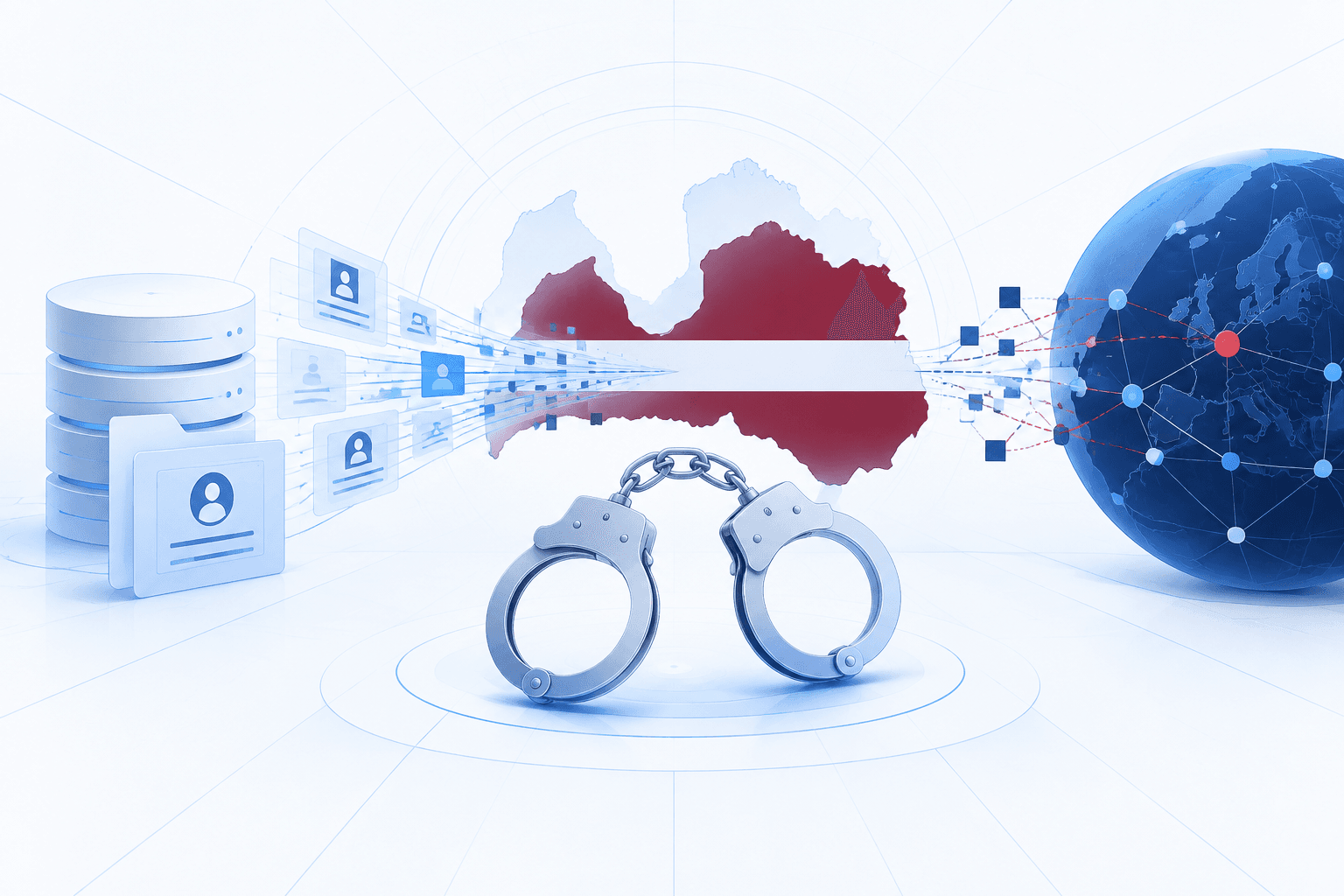
Latvia’s Road Traffic Safety Directorate (CSDD) confirmed that attackers stole historical payment receipt data affecting more than 1.2 million people and 200,000 businesses and legal entities, making it one of the country’s largest reported public-sector data breaches. Exposed records reportedly included personal or company identification numbers, vehicle license plate numbers, payment amounts and dates, names, and some registered address information tied to service interactions, while officials said usernames, passwords, phone numbers, and email addresses were not compromised.
Latvian authorities said the intrusion was a targeted, technically sophisticated attack that exploited an internet-exposed vulnerability in a CSDD system, and CERT.LV indicated mandatory cybersecurity requirements had not been fully met. The breach prompted criminal proceedings, investigations by cybersecurity and data protection authorities, and sharp political fallout: President Edgars Rinkevics and lawmakers called for accountability, CSDD’s supervisory board resigned, and agency chief Aivars Aksenoks said he would step down after response work concludes. Prime Minister Andris Kulbergs described the incident as a national security issue, said foreign involvement could not be ruled out, and criticized delays in notifying the government.
Why it matters
Impact assessment
A major public-sector data breach at Latvia’s Road Traffic Safety Directorate (CSDD) exposed historical payment receipt data tied to more than 1.2 million individuals and 200,000 businesses and legal entities. The impact is primarily confidentiality loss with high downstream fraud and social-engineering risk, and the exposure is broad rather than narrowly targeted because it covers roughly two-thirds of Latvia’s population.
Affected parties
- Latvia’s Road Traffic Safety Directorate (CSDD), a national government agency under the Transport Ministry
- Individual residents whose records were linked to vehicle and payment services
- Businesses and other legal entities with CSDD-related records
- Public-sector organizations with similar internet-exposed systems and weak compliance with mandatory cybersecurity requirements
Severity and business impact
- Large-scale exposure of personal and company data creates sustained identity fraud, impersonation, and social-engineering risk.
- Exposed fields include personal or company identification numbers, vehicle license plate numbers, payment amounts and dates, names, and some address information.
- Reputational and political damage is severe, with the incident treated as a national security issue and followed by leadership resignations and criminal proceedings.
- Reported operational disruption was limited; CSDD stated day-to-day online and in-person services remained available.
Scope and exploitation status
- Scope is nationwide and extensive, affecting records dating back to 2008.
- Authorities described the intrusion as targeted and technically sophisticated.
- Exploitation in the wild is confirmed for the initial breach because attackers successfully stole data.
- A subsequent attempted cyberattack was reportedly blocked after security improvements were implemented.
- No threat actor has been formally identified, though officials said foreign involvement could not be ruled out.