Mallory
← Back to News
voice-social-engineeringcredential-access-methodinitial-access-methodai-enabled-threat-activity

AI-Enabled Voice Phishing Drives Credential Theft and High-Impact Breaches

Social Engineering & Fraud · 7 sources · Updated 3mo ago · First seen Mar 27, 2026
AI-Enabled Voice Phishing Drives Credential Theft and High-Impact Breaches

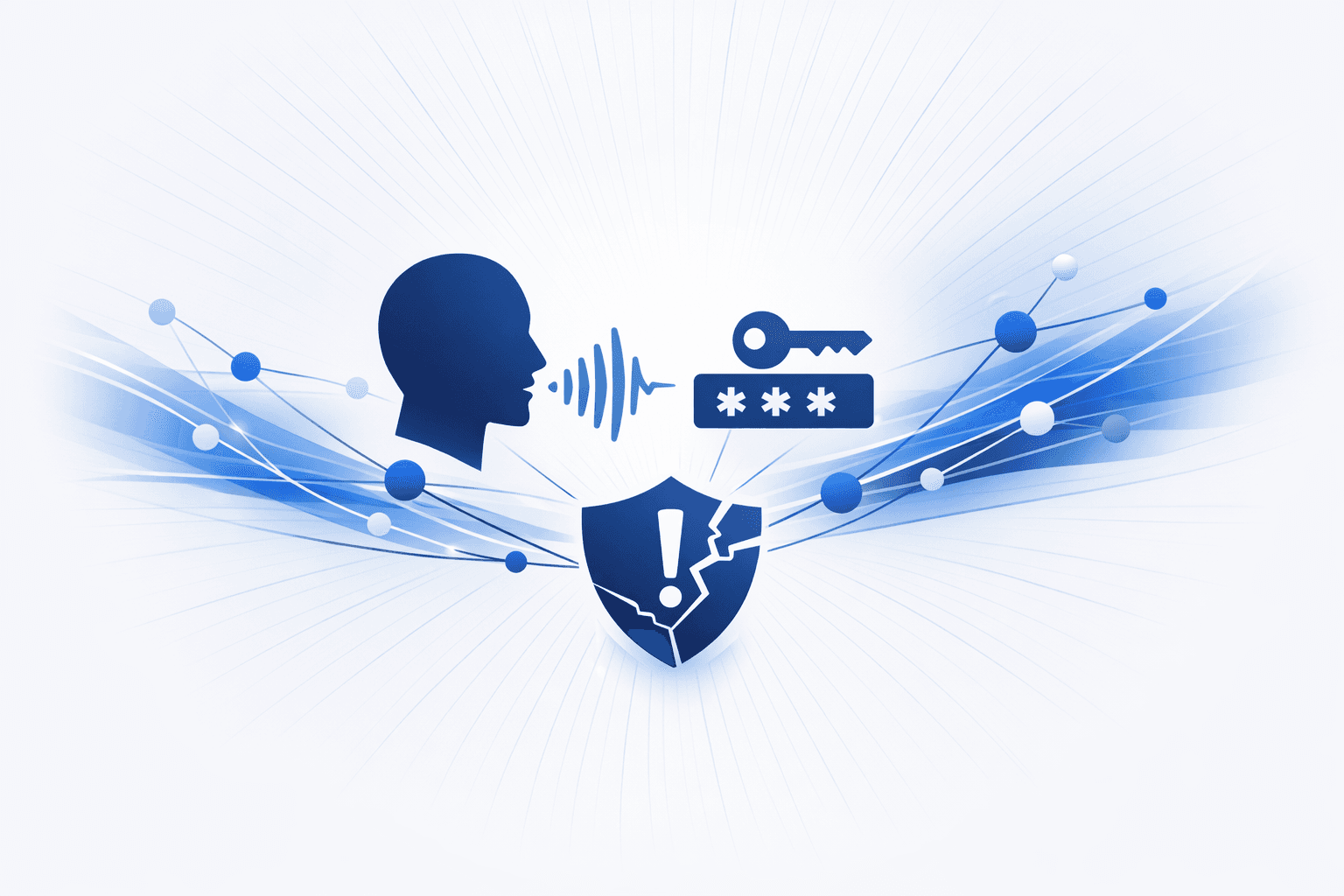
Voice phishing is emerging as a major initial-access tactic as attackers impersonate employees, help-desk staff, and senior officials to steal credentials, capture one-time passcodes, and transfer MFA enrollment. U.S. government warnings and industry reporting describe malicious messaging and vishing campaigns that use phone calls, SMS, and collaboration platforms such as Microsoft Teams to manipulate targets into granting access to single sign-on and cloud environments. Group-IB and CIS both report that advances in synthetic speech, real-time voice transformation, and voice cloning are lowering the cost and skill barrier for these scams, while incident data cited by defenders shows vishing accounting for a growing share of intrusions.

The technique has been linked to serious downstream compromises, including an alleged ShinyHunters breach at Harvard University in which attackers reportedly used voice phishing to bypass MFA and access Microsoft 365, SharePoint, and Salesforce, exposing roughly 115,000 records tied to alumni and development operations. Security guidance across the referenced reporting urges organizations to harden identity workflows rather than rely on user recognition of suspicious calls, with emphasis on phishing-resistant MFA such as FIDO2, stricter help-desk identity verification, protection of passkey enrollment, and monitoring for anomalous authentication and account-recovery activity.

Why it matters

Impact assessment

Voice phishing is now a high-impact identity compromise vector affecting organizations that rely on help desks, SSO, cloud SaaS, and MFA workflows, with elevated risk for government, education, telecom, financial services, and other large enterprises. Impact is severe because successful attacks can rapidly lead to account takeover, SaaS data theft, MFA bypass, and reputational damage without requiring malware deployment or traditional lateral movement. Exposure is broad rather than narrowly targeted, and multiple references describe active exploitation in the wild.

Key impact facts

  • Affected environments include Microsoft 365, SharePoint, Salesforce, Microsoft Entra, SSO platforms, and help-desk-driven identity recovery workflows.
  • U.S. State, Local, Tribal, and Territorial organizations are specifically assessed by CIS as facing increased vishing risk over the next 12 months.
  • CrowdStrike OverWatch observed a 2x increase in vishing intrusions in H1 2026 versus H2 2025.
  • CrowdStrike also reported a 15x increase in device code phishing over the prior six months.
  • Mandiant documented vishing as 11% of initial access cases in 2025, making it the second most common vector cited in the story.
  • CIS cited a 442% increase in vishing between the first and second halves of 2024 from CrowdStrike reporting.
  • Reported downstream effects include rapid SaaS data exfiltration after identity compromise, often in minutes.
  • CrowdStrike reported SNARKY SPIDER moved from account takeover to data theft in under five minutes.
  • CIS states successful vishing often appears as authorized administrator activity, complicating detection and response.
  • Group-IB reporting cited by CIS says financial institutions report average losses of $600,000 per deepfake vishing incident.

Incident examples cited

  • CORDIAL SPIDER and SNARKY SPIDER reportedly used vishing to compromise SSO accounts and steal data from SaaS applications.
  • CIS states ShinyHunters reportedly used vishing in April 2026 to compromise a telecom employee’s Microsoft Entra account and pivot into Salesforce to exfiltrate customer records.
  • CIS also cites a separate April 2026 case in which ShinyHunters reportedly targeted a physical security firm employee, accessed the enterprise account, pivoted into Salesforce, and exfiltrated about 5.5 million customer records.
  • Hudson Rock describes an alleged Harvard University breach attributed to ShinyHunters that reportedly exposed about 115,000 Alumni Affairs and Development records after suspected vishing-led compromise of Microsoft 365, SharePoint, and Salesforce.

Why this matters operationally

  • These attacks bypass email-centric defenses and exploit trusted identity workflows.
  • They can produce major privacy, regulatory, financial, and donor/customer trust consequences even when endpoint controls remain intact.
  • Because access is obtained through legitimate authentication, defenders should expect reduced forensic visibility and faster attacker dwell-to-impact timelines.

Is your org in this campaign?Get the infrastructure and lures behind it.
Hunt this campaign
Event timeline

How this story unfolded

Events from the most recent confirmed update back to the earliest known activity.

10 events · 2024 – Mar 27, 2026
  1. Reported Aug 20, 20263mo ago

    CrowdStrike observes surge in device code phishing paired with vishing

    CrowdStrike researchers reported that device code phishing and voice phishing attacks had more than doubled, with attackers increasingly combining phone calls and mobile authentication workflows. The tactic tricks users into approving fraudulent device authentication requests, enabling access to corporate networks through social engineering.

    Device Code Phishing Up 1500%
  2. Mar 27, 20268mo ago

    Group-IB details AI-enabled deepfake voice phishing tradecraft

    Group-IB reported that threat actors were operationalizing AI voice capabilities through synthetic speech from scripts and real-time voice transformation, while noting voice cloning was becoming more accessible.

    The Anatomy of a Deepfake Voice Phishing Attack: How AI-Generated Voices Are Powering the Next Wave of Scams | Group-IB Blog
  3. Feb 4, 202610mo ago

    Harvard University breach allegedly exposes 115,000 records

    A breach at Harvard University allegedly occurred on February 4, 2026 and was attributed in the source to ShinyHunters. The incident reportedly exposed about 115,000 records from the Alumni Affairs and Development department.

    A Technical and Ethical Post-Mortem of the Feb 2026 Harvard University ShinyHunters Data Breach | Hudson Rock
  4. Reported Jun 23, 20251y ago

    CIS observes SLTT vishing incidents in early 2026

    The CIS CTI team said it observed incidents in the first eight months of 2026 in which attackers posing as help desk personnel targeted U.S. state, local, tribal, and territorial organizations to gain unauthorized access to SSO environments.

    Vishing: An Evolving Threat to SLTT Organizations
  5. Reported Jun 23, 20251y ago

    ShinyHunters reportedly breaches physical security firm via vishing

    In April 2026, ShinyHunters reportedly targeted an employee at a widely used physical security firm with a vishing call, accessed the firm's enterprise account, pivoted into Salesforce, and exfiltrated about 5.5 million customer records.

    Vishing: An Evolving Threat to SLTT Organizations
  6. Reported Jun 23, 20251y ago

    ShinyHunters reportedly compromises telecom employee via vishing

    In April 2026, ShinyHunters reportedly used a vishing call to compromise a major telecom company employee's Microsoft Entra account, then pivoted into Salesforce and exfiltrated customer records.

    Vishing: An Evolving Threat to SLTT Organizations
  7. May 15, 20252y ago

    IC3 issues PSA on impersonation campaign targeting officials

    On May 15, 2025, the FBI's IC3 published a public service announcement warning that malicious actors were impersonating senior U.S. officials in messaging campaigns to compromise accounts and enable further malicious activity.

    Internet Crime Complaint Center (IC3) | Senior US Officials Impersonated in Malicious Messaging Campaign
  8. Apr 2025

    Threat actors begin impersonating senior U.S. officials

    The FBI said threat actors had impersonated senior U.S. officials using AI-generated voice messages and fraudulent texts since at least April 2025, targeting current and former federal and state officials.

    Internet Crime Complaint Center (IC3) | Senior US Officials Impersonated in Malicious Messaging Campaign
  9. 2025

    Mandiant records vishing as major initial access vector

    Mandiant's M-Trends 2026 report documented that vishing accounted for 11% of initial access cases in 2025, making it the second most common vector, while email phishing fell to 6% from 14% the prior year.

    Gcp Cloud
  10. 2024

    CrowdStrike reports sharp rise in vishing activity

    CrowdStrike reported a 442% increase in vishing between the first and second halves of 2024, indicating rapid growth in voice-based social engineering.

    Vishing: An Evolving Threat to SLTT Organizations
Linked entities

Related entities

Vulnerabilities, threat actors, malware, products, organizations, and breaches Mallory has linked to this story.

Open in app →

Organizations

2 linked
PowerschoolHarvard University

Breaches

1 linked
HARVARDUNIVERSITY-2025-12
Do you run this?Get the infrastructure, lures, and IOCs behind this campaign, ready to push into your email and identity stack.
Hunt This Campaign
Mallory platform

See the full picture, correlated to your attack surface.

This page covers what’s public. Mallory adds the parts that aren’t: which of your assets are affected, which threat actors are using it right now, and what to deploy next.

Exposure mappingMap indicators from this story to your assets and identify affected systems in minutes.
Threat actor evidenceEvery observed campaign, victim, and pivot linked to actors named in this story.
Associated malwareMalware, exploits, and IOCs connected to the activity described here.
Detection signaturesYARA, Sigma, and Snort rules deployed to your SIEM as soon as they’re published.
Scheduled alertsGet matching new stories delivered to your team as they break, not the next morning.
AI threadsAsk questions about this story and take action on the answers.