
Loading story…
Researchers reported that BumbleBee is a modular Windows backdoor that appears to be a refactored evolution of the older Bookworm Trojan, reusing a similar layered architecture built around DLL side-loading, shellcode, and extensible in-memory modules. Trend Micro said BumbleBee was first investigated in 2021 and observed particularly on devices in Taiwan, including local government-related targets, while Unit 42 had previously documented Bookworm in attacks focused largely on organizations in Thailand. Both malware families use legitimate executables to launch malicious DLLs, maintain persistence through Windows services or registry and logon mechanisms, and support encrypted command-and-control traffic over HTTP using techniques including RC4 and LZO compression.
BumbleBee expands the model with modules for installation, loading, control, and keylogging, while its server-side controller enables broad remote administration, including file management, remote desktop access, process and service control, registry editing, command execution, reverse proxying, and credential-surveillance functions. Bookworm was earlier described as a modular Trojan whose built-in capabilities centered on keylogging and clipboard theft, with additional functionality designed to be fetched from C2 infrastructure; its deployment chain used signed binaries such as MsMpEng.exe or ushata.exe, encrypted components with XOR, RC4, and AES, and installed a fake Windows service for persistence. Researchers said the overlap in loader design, modular framework, and communications methods strongly links BumbleBee to Bookworm, while Trend Micro assessed with moderate suspicion that Chinese actors may be responsible based on victimology and a Simplified Chinese controller interface.

Mallory correlates global threat intelligence with your attack surface — know if you’re exposed before adversaries strike.
3 events from the most recent confirmed update back to the earliest known activity.
Trend Micro published an analysis of BumbleBee and assessed that it is likely a refactored evolution of the older BookWorm backdoor. The report detailed BumbleBee's layered deployment chain, persistence methods, keylogging, and HTTP-based RC4/LZO-protected communications.
Trend Micro first investigated the BumbleBee modular backdoor in March 2021 after encountering its client component during a security breach incident. The malware was observed in Taiwan, especially on local government-related devices.
Palo Alto Networks Unit 42 discovered a previously unknown modular Trojan they named Bookworm while investigating attacks primarily targeting organizations in Thailand. The report documented its DLL side-loading, shellcode-based loading chain, modular architecture, persistence, and encrypted C2 communications.
Vulnerabilities, threat actors, malware, products, organizations, and breaches Mallory has linked to this story.
2 references tracked. Mallory keeps watching after this page renders.
Map indicators from this story to your assets and identify affected systems in minutes.
Every observed campaign, victim, and pivot linked to actors named in this story.
Malware, exploits, and IOCs connected to the activity described here.
YARA, Sigma, and Snort rules deployed to your SIEM as soon as they’re published.
Get matching new stories delivered to your team as they break — not the next morning.
Ask questions about this story and take action on the answers.
Other stories Mallory is tracking that overlap on entities, sources, or topic labels.

Security researchers and incident responders documented **Bumblebee** as a malware loader delivered through phishing campaigns that used hijacked email threads, spoofed senders, contact-form abuse, and links to legitimate file-sharing or cloud-hosted pages. Victims were lured into opening password-protected ZIP archives or mounting ISO/IMG files that contained a malicious Windows shortcut and DLL; the shortcut then launched `rundll32.exe` to execute the payload. Multiple reports tied the activity to **TA578** and **TA579**, with researchers noting Bumblebee’s emergence as a likely successor to **BazarLoader** in access operations linked to Conti-associated ecosystems and follow-on delivery of **Cobalt Strike**. Technical analysis showed Bumblebee using anti-analysis and anti-virtualization checks, RC4-encrypted configuration data, multi-server command-and-control, and in-memory loading techniques, while later reporting described continued development focused on EDR evasion and thread or APC-based injection. In one investigated intrusion, Bumblebee led to **Meterpreter** and **Cobalt Strike** deployment, reconnaissance with built-in Windows tools and **AdFind**, attempted **LSASS** dumping with **ProcDump**, lateral movement over **RDP** and **SMB**, creation of a `sql_admin` local administrator account, and installation of **AnyDesk** before responders contained the activity prior to ransomware deployment.
Aug 15, 2026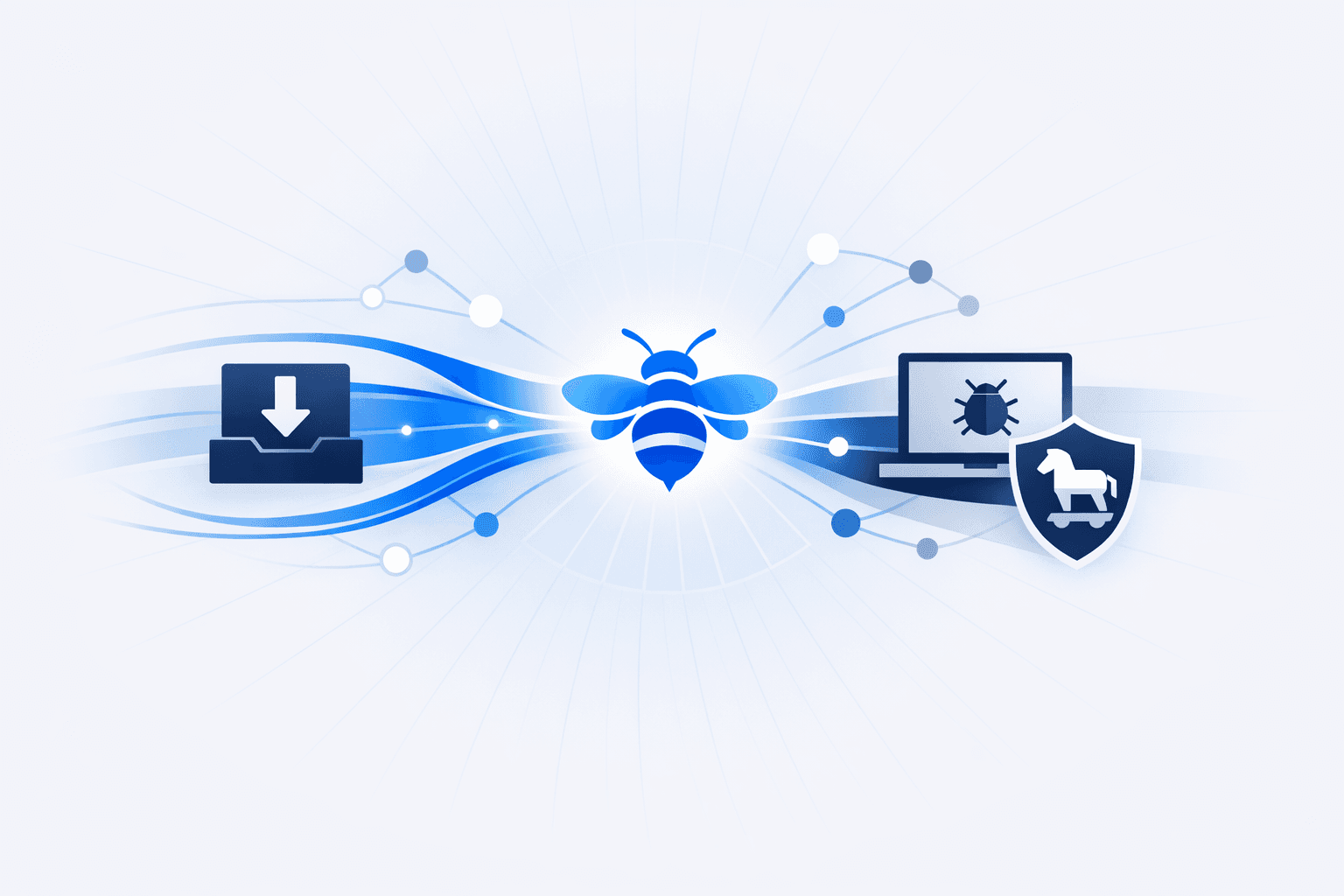
Researchers reported that the **Bumblebee** malware loader continues to evolve its initial access methods, moving beyond earlier PowerShell-heavy chains to newer delivery mechanisms including a JavaScript dropper and trojanized software installers. Deep Instinct said a new JavaScript-based dropper identified by its distinctive `PindOS` user-agent downloads DLL payloads from hardcoded URLs, stores them under `%appdata%/Microsoft/Templates/`, and launches them with `rundll32.exe`, while also supporting a PowerShell fallback path. The same dropper has been used to deliver both **Bumblebee** and **IcedID**, underscoring its role as a flexible malware distribution tool tied to ransomware-enabling intrusion activity. Other reporting shows Bumblebee has repeatedly changed infection chains while preserving its role as a loader for follow-on payloads such as **Cobalt Strike**, **Sliver**, **Meterpreter**, and ransomware. Earlier campaigns analyzed by Cyble used spam emails with password-protected attachments containing VHD files and malicious LNK shortcuts that triggered obfuscated PowerShell, Base64 decoding, gzip decompression, and reflective DLL injection via PowerSploit. VMRay found that once executed, Bumblebee uses packed or obfuscated binaries, extensive anti-analysis checks, and command-and-control over HTTP and later WebSockets to support shellcode injection, DLL injection, download-and-execute, persistence, shell execution, and plugin loading, highlighting a mature loader that is adapting both delivery and post-compromise tradecraft.
Aug 14, 2026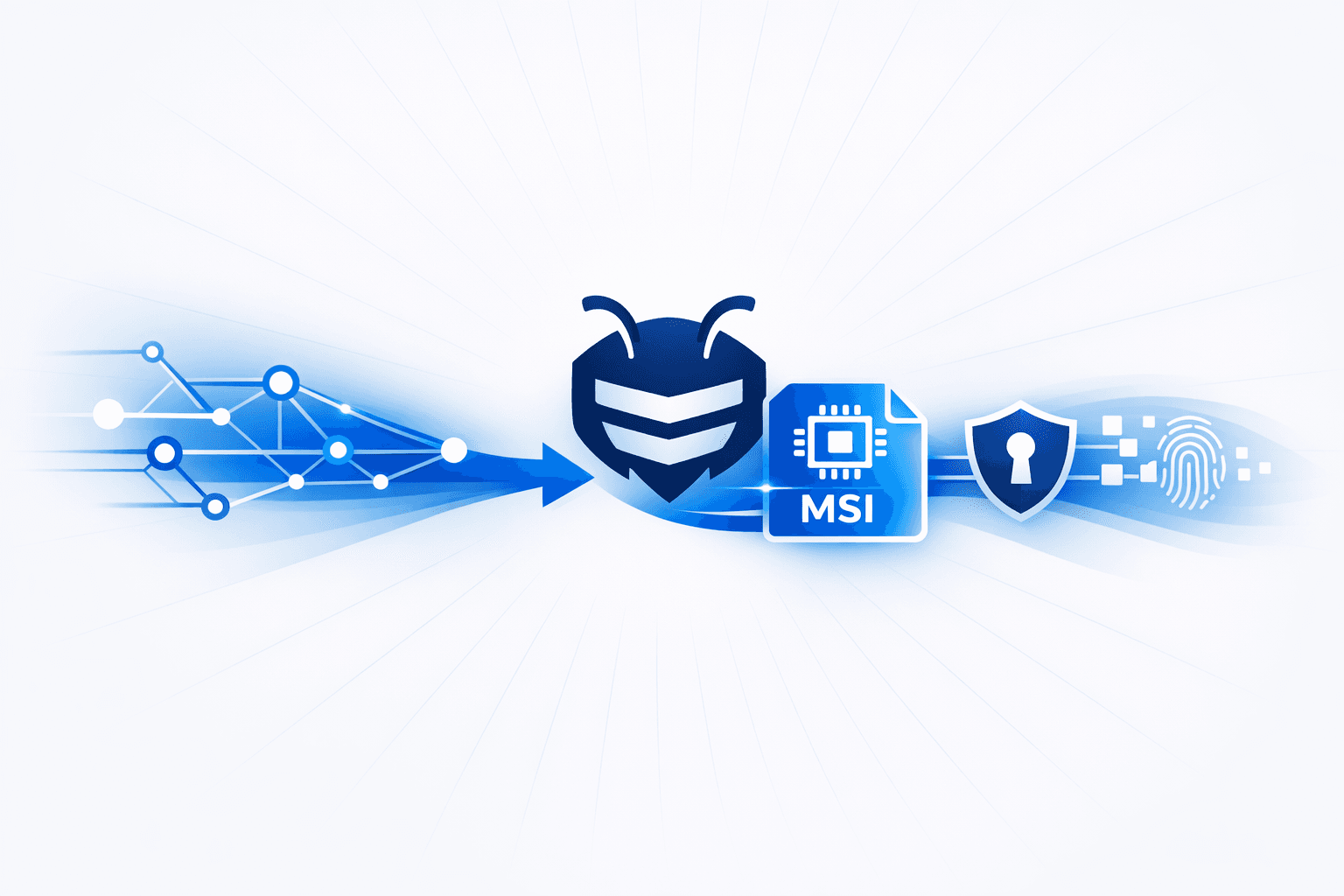
Researchers reported a new **Bumblebee** malware campaign that suggests the loader has resumed activity after Europol’s Operation Endgame disrupted Bumblebee and other major droppers. In the newly observed chain, victims are lured by phishing emails into opening a ZIP archive containing an LNK file that launches PowerShell, downloads an MSI installer, and executes it with `msiexec`. Instead of dropping a DLL to disk or spawning conspicuous child processes, the MSI abuses the Windows Installer **SelfReg** mechanism to load a DLL from an embedded CAB file and invoke `DllRegisterServer` directly in memory, a stealthier variation on Bumblebee delivery. The payload retained hallmark Bumblebee traits, including **RC4**-encrypted configuration data decrypted with the hardcoded key `NEW_BLACK`, port `443`, and campaign IDs `msi` and `lnk001`. Bumblebee emerged in 2022 as a widely used initial-access loader tied to actors such as **TA578** and **TA579**, commonly delivered through thread hijacking, contact-form abuse, ZIP or ISO archives, LNK files, and malicious DLL execution. Prior reporting linked the malware to follow-on deployment of **Cobalt Strike**, **Sliver**, **Meterpreter**, **IcedID**, and ransomware-associated operations connected to groups including **Conti**, **Diavol**, **LockBit**, and **AvosLocker**, underscoring that its return could restore a proven access path into enterprise networks.
Aug 15, 2026