DarkGate Campaigns Use Signed MSI Files and DLL Sideloading to Deploy MaaS Payloads
Malware Intelligence · 3 sources · Updated 4mo ago · First seen Aug 14, 2026
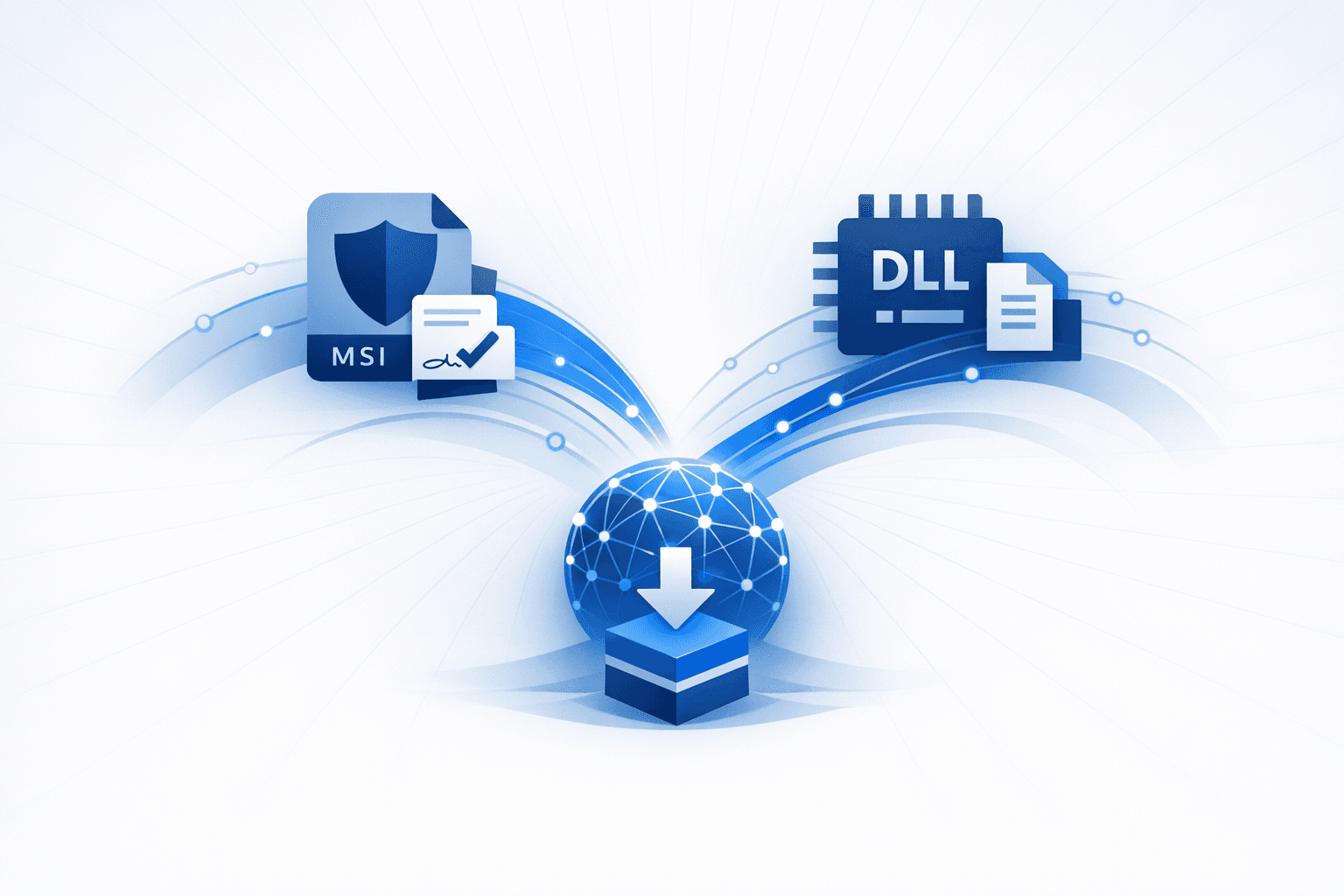
Researchers detailed multiple DarkGate infection chains that began with phishing lures themed as invoices or DocuSign documents and pushed victims toward malicious CAB and MSI installers. In one case, a wrapped DoubleClick ad URL delivered an MSI signed with a valid certificate issued to “Inoellact EloubantTech Optimization Information Co., Ltd.”, helping the malware evade reputation checks. The installer unpacked a cabinet containing legitimate signed binaries alongside tampered DLLs, enabling DLL sideloading and staged decryption before launching the next payload.
Analysis showed DarkGate using a layered loader architecture built around Delphi components and AutoIt scripts to reconstruct shellcode in memory and execute the final malware. One chain used a legitimate Apple binary with a modified CoreFoundation.dll and an encrypted sqlite3.dll; another abused windbg.exe in a similar sideloading flow. The recovered payload was the DarkGate agent, a malware-as-a-service loader capable of remote access and follow-on malware delivery, and one sample communicated with prodomainnameeforappru[.]com (46.21.157.142) over port 443.
Why it matters
Impact assessment
DarkGate campaigns target enterprise users through phishing, SharePoint, Microsoft Teams, and ad-wrapped download flows, with payload delivery relying on signed MSI installers and DLL sideloading. The impact is high because DarkGate is a malware-as-a-service loader with remote access, keylogging, information theft, HVNC, and follow-on payload delivery capabilities, making it suitable for broader intrusion chains including ransomware.
Exposure is broader than a single vertical because the lures use common business themes such as invoices and DocuSign documents and abuse trusted Windows installer workflows and legitimate signed binaries. The reporting describes active campaign activity and recovered command-and-control infrastructure, indicating real-world exploitation rather than a theoretical risk.
Affected populations
- Enterprise users exposed to phishing emails themed as invoices or DocuSign documents
- Organizations using Microsoft Teams and SharePoint for external file sharing or collaboration
- Windows environments where users can execute downloaded CAB, MSI, AutoIt, and LOLBin-assisted payload chains
Severity and business risk
- Credential theft and information theft risk from DarkGate post-compromise capabilities
- Remote access and modular plugin support enable persistence and follow-on malware deployment
- Potential operational disruption if DarkGate is used as an initial access vector for ransomware or broader hands-on-keyboard activity
- Reputational and financial impact from data theft, fraud, and incident response costs
Scope and exploitation status
- Campaigns are commodity and scalable, not limited to a narrowly targeted victim set
- Multiple infection chains were documented across separate research sources
- Known in-the-wild activity is confirmed by observed phishing chains, recovered payloads, and active C2 infrastructure