COVID-19-Themed Android Malware Campaigns Spread via SMS and Fake Apps
Social Engineering & Fraud · 2 sources · Updated 4mo ago · First seen Aug 14, 2026

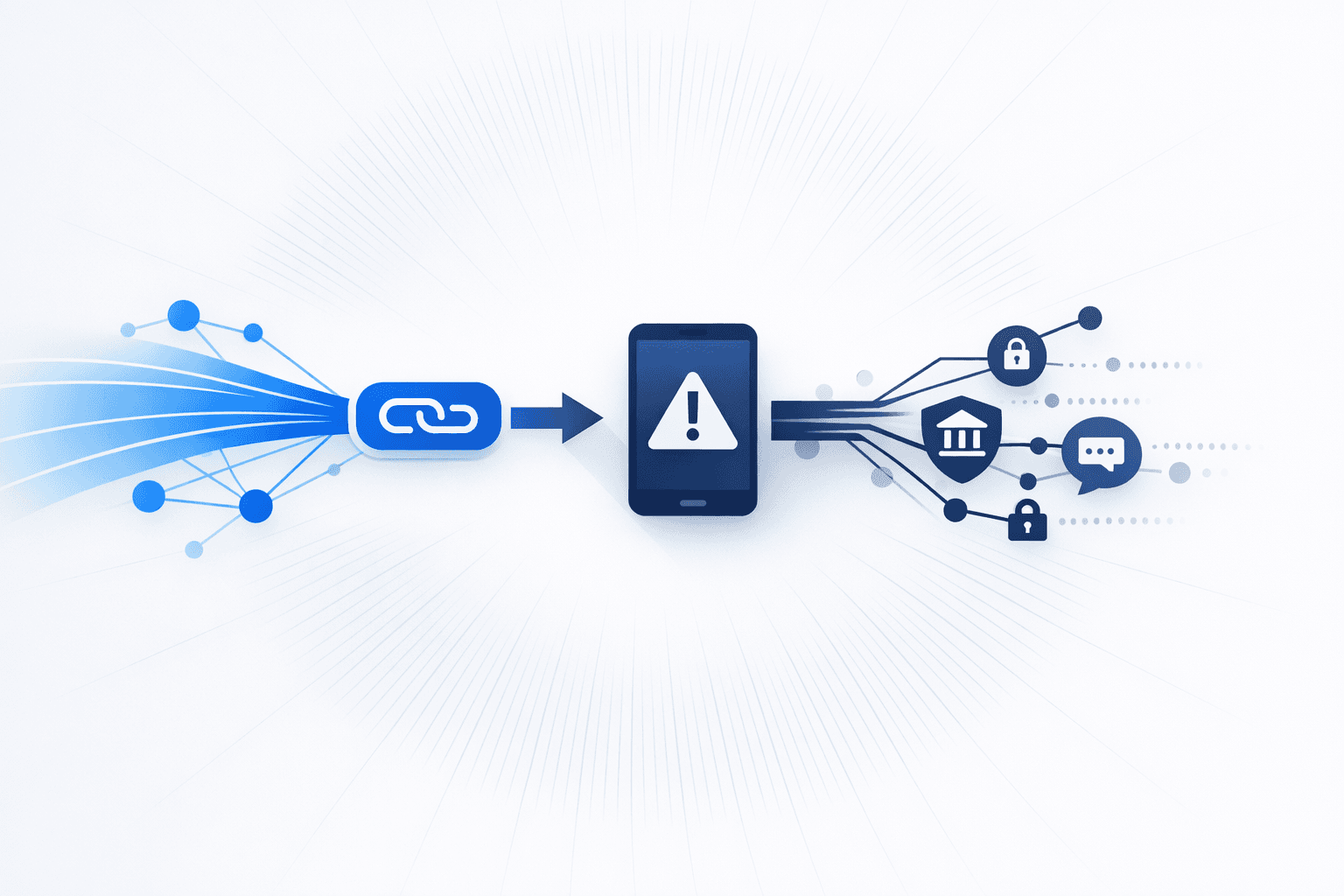
Threat actors used COVID-19-themed lures to push Android malware through SMS phishing and unofficial download sites, targeting users with fake alerts, safety tools, and public-health claims. Proofpoint reported that the TangleBot campaign sent text messages in the United States and Canada themed around coronavirus information and power outages, directing Android users to links that served a malicious APK and a fake Adobe Flash Player update prompt. Separately, researchers documented a fake "Corona Safety Mask" app and similar coronavirus-themed Android packages that were distributed outside official app stores and promoted through deceptive websites and messages.
Once installed, the malware gave operators extensive access to infected devices. TangleBot supported surveillance and device control features including keylogging, SMS and call control, screen capture, camera and microphone access, GPS tracking, clipboard access, and overlay injection, while using obfuscation and Telegram-based command-and-control discovery to hinder analysis. The other Android trojan focused on propagation by requesting permission to read contacts and send SMS messages, harvesting address books and sending malicious texts with download links to additional victims; researchers also warned the app appeared capable of evolving toward broader fraud or theft functions.
Why it matters
Impact assessment
COVID-19-themed Android malware campaigns affected mobile users who installed APKs from SMS links or unofficial sites, with observed targeting in the United States and Canada for TangleBot and broader opportunistic targeting for fake coronavirus apps. The impact is high for infected individuals and organizations with BYOD or Android-dependent workforces because the malware enabled surveillance, credential theft, SMS abuse, call control, location tracking, and potential financial fraud.
Summary
These campaigns were primarily opportunistic social-engineering operations rather than software-supply-chain compromises, but successful infection gave operators extensive control over victim devices. Exploitation in the wild was observed through active SMS phishing and malicious distribution domains, with recursive SMS propagation increasing exposure beyond the initial victim set.
Supporting details
- Affected populations:
- Android users installing apps from unofficial sources
- Users receiving SMS phishing messages themed around COVID-19 or power outages
- Organizations with BYOD Android devices accessing corporate email, MFA codes, or business apps
- Severity:
- Data exposure: typed credentials, SMS content, contacts, clipboard data, location, microphone/camera captures
- Operational disruption: unauthorized SMS sending, phone-call abuse, device surveillance, possible account takeover
- Financial impact: SMS charges, fraud enablement, credential theft, possible abuse of voice biometrics
- Reputational impact: infected users may spread malicious SMS to contacts, including coworkers and customers
- Scope:
- TangleBot was observed targeting users in the US and Canada
- Corona-themed trojan distribution relied on deceptive websites and sideloading, suggesting broad but user-driven exposure
- Spread was amplified through contact harvesting and mass SMS propagation
- Known in-the-wild activity:
- Proofpoint observed active TangleBot SMS phishing in early September 2021
- Zscaler documented active malicious domains distributing coronavirus-themed Android malware
- Key entities:
- TangleBot
- Proofpoint
- Zscaler
- Google Play Protect