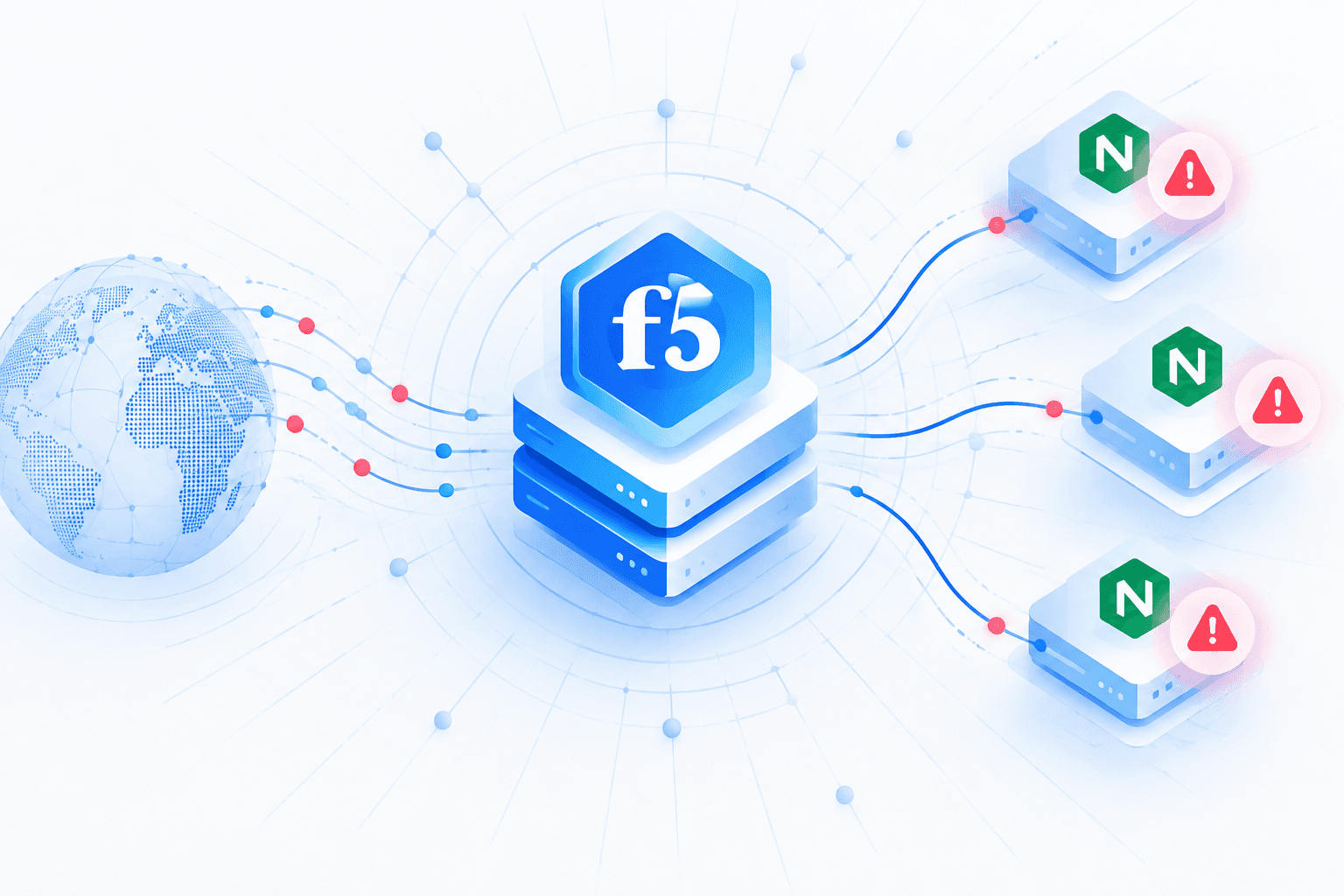
Critical RCE Flaw in NGINX and F5 NGINX Products Prompts Urgent Patching
Patch & Detection Intelligence · 4 sources · Updated 4mo ago · First seen Jul 29, 2026

F5 has disclosed multiple vulnerabilities affecting NGINX product lines, including NGINX Open Source, NGINX Plus, NGINX Gateway Fabric, and NGINX Ingress Controller, with the most serious issue tracked as CVE-2026-42533. The flaw can lead to remote code execution, while additional reported weaknesses include information disclosure and security restriction bypass across several version ranges. National cybersecurity authorities in Europe have highlighted the breadth of affected products and the severity of the exposure.
F5 released fixes on 2026-07-15 and urged customers to update immediately, warning that the vulnerable configuration is considered typical even if not every deployment is affected. Authorities also noted that proof-of-concept exploit code is already public, raising the likelihood of opportunistic attacks despite no confirmed large-scale exploitation so far. Where immediate patching is not possible, temporary mitigations are available, but vendor-recommended upgrades to fixed versions remain the primary remediation step.
Why it matters
Impact assessment
CVE-2026-42533 creates material risk for organizations running internet-facing NGINX and F5 NGINX products, especially where common configurations use regex-based map directives, non-cacheable variables, or the Stream ssl_preread feature. The impact ranges from worker-process crashes and denial of service to potential remote code execution on the host, making this both an availability and possible system-compromise issue.
Public proof-of-concept code is already available, and authorities assess the vulnerable configuration as typical even if not universal. No large-scale exploitation is confirmed in the reporting, but the exposure is broad across multiple NGINX product lines and the likelihood of opportunistic exploitation is elevated.
Affected organizations and products
- Organizations operating internet-facing NGINX Open Source or NGINX Plus instances.
- Organizations using F5 NGINX-related products, including:
- NGINX Instance Manager 2.x
- F5 WAF for NGINX 5.x
- NGINX App Protect WAF 4.x and 5.x
- NGINX Gateway Fabric 1.x and 2.x
- NGINX Ingress Controller 3.x, 4.x, 5.x, and 2026-lts-x
- Industries most exposed are those with high external web and API presence, managed ingress infrastructure, Kubernetes environments, and TLS inspection at the edge.
Severity and business effect
- Remote unauthenticated exploitation is possible under affected configurations.
- Successful exploitation can crash NGINX worker processes and create repeated denial-of-service loops.
- Under favorable memory conditions, exploitation may permit arbitrary code execution on the underlying host.
- Potential consequences include service outages, compromise of reverse proxies or ingress tiers, downstream application disruption, and reputational impact from edge-service instability or breach.
Scope and exploitation status
- Scope is broad because affected software is widely deployed and the vulnerable configuration is described as typical.
- Exploitability is increased by public proof-of-concept availability, including reporting that the exploit works even with ASLR enabled.
- No confirmed large-scale in-the-wild exploitation is cited in the provided sources as of 2026-07-30.