Coordinated Cyberattack Disrupts Water Utilities Across Minnesota Communities
Sector Threat Intelligence · 42 sources · Updated 4mo ago · First seen Jul 27, 2026
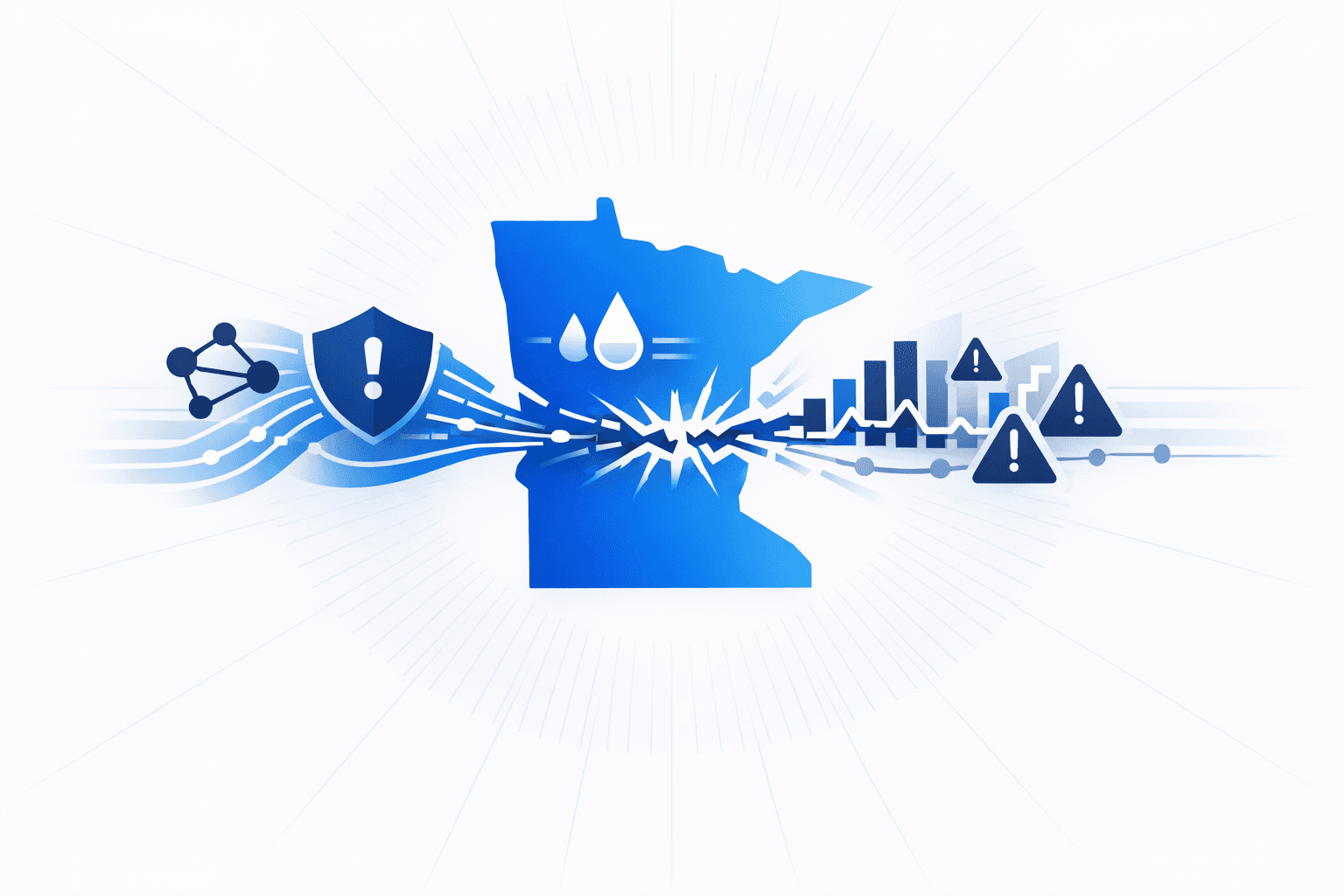
A coordinated cyberattack disrupted water and wastewater utilities in more than 30 Minnesota communities, prompting a multiagency response from Minnesota Information Technology Services and federal partners including CISA, the EPA, and the FBI. A restricted WaterISAC TLP:AMBER notification said the Minnesota Fusion Center reported ongoing malicious cyber activity affecting Minnesota water utilities, indicating the incident was active enough to warrant limited-sector sharing.
Local impacts included Braham’s water plant going offline and Plymouth isolating affected equipment connected to two water towers and several lift stations as responders worked on containment, investigation, remediation, and threat-intelligence sharing. Officials said water quality remained safe, and no public attribution has been announced, though the incident comes amid broader federal concern over attacks on internet-connected operational technology in under-resourced U.S. water systems.
Why it matters
Summary
A coordinated cyber campaign disrupted water and wastewater OT environments across at least seven U.S. states, with more than 30 Minnesota communities affected on July 26-27, 2026. The primary impact was operational disruption and loss of visibility/control rather than confirmed water contamination, but the campaign demonstrates scalable risk to small and mid-sized utilities that expose PLCs or cellular-connected OT assets to the internet.
Impact assessment
Who is affected
- Water and wastewater utilities in the United States are directly affected.
- Confirmed activity affected utilities in Minnesota and was also reported in Michigan, South Dakota, and Georgia; the FBI said incidents affected entities in at least seven states.
- Small municipal and community water systems appear especially exposed due to limited OT security resources and reliance on remote monitoring/control.
- Utilities using internet-facing or cellular-connected PLCs and remote assets such as water towers, lift stations, and pump stations are at elevated risk.
Severity
- Operational impacts included operator lockout, loss of monitoring, loss of control, pressure loss, flooding, temporary plant outages, boil-water notices in some incidents cited by CISA, and sustained manual operations.
- In Braham, Minnesota, the water plant went offline after computerized controls were disabled.
- Pressure loss can create public health risk by allowing untreated groundwater to seep into pipes.
- No source reported confirmed drinking water contamination in the Minnesota incidents, and officials repeatedly stated water quality remained safe.
Scope and exposure
- The exposure is broader than a single state incident and appears to be a repeatable campaign against similarly configured OT environments.
- Shared third-party integrator network designs and undocumented cellular modems likely increased scale and repeatability across victims.
- Censys reporting cited thousands of internet-exposed industrial hosts from Rockwell/Allen-Bradley, Siemens, and Schneider Electric, indicating substantial residual exposure.
Exploitation in the wild
- Yes. Multiple references describe active exploitation in the wild against water-sector OT.
- The FBI/EPA PSA states utilities in at least seven states reported incidents since July 27, 2026.
- CISA reported a significant increase in attacks targeting internet-exposed PLCs in the water and wastewater sector.