Researchers Jailbreak iOS 27 on iPhone 11 Pro via SecureROM Exploit
Vulnerability Disclosure · 2 sources · Updated 4mo ago · First seen Jul 27, 2026
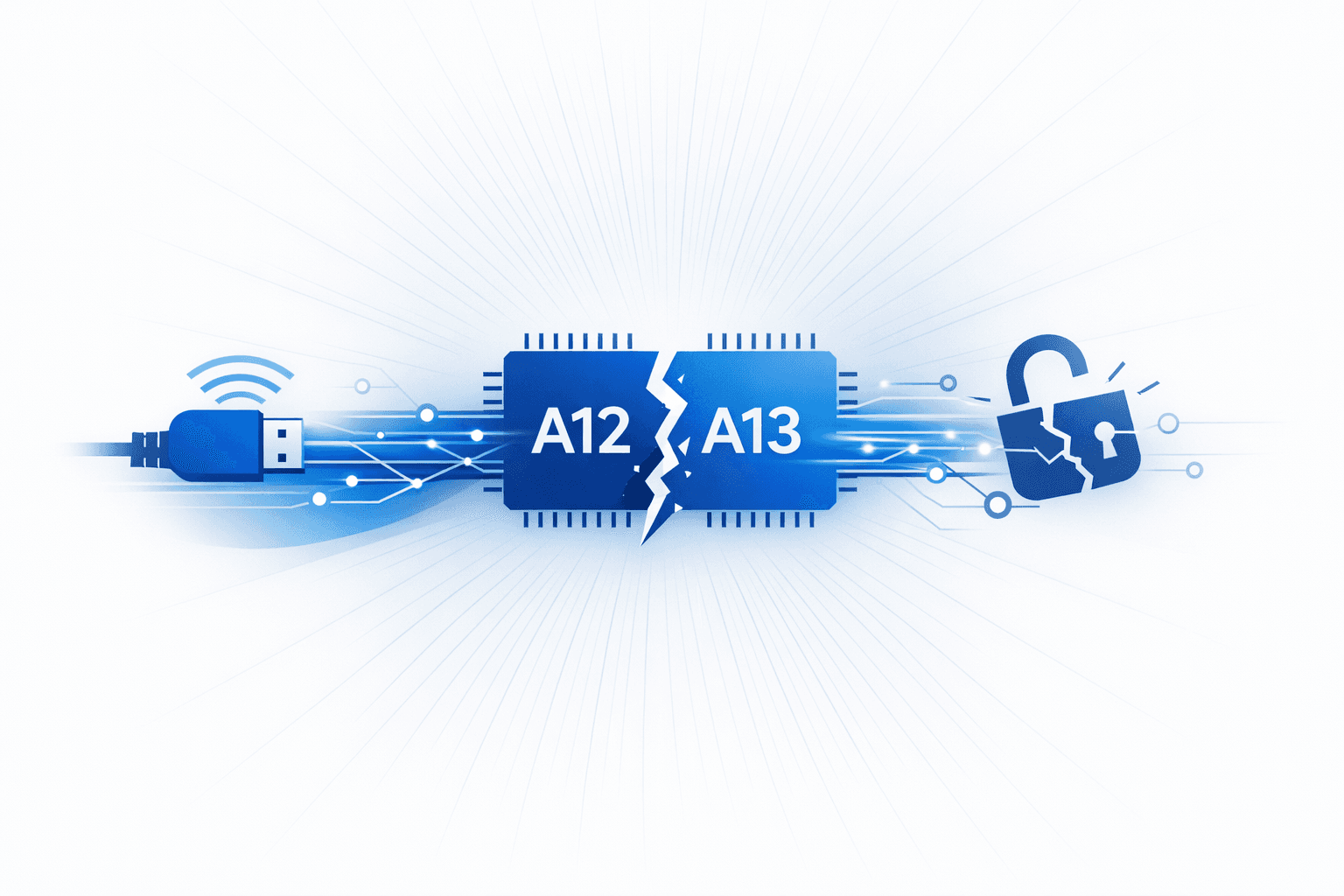
Researchers have booted a jailbroken build of iOS 27.0 beta 2 on an iPhone 11 Pro by combining the usbliter8 SecureROM exploit with a heavily modified custom firmware workflow. The demonstration targets A12 and A13 devices through DFU mode, requires physical access and specialized USB hardware, and shows that flaws in Apple’s immutable bootrom can still be used to undermine the boot chain on older hardware even after major iOS upgrades. Because the attack abuses SecureROM code, it cannot be fully fixed through a standard iOS software update.
The project reportedly introduced build-specific patches for build 24A5370h and altered kernel, userland, and system services to bypass protections including USB Restricted Mode, sandbox controls, and AMFI trust-cache checks. The modified device was able to load altered boot components and support capabilities such as SSH access, a bootstrap environment, and Sileo, but the jailbreak remains highly experimental and can disrupt SEP-dependent features, passcode support, Wi‑Fi, baseband, Bluetooth, and Apple services. No CVE, CVSS score, Apple advisory, or public evidence of in-the-wild exploitation was reported in the cited coverage.
Why it matters
Impact assessment
This affects Apple A12- and A13-based devices, with the demonstrated case on iPhone 11 Pro running iOS 27.0 beta 2 build 24A5370h. The immediate enterprise risk is concentrated on lost device trust, weakened platform security controls, and potential forensic or insider misuse where an attacker has physical access and can place the device into DFU mode.
Severity is moderate for most organizations because the attack requires physical access, DFU interaction, and specialized USB hardware, but impact on a successfully targeted device is high: the workflow can undermine the secure boot chain, bypass USB Restricted Mode, weaken sandboxing and AMFI trust enforcement, and enable unsigned code execution plus USB-based SSH access. Scope appears targeted rather than widespread, and the story provides no CVE, no Apple advisory, and no public evidence of in-the-wild exploitation.
Supporting facts
- Affected hardware family: Apple devices using A12 and A13 processors.
- Demonstrated target: iPhone 11 Pro.
- Demonstrated software: iOS 27.0 beta 2, build 24A5370h.
- Access requirements: physical access, USB connection, DFU mode, and specialized compatible hardware.
- Security impact on compromised device: modified boot components can be loaded and a custom iOS image restored.
- Security controls reportedly bypassed: USB Restricted Mode, sandbox restrictions affecting /var/jb, and AMFI trust-cache checks.
- Post-compromise capabilities: USB-based SSH access, bootstrap environment, and Sileo package manager.
- Operational side effects: SEP-dependent features, passcode support, Wi‑Fi, baseband, Bluetooth, and Apple services may break; device restore can erase the phone.
- Exploitation status: no public in-the-wild exploitation reported in the cited coverage.