usbliter8 Exploit Breaks SecureROM on Apple A12 and A13 Devices
Attack Tradecraft · 15 sources · Updated 4mo ago · First seen Jun 18, 2026
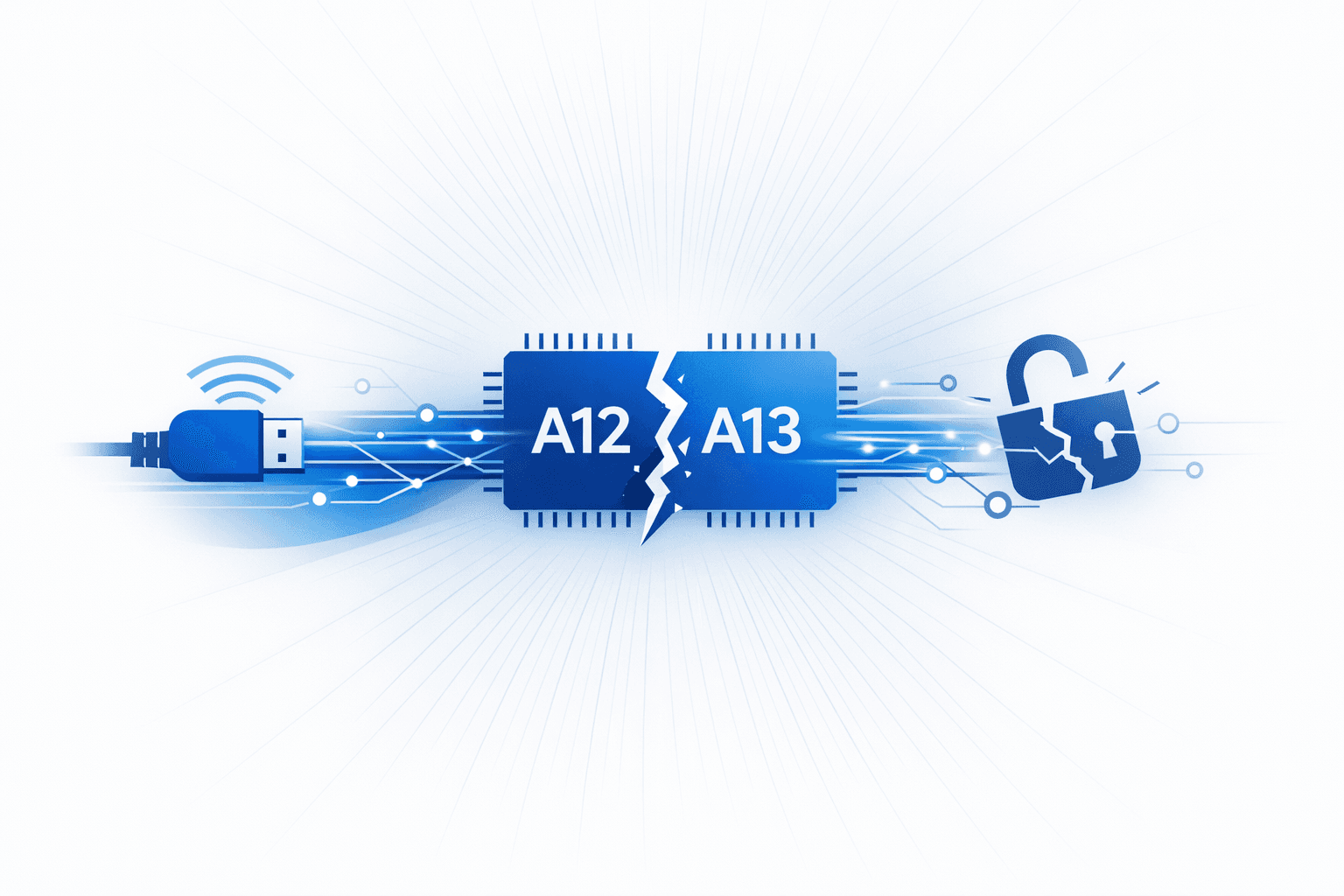
Security researchers at Paradigm Shift disclosed usbliter8, a tethered BootROM exploit that achieves privileged SecureROM code execution on Apple devices using A12 and A13 processors, as well as Apple Watch S4/S5 chipsets. The exploit chains a flaw in the Synopsys DesignWare USB 2 controller with a firmware configuration weakness in the boot chain, allowing attackers with physical access to modify DFU mode, inject custom USB handlers, and boot unsigned iBoot images. Researchers said the issue affects immutable BootROM/SecureROM code, meaning software updates cannot fully fix vulnerable devices and hardware replacement is the most effective mitigation.
The public release included a GitHub repository and technical write-up describing hardware requirements and exploitation steps. Because the bug is exposed through low-level USB behavior that typical host stacks cannot reach, the exploit uses RP2350-based microcontroller boards such as the Waveshare RP2350 USB-A, Waveshare RP2350 Zero, Pimoroni TINY2350, and Raspberry Pi Pico 2. Paradigm Shift said A11 devices are not vulnerable due to different USB driver behavior, while A14 and later platforms appear harder to exploit because DART is configured correctly; Apple Product Security was notified before publication.
Why it matters
Impact assessment
usbliter8 permanently weakens the physical security boundary of Apple devices built on A12, A13, S4, and S5 silicon by enabling pre-boot SecureROM compromise with physical access. The issue is severe for enterprises, government, legal, executive, journalist, and other high-risk users because it allows unsigned boot components and reduced boot security on devices that cannot be fully remediated by software.
The exposure is broad across older but still widely deployed Apple hardware, but exploitation is targeted rather than internet-scale because it requires DFU mode, USB access, specialized hardware, and operator skill. No public in-the-wild exploitation was reported in the references, and the published research did not demonstrate direct access to user data or a Secure Enclave compromise.
Affected populations and products
- Apple devices using A12 and A13 processors
- Apple Watch devices using S4 and S5 chips
- Specifically named affected devices:
- iPhone XS, XS Max, XR
- iPhone 11, 11 Pro, 11 Pro Max, iPhone SE (2nd generation)
- iPad Air (3rd generation), iPad mini (5th generation), iPad (8th generation), iPad (9th generation)
- Apple Watch Series 4, Series 5, Apple Watch SE (1st generation)
- HomePod mini
- Theoretical but not yet implemented support: A12X, A12Z
Severity and business impact
- Enables arbitrary code execution in SecureROM before the OS loads
- Bypasses Apple signature checks and weakens chain-of-trust protections
- Allows booting unsigned iBoot images and temporary production-mode demotion
- Creates a lifetime hardware exposure because BootROM/SecureROM is immutable
- Raises risk of forensic extraction chains, jailbreak development, device tampering, and persistent trust-boundary bypass after temporary device seizure
Scope and limitations
- Not remotely exploitable
- Requires physical possession, USB connection, DFU mode, reboot time, and specialized RP2350-based hardware
- More relevant to targeted operations than mass exploitation
- Researchers did not demonstrate bypass of Data Protection or direct compromise of the Secure Enclave Processor
- No CVE, Apple advisory, CISA alert, or public exploitation in the wild was reported in the cited material
Not affected or apparently resistant
- A11-based devices are not affected
- A14 and later devices appear resistant due to corrected DART configuration and related architectural changes
- Apple Watch S6 and later are not affected
- Apple Silicon Macs are not affected