Mallory
← Back to News
trade-export-controlai-platform-securityprivacy-surveillance-policycritical-infrastructure-threat

U.S. Weighs Curbs on Chinese Open-Weight AI Models After Kimi K3 Release

Regulatory & Policy · 8 sources · Updated 4mo ago · First seen Jul 20, 2026

U.S. Weighs Curbs on Chinese Open-Weight AI Models After Kimi K3 Release

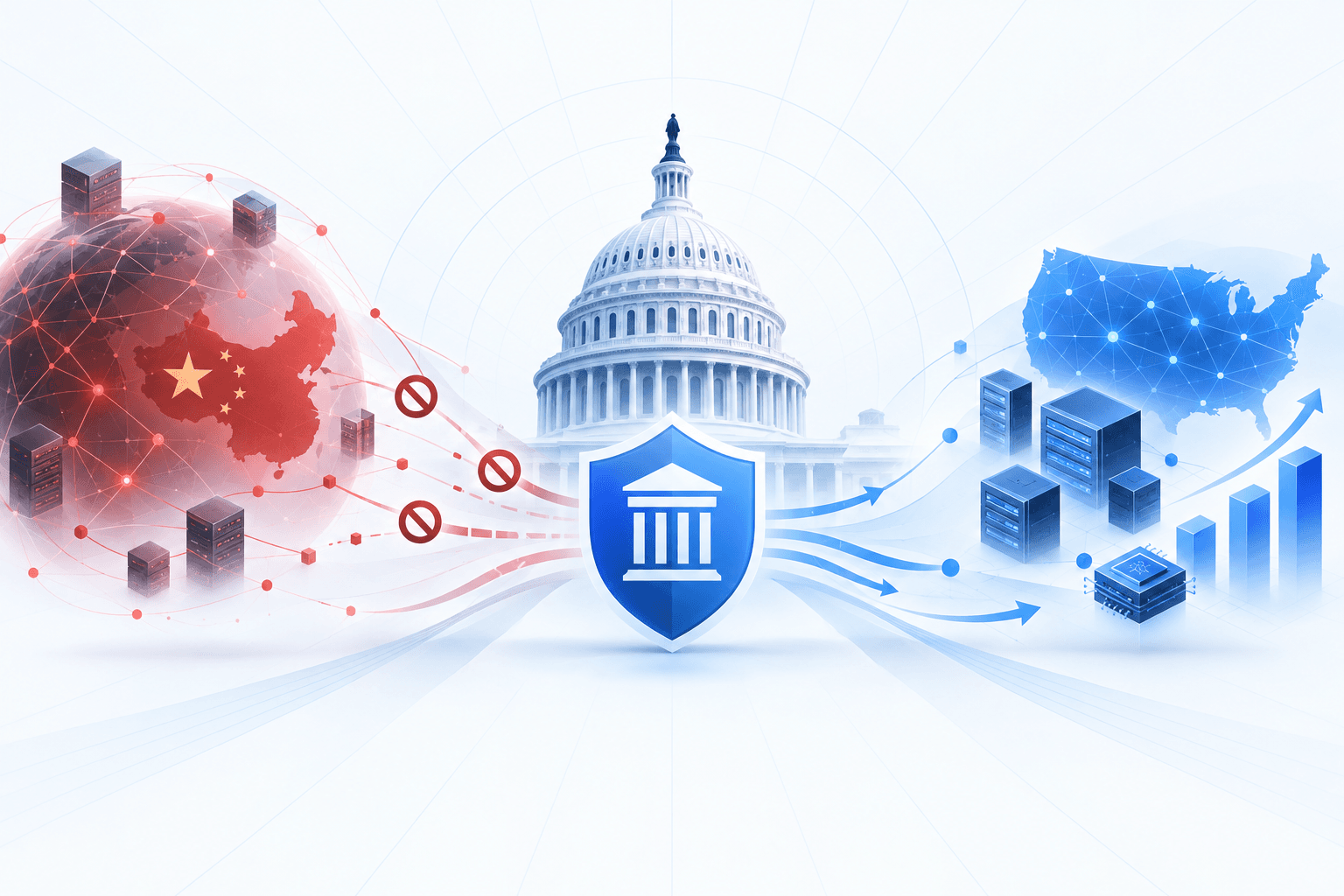
The Trump administration is reportedly reviving plans to restrict Chinese AI models in the United States after Moonshot AI released the open-weight Kimi K3 model, with officials citing cybersecurity, critical infrastructure, and digital sovereignty concerns. Reports say U.S. agencies have spent months evaluating options that include adding Chinese AI labs and research institutes to the Commerce Department blacklist, limiting U.S. companies’ access to their technologies, and issuing government warnings about the risks of hosting or deploying Chinese models.

Officials are also said to be considering rules aimed specifically at foreign open-source or open-weight AI systems, including procurement restrictions, liability measures for U.S. firms involved in breaches tied to hosted Chinese models, and broader pressure campaigns to discourage adoption. The push reflects growing concern that lower-cost Chinese models are gaining traction with U.S. companies, while their downloadable weights make any outright ban difficult to enforce because they can be copied, modified, mirrored, and run offline on private infrastructure.

Why it matters

Impact assessment

U.S. enterprises evaluating or already deploying Chinese open-weight AI models such as Moonshot AI Kimi K3 and DeepSeek are the primary affected population. The immediate risk is not a confirmed software exploit, but a combination of regulatory exposure, data-governance risk, supply-chain trust concerns, and potential business disruption if U.S. restrictions, procurement bans, or liability rules are enacted.

The scope is potentially broad because the reporting describes growing U.S. enterprise adoption driven by lower cost and self-hosting flexibility, including named production use by Coinbase. There are no publicly verified incidents in the references showing Kimi K3 itself was exploited in the wild or contained a confirmed backdoor, but multiple sources describe active U.S. government concern over cybersecurity, critical infrastructure, and possible covert extraction of U.S. model outputs by Moonshot AI.

Supporting details

  • Affected entities:
    • U.S. companies using or testing Chinese AI models
    • Critical infrastructure operators if future U.S. guidance restricts model use in sensitive environments
    • Government buyers and contractors if procurement restrictions are imposed
    • AI developers and cloud providers hosting foreign open-weight models
  • Business impacts described:
    • Potential compliance and legal liability for breaches involving hosted Chinese models
    • Data residency and privacy risk where prompts, outputs, or telemetry may be stored in China
    • Operational disruption if organizations must rapidly replace restricted models
    • Strategic vendor risk from dependence on models that may become sanctioned or blacklisted
  • Scope and exposure:
    • Broad exposure potential due to low-cost adoption and self-hosting capability
    • Hard-to-enforce restrictions because weights can be mirrored, modified, quantized, distilled, and run offline
  • Known incidents or allegations:
    • No confirmed malicious backdoor or exploitation evidence for Kimi K3 in the cited reporting
    • White House and Anthropic allegations describe large-scale deceptive model-output harvesting by Moonshot AI, DeepSeek, MiniMax, and Alibaba, but the references note lack of publicly verifiable evidence for some claims
What this changes for youSee the reporting duties and controls this puts on the clock.
Get the context
Event timeline

How this story unfolded

Events from the most recent confirmed update back to the earliest known activity.

6 events · Jul 20, 2026 – Jul 23, 2026
  1. Jul 23, 20264mo ago

    Nvidia CEO Jensen Huang praises Chinese AI models like Kimi K3

    Nvidia CEO Jensen Huang publicly praised Chinese open-source AI models including Moonshot AI's Kimi K3, saying enterprises should not be deterred by what he characterized as security misconceptions. His comments highlighted growing industry support for low-cost Chinese models amid ongoing U.S. cybersecurity and national security concerns.

    ‘These Chinese models are excellent’: Nvidia CEO Jensen Huang hails powerful new Chinese AI models like Kimi K3 - and says don’t be put off by security ‘misconceptions’ | IT Pro
  2. Jul 22, 20264mo ago

    White House official accuses Moonshot AI of distilling Anthropic’s Fable

    White House technology official Michael Kratsios publicly accused Beijing-based Moonshot AI of covertly distilling Anthropic’s recently released Fable model to build K3. He alleged Moonshot used a sophisticated internal platform and multiple access methods to evade detection, though no evidence was publicly provided in the report.

    White House accuses Chinese company of distilling Anthropic’s Fable | CyberScoop
  3. Jul 20, 20264mo ago

    Trump administration revives push to restrict Chinese AI models

    U.S. officials have reportedly renewed efforts to restrict or potentially ban Chinese AI models in the United States, citing cybersecurity and critical infrastructure concerns as adoption of lower-cost, self-hostable Chinese models grows.

    Trump administration reportedly reviving push to ban Chinese AI models following Kimi K3 launch, citing cybersecurity concerns - downloadable open weights could make an outright U.S. ban nearly impossible to enforce amid growing adoption | Tom's Hardware
  4. Jul 20, 20264mo ago

    Earlier U.S. restriction efforts were paused over market impact concerns

    The reported earlier effort to impose restrictions on Chinese AI models was paused because of concerns about the potential impact on the market and innovation.

    Trump administration reportedly reviving push to ban Chinese AI models following Kimi K3 launch, citing cybersecurity concerns - downloadable open weights could make an outright U.S. ban nearly impossible to enforce amid growing adoption | Tom's Hardware
  5. Jul 20, 20264mo ago

    U.S. officials previously weighed restrictions on Chinese AI labs

    Before the latest renewed push, U.S. officials had considered measures such as adding Chinese AI labs like DeepSeek to the Commerce Department Entity List, issuing an NSA and Office of the National Cyber Director advisory, and drafting liability-focused executive action for U.S. companies hosting Chinese models.

    Trump administration reportedly reviving push to ban Chinese AI models following Kimi K3 launch, citing cybersecurity concerns - downloadable open weights could make an outright U.S. ban nearly impossible to enforce amid growing adoption | Tom's Hardware
  6. Jul 20, 20264mo ago

    Moonshot AI releases open-weight Kimi K3 model

    Moonshot AI released the open-weight Kimi K3 model, a development that U.S. reporting says triggered or accelerated renewed Washington discussions about restricting Chinese AI models over cybersecurity concerns.

    Trump administration reportedly reviving push to ban Chinese AI models following Kimi K3 launch, citing cybersecurity concerns - downloadable open weights could make an outright U.S. ban nearly impossible to enforce amid growing adoption | Tom's Hardware
Linked entities

Related entities

Vulnerabilities, threat actors, malware, products, organizations, and breaches Mallory has linked to this story.

Open in app →

Affected products

1 linked
Deepseek

Organizations

2 linked
DeepseekMoonshot AI
Do you run this?See what this changes for your reporting obligations and which controls it puts on the clock.
Get the Regulatory Context
Mallory platform

See the full picture, correlated to your attack surface.

This page covers what’s public. Mallory adds the parts that aren’t: which of your assets are affected, which threat actors are using it right now, and what to deploy next.

Exposure mappingMap indicators from this story to your assets and identify affected systems in minutes.
Threat actor evidenceEvery observed campaign, victim, and pivot linked to actors named in this story.
Associated malwareMalware, exploits, and IOCs connected to the activity described here.
Detection signaturesYARA, Sigma, and Snort rules deployed to your SIEM as soon as they’re published.
Scheduled alertsGet matching new stories delivered to your team as they break, not the next morning.
AI threadsAsk questions about this story and take action on the answers.