Mallory
← Back to News
widely-deployed-product-advisoryendpoint-software-vulnerabilityidentity-authentication-vulnerabilityopen-source-dependency-vulnerability

Node.js Patches 12 Flaws Including TLS Authentication Bypass and WebCrypto DoS

Patch & Detection Intelligence · 10 sources · Updated 5mo ago · First seen Jun 18, 2026

Node.js Patches 12 Flaws Including TLS Authentication Bypass and WebCrypto DoS

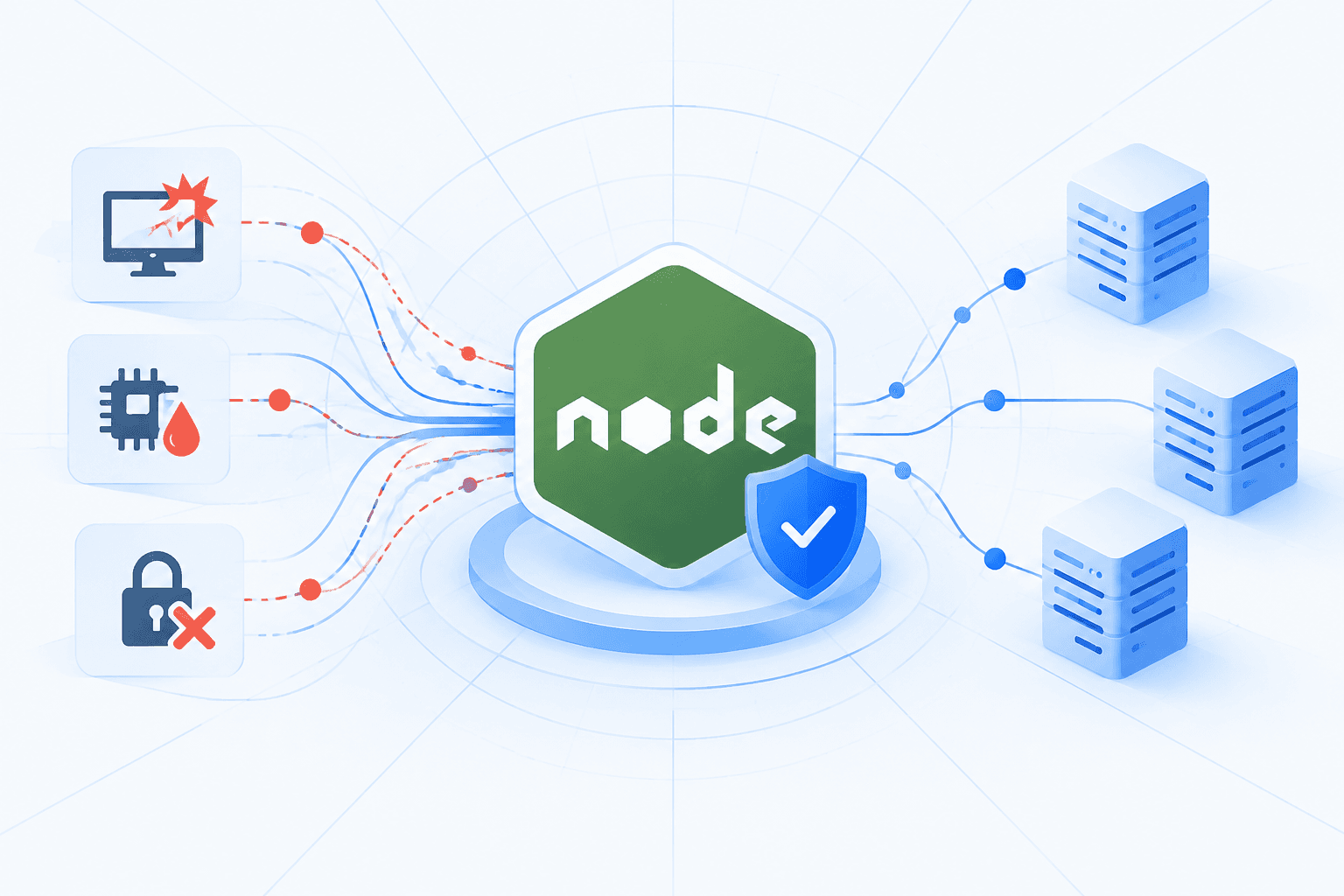
The Node.js project released security updates across its supported 22.x, 24.x, and 26.x lines to fix 12 vulnerabilities, including two high-severity issues that prompted calls for immediate patching. The most serious bugs are CVE-2026-48618, a TLS hostname verification flaw caused by improper handling of Unicode dot separators that can lead to authentication bypass, and CVE-2026-48933, a WebCrypto AES integer overflow that can crash processes and enable remote denial-of-service. The releases were announced for all active Node.js lines through the project’s coordinated June security update process and public notices on the oss-sec mailing list.

Why it matters

Impact assessment

Node.js deployments running supported 22.x, 24.x, and 26.x lines before the June 18, 2026 security releases are affected. The highest-risk impact is on internet-facing applications and internal services that rely on Node.js TLS validation, mTLS, WebCrypto, HTTP/2, proxying, or the permission model, with potential outcomes including authentication bypass, denial of service, memory exhaustion, credential leakage, and policy bypass.

The exposure is broad because Node.js is widely deployed across web applications, APIs, developer platforms, and backend services. The story does not provide confirmed in-the-wild exploitation, but the presence of multiple high- and medium-severity flaws in core runtime functionality makes rapid remediation necessary.

Supporting facts

  • Affected products: Node.js 22 before v22.23.0, Node.js 24 before v24.17.0, and Node.js 26 before v26.3.1.
  • High-severity issues affect all supported release lines:
    • CVE-2026-48618: TLS hostname verification flaw that can enable authentication bypass under certain configurations.
    • CVE-2026-48933: WebCrypto integer overflow that can crash processes and enable remote denial of service.
  • Medium-severity issues include:
    • CVE-2026-48934: TLS host identity verification bypass via session reuse with a different server name.
    • CVE-2026-48928: mTLS authorization bypass in multi-context deployments.
    • CVE-2026-48930: silent authority rebinding via embedded null bytes in hostnames.
    • CVE-2026-48619: HTTP/2 memory exhaustion via attacker-controlled ORIGIN frames.
    • CVE-2026-48615: proxy credential leakage in error messages.
    • CVE-2026-48937: HTTP/2 session cleanup failure after GOAWAY on invalid protocol errors.
  • Low-severity issues include permission model bypasses, Unix domain socket restriction bypass, and HTTP response queue poisoning.
  • No source cited in the story confirms active exploitation in the wild.

Patch this, or something else?See real exploitation activity before you spend the cycle.
Triage this advisory
Event timeline

How this story unfolded

Events from the most recent confirmed update back to the earliest known activity.

4 events · Jun 10, 2026 – Jun 26, 2026
  1. Jun 26, 20265mo ago

    Node.js issue reports IPv6 SAN regression in tls.checkServerIdentity()

    A new Node.js issue disclosed that tls.checkServerIdentity() no longer matches IPv6 IP-Address SANs, identifying the behavior as a regression in v24.17.0. This is a separate technical development from the June 18 security release and subsequent advisory.

    tls: checkServerIdentity() no longer matches IPv6 IP-Address SANs (regressed in v24.17.0) · Issue #64144 · nodejs/node
  2. Jun 22, 20265mo ago

    Canadian Centre for Cyber Security issues Node.js advisory AV26-624

    On 2026-06-22, the Canadian Centre for Cyber Security published advisory AV26-624 about the Node.js security releases issued on June 18. The notice identified affected versions in the 22.x, 24.x, and 26.x lines and urged users and administrators to review the release information and apply the updates.

    Nodejs security advisory (AV26-624) - Canadian Centre for Cyber Security
  3. Jun 18, 20265mo ago

    Node.js releases June 2026 security updates for supported lines

    On June 18, 2026, Node.js released security updates for its supported 22.x, 24.x, and 26.x release lines to address 12 vulnerabilities. Reported issues included high-severity flaws such as CVE-2026-48618 and CVE-2026-48933, along with additional fixes affecting TLS, HTTP/2, proxy handling, permissions, and related components.

    Node.js Security Updates: Patch Critical Flaws Now
  4. Jun 10, 20266mo ago

    Node.js announces planned June 2026 security releases

    An earlier Node.js notice stated that new versions of all supported release lines were intended to be released on or shortly after June 17, 2026.

    oss-sec: Fwd: Node.js security updates for all active release lines, June 2026
Linked entities

Related entities

Vulnerabilities, threat actors, malware, products, organizations, and breaches Mallory has linked to this story.

Open in app →
Do you run this?See real exploitation activity behind this advisory so you can triage it against everything else in the queue.
Prioritize This Patch
Mallory platform

See the full picture, correlated to your attack surface.

This page covers what’s public. Mallory adds the parts that aren’t: which of your assets are affected, which threat actors are using it right now, and what to deploy next.

Exposure mappingMap indicators from this story to your assets and identify affected systems in minutes.
Threat actor evidenceEvery observed campaign, victim, and pivot linked to actors named in this story.
Associated malwareMalware, exploits, and IOCs connected to the activity described here.
Detection signaturesYARA, Sigma, and Snort rules deployed to your SIEM as soon as they’re published.
Scheduled alertsGet matching new stories delivered to your team as they break, not the next morning.
AI threadsAsk questions about this story and take action on the answers.