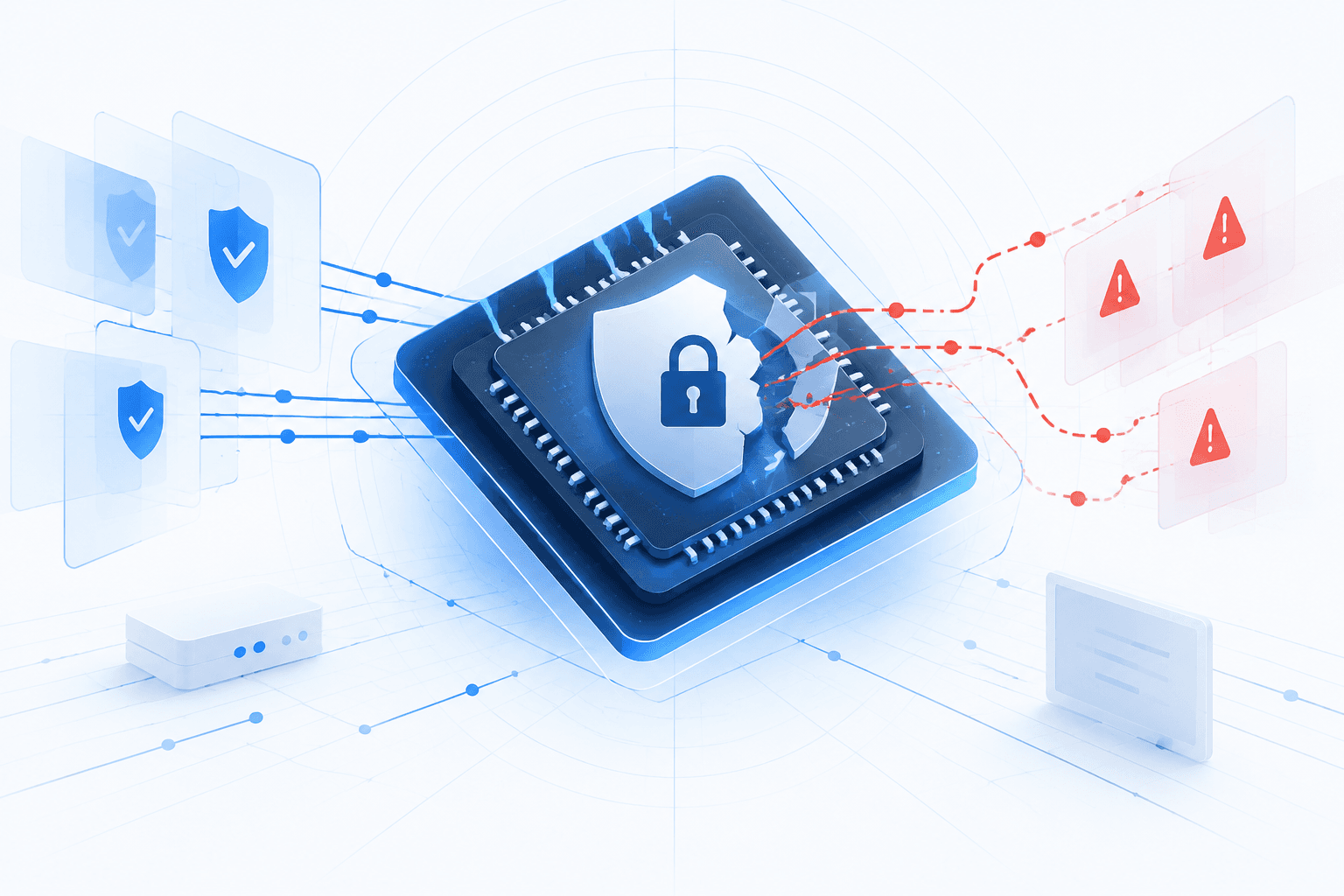
Fedora Warns Legacy Shim Bootloaders Can Undermine UEFI Secure Boot
Patch & Detection Intelligence · 3 sources · Updated 5mo ago · First seen Dec 25, 2025

Fedora warned that older Microsoft-signed Shim bootloaders used to start Linux under UEFI Secure Boot can remain trusted long after fixes are available, allowing vulnerable components to load unless their signatures are added to the UEFI DBX revocation list. The warning highlights legacy Shim 0.9 builds from 2016 and ties the risk to CVE-2026-8863 and CVE-2026-10797, which could let attackers bypass Secure Boot protections on systems still relying on outdated binaries.
Fedora said an updated Shim with additional protections is already present in Rawhide for Fedora 45, while Microsoft is expected to enforce broader revocations through the UEFI DBX. Users were urged to verify whether Secure Boot systems still depend on old Microsoft-signed Shim binaries and to update affected components, with older platforms such as RHEL 7.2, CentOS 7.2, Oracle Linux 7.2, ROSA Linux R10/R9, and some openSUSE installations identified as potentially exposed.
Why it matters
Impact assessment
Fedora's warning affects organizations and users running Linux systems with UEFI Secure Boot that may still trust legacy Microsoft-signed Shim bootloaders, especially older enterprise and server distributions. The primary impact is loss of Secure Boot integrity: attackers with the ability to place or boot an old trusted Shim can potentially bypass boot-chain protections, enabling stealthy persistence and undermining platform trust.
The exposure is broad across environments that still carry old signed boot media or installed EFI binaries, but practical exploitation is most relevant to systems using legacy Shim 0.9-era components. No confirmed in-the-wild exploitation is cited in the provided references, but the issue is operationally significant because DBX revocation lag means vulnerable binaries can remain trusted long after fixes exist.
Affected entities and products
- Fedora Linux issued the warning.
- Microsoft-signed Shim bootloaders used for Linux UEFI Secure Boot are affected.
- Potentially exposed distributions explicitly named:
- RHEL 7.2
- CentOS 7.2
- Oracle Linux 7.2
- ROSA Linux R9/R10
- Some openSUSE installations
- Fedora Rawhide for Fedora 45 reportedly includes an updated Shim.
Severity and business impact
- Security impact: Secure Boot bypass and weakened boot-chain verification.
- Operational impact: systems may continue booting vulnerable components until DBX revocation is applied; after revocation, some legacy systems may fail to boot if not updated.
- Business risk: persistence below the OS layer, reduced trust in endpoint/server integrity, and potential recovery effort if revocations break outdated boot paths.
Scope and exploitation status
- Scope is environment-dependent but potentially widespread in mixed Linux fleets, legacy servers, golden images, recovery media, and removable boot media.
- Exposure persists because trust is signature-based and old Shim binaries remain valid until explicitly revoked in UEFI DBX.
- Known exploitation in the wild: not stated in the references.