Mallory
← Back to News
command-and-control-methodcryptocurrency-platform-riskstate-sponsored-espionagepackage-repository-poisoning

DPRK-Linked Malware Campaigns Use Blockchain C2 to Target Crypto Firms and Developers

Attack Tradecraft · 5 sources · Updated 5mo ago · First seen Jun 1, 2026

DPRK-Linked Malware Campaigns Use Blockchain C2 to Target Crypto Firms and Developers

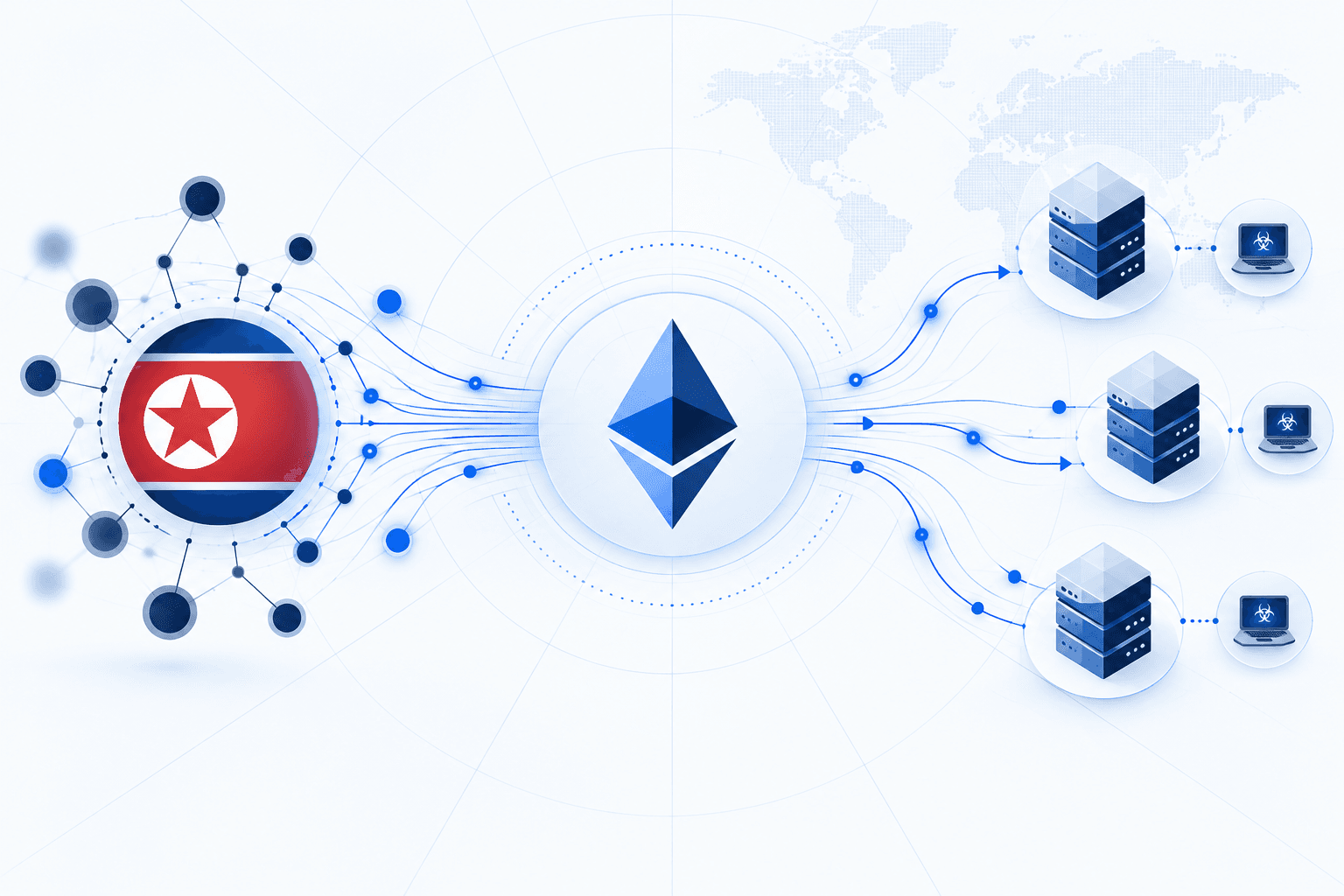
Researchers detailed two likely DPRK-linked malware operations that used public blockchains as resilient command-and-control infrastructure while targeting the cryptocurrency ecosystem and software developers. Elastic Security Labs said the PHANTOMPULSE Windows RAT, delivered through abused Obsidian plugins and the PHANTOMPULL loader, used multiple process-injection techniques, a schuac-based UAC bypass via IElevatedFactoryServer, hardware breakpoints to suppress AMSI, WLDP, and ETW, and scheduled tasks for persistence. The implant conducted host reconnaissance, screenshot capture, keylogging, and clipboard monitoring, and resolved its latest C2 by reading transaction data from Ethereum, Base, and Optimism, with Telegram and hardcoded-domain fallback paths also noted.

A separate supply-chain intrusion attributed to Famous Chollima compromised the legitimate Packagist package roberts/leads, hiding malicious JavaScript in a development-branch tailwind.js file that fetched encrypted payloads from TRON, Aptos, and BNB Smart Chain. Socket linked the activity to prior DPRK tooling including DEV#POPPER RAT, OmniStealer, and BeaverTail, while public reporting and social-media tracking tied it to the broader Contagious Interview ecosystem. Elastic said PHANTOMPULSE's blockchain resolver failed to verify transaction senders, creating a rare opportunity for defenders to sinkhole infected hosts with a crafted transaction, and advised monitoring suspicious scheduled tasks, unusual rundll32.exe execution, hardware-breakpoint tampering, and Node.js access to blockchain or RPC services during builds.

Why it matters

Impact assessment

PHANTOMPULSE and the related Packagist supply-chain activity primarily affect cryptocurrency firms, digital financial platforms, and software developers, especially PHP and Node.js users who consume development branches or build plugins from untrusted sources. The impact is high because the malware supports privilege escalation, stealthy persistence, keylogging, screenshot capture, clipboard monitoring, wallet and messaging-data targeting, and follow-on payload delivery that can expose credentials, crypto assets, and internal systems.

The exposure is both targeted and operationally significant rather than indiscriminate. Reporting ties the activity to DPRK-linked clusters including Lazarus, BlueNoroff, UNC5342/Contagious Interview, APT38, and Famous Chollima, indicating likely financially motivated and espionage-aligned intrusions against the cryptocurrency ecosystem and developer supply chains.

Supporting facts

  • Targeted sectors and populations:
    • Cryptocurrency sector and digital financial platforms
    • Software developers, including PHP developers and users of Obsidian plugins
    • Build environments running Node.js and package-management workflows
  • Severity drivers:
    • Credential and secret exposure from environment variables, .env files, SSH keys, stored tokens, and CI secrets
    • Theft-enabling collection from wallets, messaging databases, clipboard contents, screenshots, and keystrokes
    • Privilege escalation and persistence via scheduled tasks increase dwell time and remediation cost
    • Supply-chain compromise can propagate trust abuse into developer and enterprise environments
  • Scope:
    • PHANTOMPULSE appears targeted at crypto-focused victims through a defined intrusion chain
    • The roberts/leads incident required explicit installation of a dev branch, suggesting narrower but high-value targeting of individual developers
  • Exploitation status:
    • The story describes active malware operations and a documented supply-chain compromise in the wild
    • The affected Packagist dev version was reported and removed after disclosure
Who uses this technique?Get the actors, campaigns, and ATT&CK mapping behind it.
Get the tradecraft
Event timeline

How this story unfolded

Events from the most recent confirmed update back to the earliest known activity.

5 events · May 22, 2026 – Jun 1, 2026
  1. Jun 1, 20266mo ago

    Affected Packagist dev version was reported and removed

    The compromised development version of the roberts/leads package was reported and subsequently removed from Packagist. This was part of the response to the supply-chain attack targeting PHP developers.

    Famous Chollima Hackers Target PHP Developers Using Compromised Packagist Package
  2. Jun 1, 20266mo ago

    Malicious Packagist dev branch used to target PHP developers

    Socket.dev identified a supply-chain attack involving the legitimate PHP package roberts/leads on Packagist, where malicious JavaScript was hidden in a development branch file named tailwind.js. The activity was attributed to Famous Chollima and used blockchain platforms including TRON, Aptos, and BNB Smart Chain to retrieve encrypted payloads.

    Famous Chollima Hackers Target PHP Developers Using Compromised Packagist Package
  3. Jun 1, 20266mo ago

    Bluesky post amplifies reporting on Famous Chollima Packagist campaign

    A Bluesky post by lazarusholic shared Socket’s article about Famous Chollima targeting PHP developers through a compromised Packagist package. The post tagged the activity with #ContagiousInterview, #FamousChollima, and #DPRK.

    Post by @lazarusholic.bsky.social - Bluesky
  4. May 22, 20266mo ago

    Elastic links PHANTOMPULSE activity to DPRK-aligned clusters

    In its PHANTOMPULSE analysis, Elastic assessed the tradecraft, targeting, and infrastructure as aligned with DPRK-linked crypto-focused clusters including Lazarus, BlueNoroff, UNC5342, and APT38. The assessment tied the malware campaign to North Korean threat activity targeting the cryptocurrency sector.

    PHANTOMPULSE: anatomy of a hijackable blockchain-C2 RAT - Elastic Security Labs
  5. May 22, 20266mo ago

    Elastic documents PHANTOMPULSE RAT and sinkhole weakness

    Elastic Security Labs published analysis of PHANTOMPULSE, the final-stage implant in the REF6598 intrusion set, detailing its injection methods, persistence, UAC bypass, and blockchain-based C2 resolution. The report highlighted that the resolver does not verify transaction senders, creating an opportunity for defenders to sinkhole implants with a crafted transaction.

    PHANTOMPULSE: anatomy of a hijackable blockchain-C2 RAT - Elastic Security Labs
Linked entities

Related entities

Vulnerabilities, threat actors, malware, products, organizations, breaches, and observables Mallory has linked to this story. Indicator values are masked here and available in full in the app.

Open in app →

Threat actors

1 linked

Observables

19 linked

Indicator values are masked on this page. View all 19 in Mallory Domains, IPs, hashes, and URLs are exportable to your SIEM.

Do you run this?Get the adversaries, campaigns, and ATT&CK mapping behind this technique, with detections ready to deploy.
See Who Uses This Technique
Mallory platform

See the full picture, correlated to your attack surface.

This page covers what’s public. Mallory adds the parts that aren’t: which of your assets are affected, which threat actors are using it right now, and what to deploy next.

Exposure mappingMap indicators from this story to your assets and identify affected systems in minutes.
Threat actor evidenceEvery observed campaign, victim, and pivot linked to actors named in this story.
Associated malwareMalware, exploits, and IOCs connected to the activity described here.
Detection signaturesYARA, Sigma, and Snort rules deployed to your SIEM as soon as they’re published.
Scheduled alertsGet matching new stories delivered to your team as they break, not the next morning.
AI threadsAsk questions about this story and take action on the answers.