Unpatched Gogs Argument Injection Flaw Enables Authenticated RCE
Vulnerability Disclosure · 11 sources · Updated 5mo ago · First seen May 28, 2026

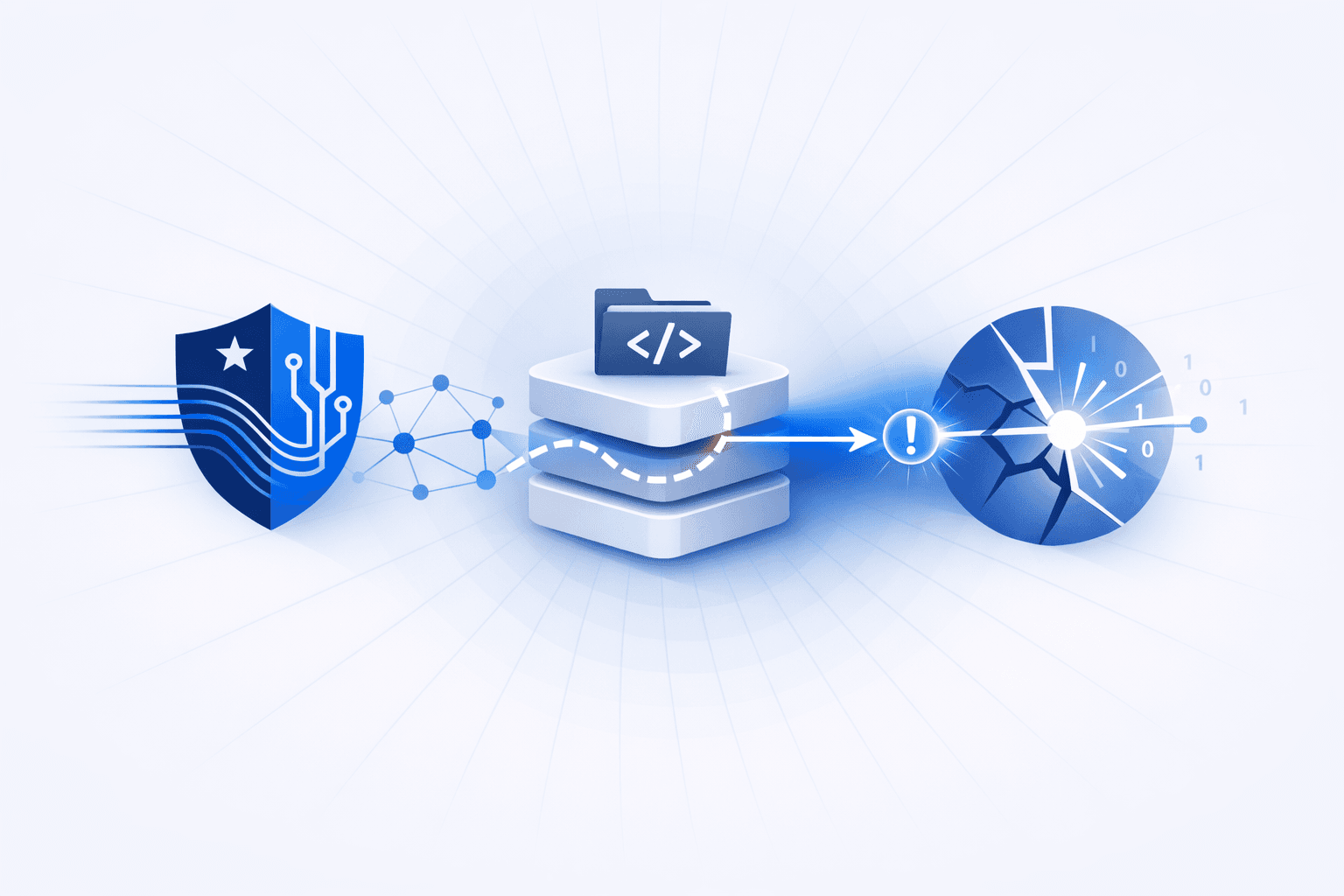
Rapid7 and BleepingComputer reported an unpatched zero-day in the self-hosted Git service Gogs that allows authenticated remote code execution through argument injection in the pull request rebase workflow. The flaw affects current releases including 0.14.2 and 0.15.0+dev, and likely earlier versions that support rebase merging. An attacker can abuse the "Rebase before merging" feature by supplying a malicious branch name that is passed into a git rebase command without a proper option separator, enabling use of Git's --exec flag to run attacker-controlled shell commands as the Gogs server process user.
The issue is rated CVSSv4 9.4 and is considered especially dangerous on default-configured instances because open registration and unrestricted repository creation are enabled by default, lowering the barrier to exploitation. Successful attacks could expose private repositories, stored credentials, and secrets, enable code tampering and supply-chain compromise, and support lateral movement deeper into victim networks. Rapid7 said no vendor patch was available at publication time and released a Metasploit module for Linux and Windows, while separate reporting noted Gogs maintainers had only acknowledged the report. The disclosures follow broader scrutiny of Git hosting platforms, including a recently disclosed Gitea flaw, CVE-2026-27771, that can expose private container images without authentication on versions prior to 1.26.2.
Why it matters
Impact assessment
Gogs deployments are exposed to critical authenticated remote code execution that can often be reached by unauthenticated internet users on default configurations because self-registration and unrestricted repository creation are enabled by default. The most affected populations are organizations running self-hosted Gogs for software development, especially internet-facing shared instances and multi-tenant environments across Asia and Europe.
The impact is severe: successful exploitation can compromise the Gogs host, expose all repositories including private code, leak password hashes, API tokens, SSH keys, and MFA secrets, and enable source-code tampering and downstream supply-chain compromise. Exposure is broad rather than narrowly targeted, with reporting citing roughly 1,100 Shodan-visible instances and more than 2,300-2,400 internet-exposed Gogs servers tracked by Shadowserver.
At initial disclosure there was no vendor patch and a public Metasploit module lowered exploitation barriers; later reporting states Gogs patched the flaw in version 0.14.3 on 2026-06-07. There is no confirmed exploitation in the wild for this specific flaw in the provided reporting, but prior Gogs RCE CVE-2025-8110 was actively exploited, which raises urgency.
Supporting facts
- Affected product: Gogs self-hosted Git service.
- Affected versions: all releases up to and including 0.14.2 and 0.15.0+dev; earlier versions supporting rebase merging are likely vulnerable.
- Fixed version: 0.14.3.
- Affected platforms: Linux, Windows, and macOS; binaries, Docker, and source deployments.
- Exposure estimates:
- Shodan: about 1,000-1,141 internet-facing instances.
- Shadowserver: more than 2,300-2,400 exposed servers.
- Regional concentration: most exposed systems reported in Asia and Europe.
- Business consequences:
- Private repository disclosure
- Credential and secret theft
- Cross-tenant data exposure on shared instances
- Lateral movement from the Gogs host
- Source-code tampering and supply-chain risk
- Exploitation status:
- Public exploit available via Metasploit.
- No confirmed in-the-wild exploitation of this specific flaw in the cited reporting.