Mallory
← Back to News
actively-exploited-vulnerabilityinternet-facing-service-vulnerabilityinternet-exposed-servicedetection-content-update

Remote Code Execution via File Overwrite in Gogs PutContents API

Active Exploitation · 19 sources · Updated 5mo ago · First seen Dec 10, 2025
Remote Code Execution via File Overwrite in Gogs PutContents API

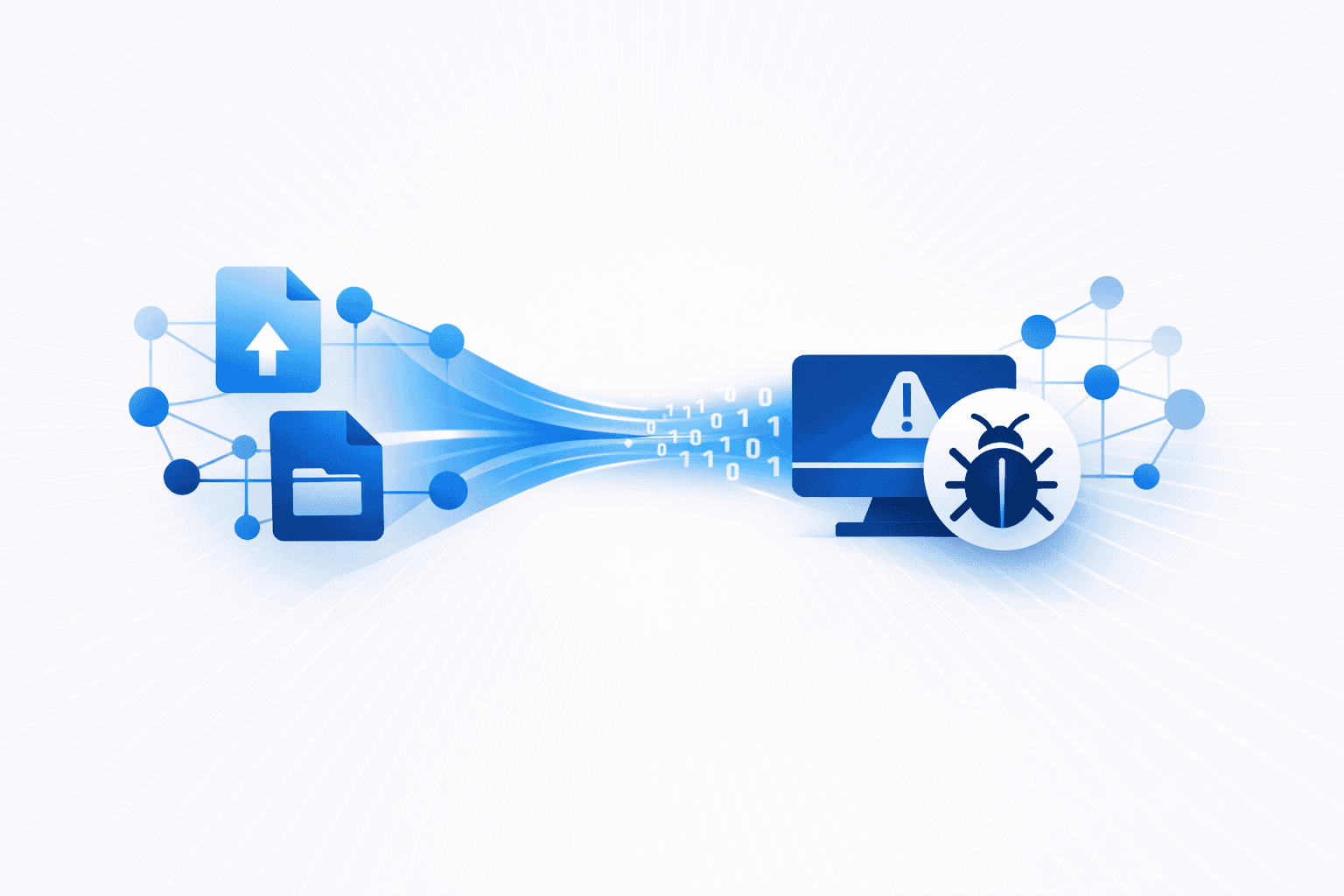
A critical vulnerability, tracked as CVE-2025-8110, has been identified in the PutContents API of the Gogs self-hosted Git service. The flaw arises from improper handling of symbolic links, allowing remote, authenticated attackers to overwrite arbitrary files on the server. Successful exploitation enables attackers to execute arbitrary code with the privileges of the Gogs server process, potentially leading to full system compromise. Security researchers have reported that this vulnerability is being actively exploited in the wild, and it affects Gogs versions 0.13.3 and prior.

Currently, there is no patched version available to address CVE-2025-8110. Administrators are advised to disable auto-registration of users and avoid exposing Gogs instances to the internet as temporary mitigations. Detection of vulnerable systems can be performed using specific queries to identify Gogs installations, such as searching for HTTP services with a known favicon hash. Organizations running Gogs should prioritize mitigation steps to reduce the risk of exploitation until an official fix is released.

Why it matters

Impact assessment

CVE-2025-8110 is a critical exposure for organizations running self-hosted Gogs, especially internet-facing instances with open registration enabled. Impact is severe because authenticated attackers can overwrite arbitrary files and achieve code execution as the Gogs service account, creating risk of source code theft, malware deployment, persistence, and potential full host compromise.

Active exploitation is confirmed in the wild, and reporting consistently indicates broad opportunistic targeting rather than narrow victim selection. Multiple sources cite roughly 1,400-1,500 exposed Gogs instances and more than 700 compromised systems, making this a widespread exposure for any enterprise, developer platform, or internal engineering environment using vulnerable Gogs deployments.

Affected populations

  • Organizations operating Gogs self-hosted Git service
  • Highest risk: Gogs 0.13.3 and earlier
  • Highest risk configuration: internet-exposed instances with Open Registration enabled by default
  • Likely affected sectors: any industry using self-hosted developer infrastructure, including enterprise software, cloud, on-prem engineering, and internal DevOps environments

Severity and business consequences

  • Remote code execution with privileges of the Gogs server process
  • Arbitrary file overwrite outside repository boundaries
  • Potential theft of source code and secrets stored on or reachable from the host
  • Malware deployment observed, including Supershell for persistent remote access
  • Operational disruption possible if Git service integrity is altered or host remediation requires rebuild
  • Reputational and financial impact likely if proprietary code or credentials are exposed

Scope and exploitation status

  • Active exploitation in the wild is confirmed
  • Campaign appears automated and opportunistic, described as smash-and-grab
  • More than 700 compromised public-facing instances reported across multiple references
  • Earliest observed exploitation: 2025-07-10
  • Second wave of attacks observed on 2025-11-01

Entity and product facts

  • Product: Gogs
  • Related but likely unaffected forks: Gitea, Forgejo
  • Researcher/organization: Wiz Research
  • Malware/C2 framework: Supershell
  • Maintainer acknowledgment reported on 2025-10-30
  • No patch available as of 2025-12-10/11

This is being exploited nowSee which actors are running it and whether you're in range.
Check your exposure
Event timeline

How this story unfolded

Events from the most recent confirmed update back to the earliest known activity.

8 events · Jul 1, 2025 – Dec 11, 2025
  1. Dec 11, 20251y ago

    Forgejo and Gitea are reported likely unaffected

    In an oss-security follow-up on December 11, 2025, a Forgejo developer said the relevant code in Gitea, and therefore Forgejo, had previously been rewritten and attack attempts had not succeeded. This indicated the notable Gogs forks were most likely not affected by CVE-2025-8110.

  2. Dec 10, 20251y ago

    Reports detail Supershell malware use and scale of compromise

    Public reporting on December 10-11, 2025 tied the exploitation to Supershell C2 malware and estimated that over 700 of roughly 1,400-1,500 internet-facing Gogs instances showed signs of compromise. Researchers said the attacks appeared opportunistic, widespread, and likely run by a single actor or group.

  3. Dec 10, 20251y ago

    CVE-2025-8110 is published in vulnerability databases

    On December 10, 2025, CVE-2025-8110 was formally published with high-severity scoring and descriptions of the PutContents API symlink handling flaw in Gogs. Public proof-of-concept and technical details were also referenced by vulnerability feeds.

  4. Dec 10, 20251y ago

    Wiz publicly discloses active exploitation of CVE-2025-8110

    Wiz published research on December 10, 2025 describing CVE-2025-8110 as an actively exploited Gogs zero-day affecting version 0.13.3 and earlier. The disclosure said more than 700 public-facing instances had been compromised, no patch was yet available, and published indicators of compromise and mitigations were provided.

  5. Nov 1, 20251y ago

    Second wave of Gogs zero-day attacks begins

    Researchers observed a renewed wave of exploitation starting on November 1, 2025, showing the campaign was ongoing months after initial abuse began. Reports describe the activity as automated and likely conducted by a single actor or group.

  6. Oct 1, 20251y ago

    Gogs maintainers acknowledge the reported vulnerability

    According to later reporting, Gogs maintainers acknowledged Wiz's report in October 2025, but no patch had been released at that time. The issue remained unresolved despite prior responsible disclosure.

  7. Jul 10, 20251y ago

    Attackers begin exploiting CVE-2025-8110 against exposed Gogs servers

    Evidence cited by multiple reports indicates exploitation began around July 2025, including suspicious repositories with random eight-character names created around July 10. The campaign targeted internet-exposed Gogs instances with open registration enabled.

  8. Jul 1, 20251y ago

    Wiz discovers Gogs symlink bypass zero-day and reports it to maintainers

    Wiz Research discovered CVE-2025-8110 in Gogs during a malware investigation and responsibly disclosed the issue to Gogs maintainers in July 2025. The flaw is a symlink-based bypass of the earlier CVE-2024-55947 protections and can lead to remote code execution.

Linked entities

Related entities

Vulnerabilities, threat actors, malware, products, organizations, breaches, and observables Mallory has linked to this story. Indicator values are masked here and available in full in the app.

Open in app →

Affected products

1 linked
Gogs

Organizations

1 linked
Gogs

Observables

6 linked

Indicator values are masked on this page. See the values in Mallory Domains, IPs, hashes, and URLs are exportable to your SIEM.

Do you run this?Correlate live exploitation activity against the software you actually run, and see where you're exposed.
See Who's Exploiting This
Mallory platform

See the full picture, correlated to your attack surface.

This page covers what’s public. Mallory adds the parts that aren’t: which of your assets are affected, which threat actors are using it right now, and what to deploy next.

Exposure mappingMap indicators from this story to your assets and identify affected systems in minutes.
Threat actor evidenceEvery observed campaign, victim, and pivot linked to actors named in this story.
Associated malwareMalware, exploits, and IOCs connected to the activity described here.
Detection signaturesYARA, Sigma, and Snort rules deployed to your SIEM as soon as they’re published.
Scheduled alertsGet matching new stories delivered to your team as they break, not the next morning.
AI threadsAsk questions about this story and take action on the answers.